
The short answer
- A home carer visits, a live-in carer moves inBoth cover the same kind of work. Domiciliary carer and care assistant are the same job again under different names.
- The day covers four kinds of taskPersonal care, household tasks, admin help and company, built around whatever the client's care plan says they need.
- You set your own rate, fee includedCarers on PrimeCarers currently charge around £18 to £25 an hour for visits, or from £1,050 a week living in.
- No qualification is required by lawID, a right to work check, an enhanced DBS check and an online interview matter more than a certificate, and the enhanced DBS route needs a platform or an umbrella body behind you.
Rates are what carers on PrimeCarers set for themselves, with our fee already included in the figure a family sees. Checked against gov.uk and Skills for Care, 6 September 2026.
Names for the job
The names this job goes by, and what each one means
Home carer is the general title. Search for the work or the person to do it and three or four other names come up for the same, or a related, job, and knowing which is which helps you choose a route in.
Home carer or domiciliary carer
Visits someone in their own home for set calls, from one visit a day to several a day.
- Where they work
- In the client's home, for the length of each booked visit.
- Who they answer to
- The family or client directly, or an agency that sets their rota.
Care assistant
The same job as a home carer under a different name, used interchangeably in job adverts.
- Where they work
- A private home, or sometimes a care home shift alongside other staff.
- Who they answer to
- Whoever employs them: a family, an agency or a care home.
Live-in carer
Moves into the client's home and is present through the day and night, with a break and time off built in.
- Where they work
- The client's home, with their own room for the length of the placement.
- Who they answer to
- The family or client directly, since almost all live-in carers are self-employed.
Healthcare assistant (HCA)
A related but different role, usually based in a hospital, surgery or care home under a nurse's supervision.
- Where they work
- An NHS ward, GP surgery or registered care setting, not usually a private home.
- Who they answer to
- A registered nurse, who delegates and supervises any clinical tasks.
Home carer and domiciliary carer are used for exactly the same work: someone who visits a person in their own home. Care assistant is the same job again, mostly a difference of which advert or employer is using it. Live-in carer is a different shape of the same role: instead of visits, the carer moves into the client's home for the length of the placement. The different types of support worker goes further into how these titles are used across the sector, and what is the difference between a carer and a HCA? is worth reading before you apply anywhere that uses the two interchangeably, because they are not the same role.
Day to day
What the job covers day to day
A home carer's tasks fall into four groups, and which ones come up in a visit depends on what the client's care plan says they need.
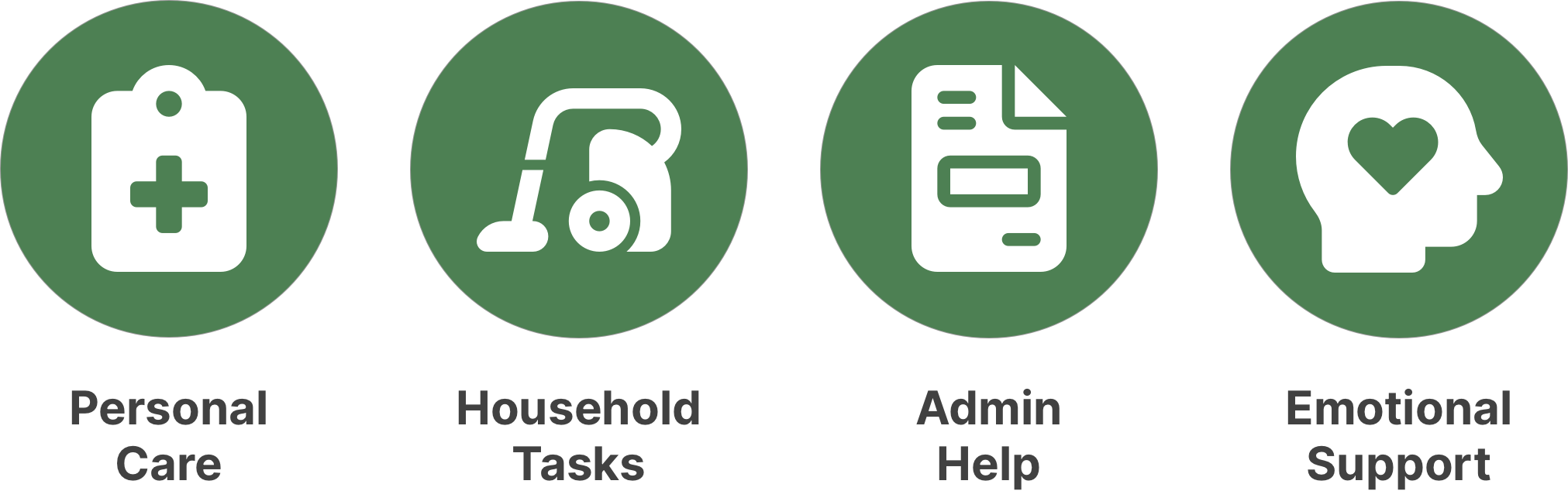
Personal care is washing, dressing, help with toileting, and continence support such as changing pads or emptying a catheter bag. Replacing a urinary catheter is different: that is a nursing task in the UK, and a home carer can only do it if a nurse has formally delegated it, provided the training, and written it into the care plan, so it comes up rarely and never as a routine part of the job. Managing a client's continence goes further into what is and is not part of a carer's role here.
Household tasks are the things that keep a home running: light cleaning, laundry, cooking, shopping, and getting the person to appointments. Admin help covers the paperwork around a person's life, prompting and recording medication, dealing with post, and making calls on their behalf. Emotional support is company: sitting and talking, going out together, and being there when a family carer needs a break. Companionship care sets out what that side of the role looks like.
None of this is fixed by law. What a carer does in a visit is agreed between the carer and the family and written into a plan, and PrimeCarers does not issue clinical policies of its own, since it introduces carers to families rather than employing or supervising them.
What it pays
What home carers charge, and what stays with you
Rates vary by carer, by area, and by whether the work is visits or live-in. These are the ranges carers on PrimeCarers price against.
| Typical rate | Who tends to choose it | |
|---|---|---|
| Hourly visits | £18 to £25 an hour, from £18 an hour for a shift of six hours or more | Carers who want to fit several clients around their week |
| Live-in care | £1,050 a week upwards, more for a couple or a complex placement | Carers who want one client and somewhere to live while they work |
Hourly visits
- Typical rate
- £18 to £25 an hour, from £18 an hour for a shift of six hours or more
- Who tends to choose it
- Carers who want to fit several clients around their week
Live-in care
- Typical rate
- £1,050 a week upwards, more for a couple or a complex placement
- Who tends to choose it
- Carers who want one client and somewhere to live while they work
Rates are what families pay carers on PrimeCarers, with our fee already included in that figure, checked September 2026.
You set your own rate within a range like this one, and the family pays it with our fee already built in, so what is quoted to them is not on top of what you charge. How to become a self-employed carer goes through registering and setting a rate in more detail, and what carers earn on PrimeCarers sets out what reaches a carer once our fee comes out.
Getting started
What you need before your first booking
Four things stand between this page and your first visit, and none of them require a qualification.
- 1
Decide your route
TodayA platform, an agency and a care home check you differently and pay you differently. Become a carer: the complete guide sets the three routes side by side. - 2
Sort your ID and DBS route
This weekFor your right to work on PrimeCarers, a British or Irish carer needs a valid British or Irish passport, checked digitally, and everyone else uses a share code; an expired passport is not accepted. Right to work checks for carers covers both. An enhanced DBS check has to go through an umbrella body or an employer, never you alone, so this step decides which route is open to you. Enhanced DBS and the Update Service explains the certificate and how to keep it current. - 3
Decide on training
OptionalNothing is compulsory, but the Care Certificate and a Level 2 or 3 diploma in adult care are worth having. Training for private carers covers what is worth doing first. - 4
Register and complete an online interview
FreeSet up your profile with your experience and availability written out plainly, complete a short online interview, and set the rate you want to charge within the ranges above.
Questions
Questions people ask about home carers
A home carer is someone who helps a person live safely and comfortably in their own home, with tasks such as personal care, housework, admin and company. The same job is also called a domiciliary carer or a care assistant, and a carer who moves in rather than visiting is usually called a live-in carer. The different types of support worker goes through the full list of titles.
A home carer visits for set calls and goes home afterwards. A live-in carer moves into the client's home for the length of the placement and is present through the day and night, with a daily break and time off built into the arrangement. How live-in care works sets out what the role involves day to day.
A home carer usually works alone in a private home and is not supervised on a visit-by-visit basis. A healthcare assistant is usually based in a hospital, GP surgery or care home and works under a registered nurse, who delegates and oversees any clinical tasks. What is the difference between a carer and a HCA? covers this in full.
No. There is no legal requirement to hold a qualification before working as a private home carer in England. Skills for Care's Care Certificate, a 16-standard induction most employers expect a new care worker to complete, and a Level 2 or 3 Diploma in Adult Care are both worth having, but neither is compulsory. Training for private carers covers what is worth doing first.
Not routinely. Emptying or changing a catheter drainage bag is ordinary continence care. Replacing the catheter itself is a nursing task in the UK, and a home carer can only do it if a nurse has formally delegated it, provided the training, and written it into the care plan. Outside that, it stays with a district nursing team.
You set your own rate. Carers on PrimeCarers currently charge around £18 to £25 an hour for visits, or from £1,050 a week for live-in care, with our fee already included in what the family sees. How to become a self-employed carer goes through registering and pricing your profile.