

This page is part of PrimeCarers' guide to dementia care. It looks at what shapes a good day for someone living with dementia now, rather than the bigger decisions covered by at what point should someone with dementia go into care or the money in the cost of care for dementia.
The short answer
- Five things matter more than any single activityFeeling comfortable, trusting of familiar people, included, useful and known as themselves. A good day usually has some of each rather than one big treat.
- A predictable routine does more than any single treatThe same wash, meals and bedtime in the same order each day gives a sense of safety that a surprise cannot.
- Answer the feeling, not the factIf they say something that is not true, correcting them rarely helps. Responding to what they seem to be feeling usually does.
- A carer can share the load, not just the personal careCompanionship visits on PrimeCarers run from £15 to £20 an hour with our fee included, built around company and activity.
Figures are what carers on PrimeCarers charge, with our fee included, September 2026.
What helps, and why
What shapes a good day, more than any single activity
Every person's dementia is a little different, so an idea that lifts one person's mood can leave another cold. What carries over from person to person is a short list of needs, and a good day tends to have several of them met rather than one thing done especially well.
The best-known version of this list comes from the psychologist Tom Kitwood, whose model of five needs behind wellbeing in dementia, comfort, attachment, inclusion, occupation and identity, sits behind the principles of person-centred care that the NICE guideline for dementia asks every carer to follow: seeing a person's individuality, their life history and their relationships, rather than a set of symptoms to be managed.
At the centre of all five: feeling loved and safe
Comfort
Feeling physically at ease and free from fear, even when they cannot say what is worrying them.
Try: A warm, familiar room, a hand held during a hard moment, a voice that stays calm.
Attachment
Trusting a small number of people, more than the number of new faces they meet.
Try: The same carer or family member for the tasks that involve close contact, such as washing.
Inclusion
Being part of a conversation or a room, not talked over or about.
Try: Speak to them directly and keep them in the conversation, even when they are not the one answering.
Occupation
Having something to do that uses a skill they still have.
Try: Folding washing, laying a table, watering a plant, sorting post into piles.
Identity
Being seen as the person they have always been, not only as somebody with dementia.
Try: Use the name they prefer, keep their usual interests going, let visitors see the person you knew.
None of these needs is met by a single grand gesture. They are met, or missed, dozens of times over an ordinary day, in how a question gets answered, whether the same face turns up for the morning wash, or whether there is a small job waiting to be done.
Identity is worth a word of its own, because it is easy to think there is little you can do about it once someone struggles to follow a conversation. Reminiscence, talking through old photographs, a former job, a wedding, or children when they were small, works on this need directly. It does not rely on short-term memory, so it can still reach somebody whose memory of yesterday has gone, and for a few minutes it can put them back in the position of an expert on their own life rather than someone being asked questions they cannot answer. 37 activities for someone with dementia has a fuller list of ways to bring the past into a conversation. The sections below go through what the rest of this looks like in practice, starting with the routine that holds the day together.
Routine and environment
Why a familiar routine steadies the day
Consistency does a particular kind of work for someone with dementia. They cannot always explain why a change unsettled them, but the same order of events each day means there is less to work out and less to feel anxious about.
Ideas that help a routine hold
0 of 7 ticked
The shape of the day
A familiar setting
If the harder part of the day is consistently the evening, read what is sundowning: agitation that builds as daylight fades has a name, and a routine of its own that tends to help.
You can get the free printable PDF to keep with this guide.
How you talk to them
Reassuring rather than correcting
How something is said reaches someone with dementia even when the exact words no longer do. Reassurance usually works better than accuracy, and that runs against most people's instinct to correct a mistake.
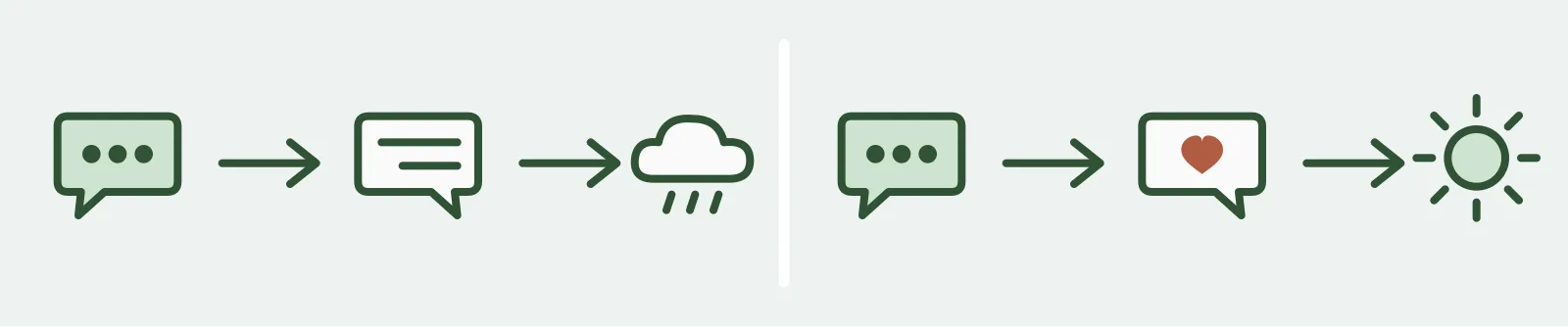
One approach, sometimes called validation, answers the feeling behind a statement rather than correcting the statement itself. If your relative asks for a parent who died years ago, telling them the truth again can cause the same grief every time, while asking what that parent was like, or saying they will be along soon, often settles the moment without a fresh loss. A Cochrane review of validation therapy found the trials done so far are too few and small to prove it works, but reassurance over argument is consistent with the Alzheimer's Society's own guidance on communicating with someone with dementia, which asks families to keep their voice, face and posture calm and matched to what they are saying, because tone reaches somebody who has lost the meaning of the words.
What tends to help
- Answering the feeling behind a question rather than the fact in it
- A calm, slightly slower voice, with a face that matches what you are saying
- Getting to eye level and holding a hand, if they are comfortable with touch
- Waiting for an answer rather than filling the silence for them
- Moving on to something else if a moment is not settling
What tends to escalate things
- Correcting a memory or a fact that is not causing any harm
- Arguing, or repeating the same true answer more loudly
- Several questions or instructions at once
- Talking about them, in the room, as if they cannot hear
- Rushing an answer, or finishing sentences for them
Purpose and company
Feeling useful, and spending time with people
Occupation and inclusion, two of the five needs above, both come down to the same thing day to day: having something to do, and someone to do it with.
A task does not need to be significant to work. Folding washing, laying a table or watering a plant give a sense of having done something useful, and the NICE guideline on dementia recommends offering activities such as gardening, baking, music and reminiscence for exactly this reason, tailored to what a person still enjoys rather than run as a fixed programme. Music is one of the easiest of these to set up in advance: a playlist of songs from the years your relative remembers best, put together once and played on request, can settle somebody who is agitated within a few minutes, and it needs no supervision once it exists. 37 activities for someone with dementia goes through a fuller list grouped by what each one is good for, from movement to reminiscing.
Include them in the room, not just the house
Every day
One familiar face for the tasks that need trust
Ongoing
A short visit often lands better than a long one
20 to 30 minutes
A companionship carer builds this kind of task and conversation into a visit as a matter of course, rather than it being one more thing for a family to remember to arrange.
A family occasion asks more of them than an ordinary visit does. Family occasions and dementia covers birthdays, christenings and big gatherings, from a quiet room to a planned time to leave.
Looking after the body
Sleep, food and movement shape mood as much as the mind does
A body that is tired, hungry, thirsty or in pain cannot always say so in words once dementia has taken some of the vocabulary, so mood and behaviour often carry the message instead. Agitation late in the afternoon is as likely to be thirst or tiredness as it is confusion.
150 mins
of moderate activity a week
The NHS guideline for adults aged 65 and over, taken in short walks or chair-based sessions rather than one long one.
6 to 8
cups or glasses of fluid a day
The NHS Eatwell Guide figure for everyone, and a common cause of extra confusion in dementia when it is missed.
NHS physical activity guidelines for older adults and the NHS Eatwell Guide, 2026.
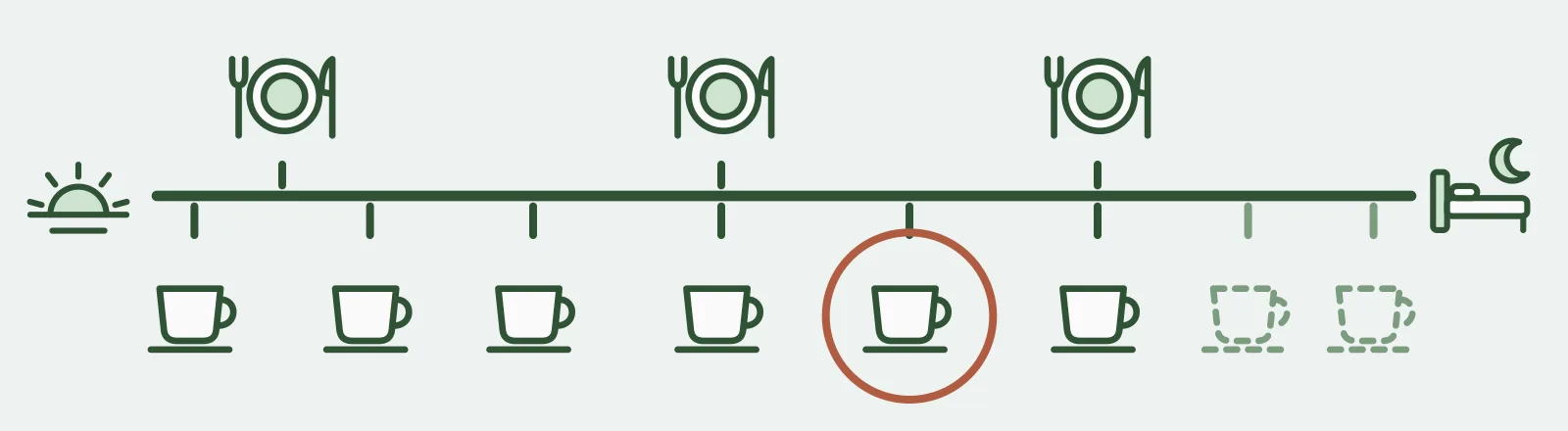
Meals matter for the same reason, even though there is no single official figure for how often to offer them. A skipped or forgotten meal tends to show up as low mood, tiredness or extra confusion well before anyone notices weight loss, so keeping meals at roughly the same times each day is worth as much as their content. Elderly hydration and elderly nutrition go through the signs of dehydration and poor eating in more detail, both common and treatable causes of a sudden bad afternoon. Exercise for older people has more on building safe activity into a week, including chair-based options for somebody who tires quickly or cannot get outside. If broken nights have become the harder problem, an overnight carer a few nights a week is often what restores everyone's sleep, your relative's included.
Getting help
Bringing in a carer to share the load
Doing all of this yourself, every day, is a great deal to carry, and most families cannot sustain it alone indefinitely without it costing them their own health.
- 1
Search carers who list dementia experience
FreeEvery profile shows the carer's rate, reviews and the kind of dementia experience they have, so you are not choosing blind. - 2
Talk before you book
FreeAsk how they would handle a moment like the ones in this guide: a wrong memory, a refusal, a bad afternoon. The answer tells you more than a profile can. - 3
Start with company, add personal care later if needed
Whenever you are readyCompanionship visits from £15 to £20 an hour cover routine, conversation and a shared task. Personal care can be added to the same arrangement once it is needed. - 4
Every carer is checked before they appear
AlwaysIdentity, right to work and an accepted criminal-record check (Enhanced DBS issued within the last 2 years, DBS Update Service, Scottish PVG or Access NI) are checked before a carer is listed, and every carer has interviewed online. Carers are self-employed, and PrimeCarers is an introductory service rather than their employer.
If your relative's needs have moved beyond company and are now about safety through the day or the night, at what point should someone with dementia go into care sets out the signs to watch for and what each level of help tends to cost.
Questions
Questions families ask about this
Keep the day predictable. A fixed order for waking, washing, meals and bed removes a source of anxiety that no single activity can make up for, and most families notice the difference within a week or two. Why a familiar routine steadies the day goes through how to build one.
Usually not, if the mistake is not causing any harm. Correcting them tends to cause distress, sometimes a fresh grief if they have asked for somebody who has died, without changing what they believe for long. Answering the feeling behind what they have said, and reassuring them, usually settles the moment better than the facts do. Reassuring rather than correcting has more on how this works.
Yes. Research on emotional memory in Alzheimer's disease has found that a feeling can outlast the memory of whatever caused it: in one 2014 study, patients stayed sad or cheerful for around half an hour after watching an emotional film they could no longer recall anything about. That is a good reason to keep offering good moments even once your relative cannot describe or remember them afterwards. The study is summarised here.
Stop, rather than pushing on and hoping it passes. A bad reaction is often about tiredness, hunger or the time of day rather than the activity itself, and it is not a verdict on whether to try it again another day. 37 activities for someone with dementia has more ideas if the ones you have tried are not landing.
Yes, and it is one of the more fixable causes of a sudden bad afternoon. Not drinking enough or skipping a meal commonly shows up as extra confusion, agitation or tiredness in someone with dementia, and both are easy to miss because the person may not be able to tell you they are thirsty or hungry. Elderly hydration covers the signs to watch for.
Yes. Companionship visits on PrimeCarers, from £15 to £20 an hour with our fee included, are built around company, routine and shared activity rather than personal care tasks. What carers do on a companionship visit has more detail, and personal care can be added to the same arrangement later if it becomes necessary.
No. Dementia is the general term for a group of conditions that affect memory and thinking, and Alzheimer's disease is the most common cause, accounting for 60 to 70 in every 100 diagnoses. The different types of dementia explains how the others differ and what tends to come first with each one.