
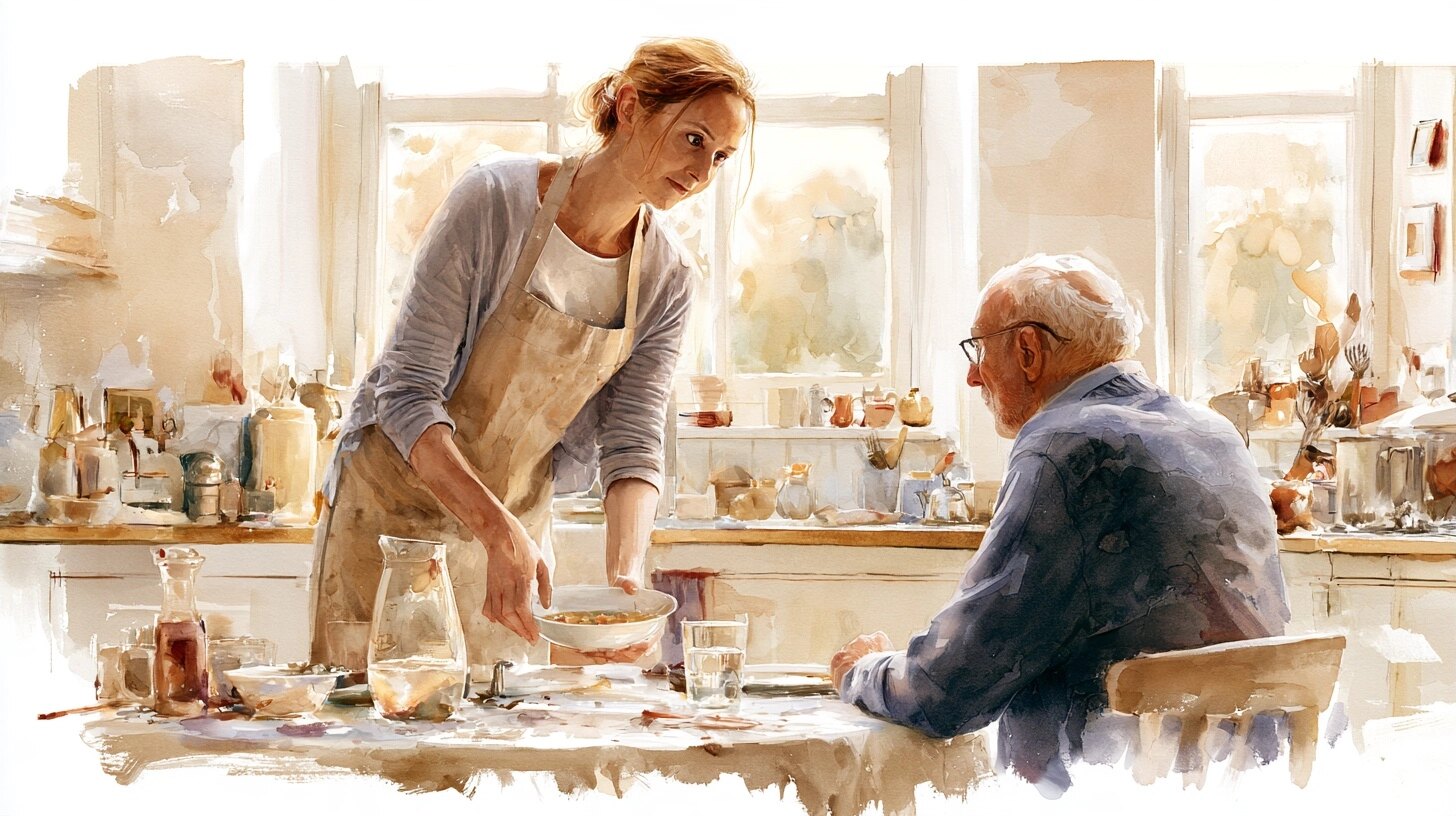
The short answer
- Build meals around the same four groups as anyone elseFruit and veg, starchy carbohydrates, protein foods and dairy, in smaller portions if their appetite has shrunk.
- A smaller appetite is normal, not a sign of illness on its ownMetabolism slows and muscle is lost with age, so less food is often needed, even though the vitamins and minerals in it matter as much as ever.
- Only iron differs from a younger adultCalcium, vitamin C and vitamin D needs stay the same throughout adult life. Vitamin D matters more if they rarely get outside, but the daily amount is unchanged. Iron needs fall after menopause.
- Watch fluids as closely as foodOlder people often stop feeling thirsty before they are short of fluid, so a routine of offered drinks matters more than waiting to be asked.
Figures on this page are the NHS's reference amounts for UK adults. Some advice repeated online for older people, particularly on calcium, is the higher American recommendation rather than the UK one.
The daily plate
What a well-balanced plate looks like for an elderly relative
The building blocks of a good diet do not change with age. What usually needs to change is the portion size, and how easy each part is to eat and prepare.
Fruit and vegetables
At least 5 portions a day, fresh, frozen, tinned or dried all count.
Starchy carbohydrates
Just over a third of what they eat: potatoes, bread, rice or pasta, wholegrain where they can manage it.
Beans, pulses, fish, eggs and meat
A source at most meals. At least 2 portions of fish a week, one of them oily, such as salmon, mackerel or sardines.
Dairy or alternatives
Milk, cheese or yoghurt, or a calcium-added alternative, most days.
Where appetite has shrunk, the NHS and dietitians recommend a food-first approach rather than skipping meals: smaller meals more often, with extra butter, cheese, cream or full-fat milk stirred through ordinary food to add calories without adding bulk. A boiled egg, cheese on toast or a milky pudding between meals often does more good than trying to finish a full plate three times a day.
Why appetite changes
Why an older body needs less energy, but not fewer nutrients
A smaller appetite in later life is usually physical rather than a sign that something is wrong, but several other things can push it further down, and it is worth knowing which is which.
A slower metabolism and less muscle
Physical, and normal
Medicines can blunt appetite and thirst
Worth a medication review
Memory, mood and dementia get in the way of eating
Look for a pattern, not one bad day
Eating alone
One of the strongest single factors
If a change in medication looks like the cause, medicines in later life covers how to raise it with a GP or pharmacist without stopping anything on your own first. Where dementia is behind the change, dementia care is the fuller guide to what else tends to shift day to day.
Nutrients to watch
Vitamin D, calcium, iron and vitamin C: the right amounts for an older adult
Most of a good diet takes care of vitamins and minerals on its own. These four come up most often for older people, and only one of them changes with age.
| Daily amount | Changes with age? | What to know | |
|---|---|---|---|
| Vitamin D | 10 micrograms a day | Everyone | The same amount as any adult. Someone who is frail, housebound or in a care home makes little or no vitamin D from sunlight, so the NHS advises they take a supplement all year, not just in autumn and winter. |
| Calcium | 700mg a day | Everyone | The NHS gives the same figure for every adult, whatever their age. Milk, cheese, yoghurt, fortified bread and tinned fish eaten with the bones all count, and most people reach it through food without a supplement. |
| Iron | 8.7mg a day (men and women past menopause), 14.8mg a day (women under 50) | Falls after menopause | A woman past menopause needs the same amount as a man, roughly 40% less than before, because periods no longer take iron with them. Tiredness, weakness or breathlessness are still worth mentioning to the GP. |
| Vitamin C | 40mg a day | Everyone | The body can't store it, so it needs topping up daily. A glass of orange juice, a pepper or a helping of broccoli covers it, and a diet with the 5 portions above rarely falls short. |
Vitamin D
- Daily amount
- 10 micrograms a day
- Changes with age?
- Everyone
- What to know
- The same amount as any adult. Someone who is frail, housebound or in a care home makes little or no vitamin D from sunlight, so the NHS advises they take a supplement all year, not just in autumn and winter.
Calcium
- Daily amount
- 700mg a day
- Changes with age?
- Everyone
- What to know
- The NHS gives the same figure for every adult, whatever their age. Milk, cheese, yoghurt, fortified bread and tinned fish eaten with the bones all count, and most people reach it through food without a supplement.
Iron
- Daily amount
- 8.7mg a day (men and women past menopause), 14.8mg a day (women under 50)
- Changes with age?
- Falls after menopause
- What to know
- A woman past menopause needs the same amount as a man, roughly 40% less than before, because periods no longer take iron with them. Tiredness, weakness or breathlessness are still worth mentioning to the GP.
Vitamin C
- Daily amount
- 40mg a day
- Changes with age?
- Everyone
- What to know
- The body can't store it, so it needs topping up daily. A glass of orange juice, a pepper or a helping of broccoli covers it, and a diet with the 5 portions above rarely falls short.
NHS reference amounts for adults (nhs.uk/conditions/vitamins-and-minerals). Always check with a GP before starting a supplement, especially alongside existing medication.
Vitamin D is the one worth acting on without waiting for a symptom: anyone who rarely gets outside, whatever their age, is advised to take a 10 microgram supplement every day of the year rather than only in autumn and winter, because there is not enough sunlight reaching their skin to make it any other way.
Fluids alongside food
Building enough to drink into the day, not only at mealtimes
Older people are more prone to dehydration than younger adults, partly because the sense of thirst that would normally prompt a drink fades with age. Waiting to be asked is not a reliable plan.
1,600ml to 2,000ml
A day's fluid target for an older woman and an older man, from ordinary drinks and water-rich food together, according to the British Dietetic Association's guidance for older adults.
British Dietetic Association, hydration guidance for older adults.
The simplest changes make the biggest difference: a full glass of water taken with each round of tablets, a jug or glass left by their chair rather than in the kitchen, and squash or juice on hand for anyone who finds plain water unappealing. Tea and coffee count towards the total too.
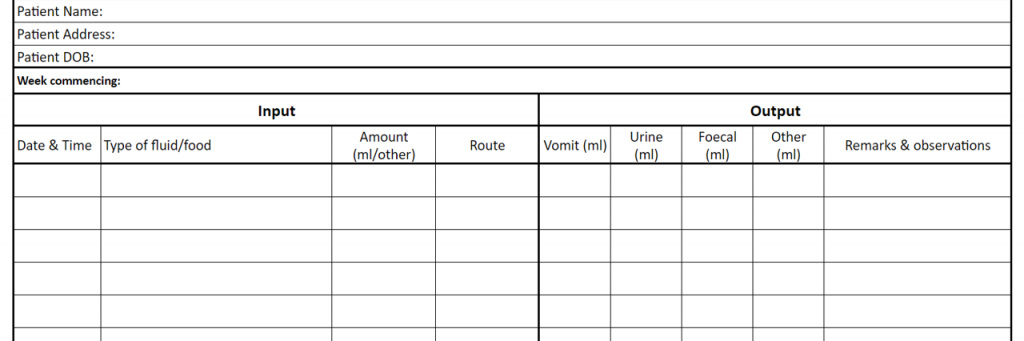
If a GP, dietitian or district nurse wants fluids and food tracked closely, for example after a hospital stay, they will set up a chart like the one below and show you how to fill it in. It is not something to create yourself; ask them for one if they have raised the idea, or if you are worried enough to want a clearer picture of what your relative is managing each day.
How serious is dehydration in the elderly? sets out what makes it more dangerous at this age and when it becomes an emergency, what are the symptoms of dehydration in the elderly? is the fuller list to check against, and why might an older person be reluctant to drink fluids? is worth reading if your relative is actively avoiding drinks rather than simply forgetting them.
Warning signs
Signs your relative is not eating or drinking enough
Poor nutrition and dehydration both build up gradually, and families are often the last to notice because they see the person every day. Look out for the following over a few weeks rather than a single day.
Has any of this been true recently?
0 of 7 ticked
Eating
Drinking
Any of these on its own is worth mentioning to a GP, and several together over a few weeks make it more urgent, not less. Sudden confusion, or someone who seems seriously unwell rather than just off colour, needs same-day advice from 111 or a same-day GP appointment rather than waiting. If your relative is refusing meals or drinks rather than simply forgetting them, how do you get someone to accept care? covers ways to approach that conversation.
Getting help
From noticing a problem to a plan that works
Four steps cover most families' next move, and the first two do not cost anything.
- 1
See the GP
First stopThey can weigh your relative, screen for malnutrition risk using a tool such as MUST, and check for a treatable cause: a medicine side effect, dental pain, depression or an infection. - 2
Ask about a dietitian referral
If weight loss continuesA dietitian usually starts with a food-first plan, fortifying ordinary meals and adding snacks between them, before considering nutritional drinks or supplements. - 3
Bring company back to mealtimes
Often the biggest single changeA family member joining for a meal, a regular visitor, or a companionship carer at mealtimes addresses the eating-alone problem directly, which fixes more than any change to the food itself. - 4
Book a carer for meal prep and company
From £18 an hourSearch hourly carers who cook, sit with your relative while they eat, and clear away afterwards. Visits are usually an hour or more, at £18 to £25 an hour with our fee included. Every carer has interviewed online and had their identity, right to work and an enhanced DBS checked before appearing in search.
If company is the main gap rather than cooking, what does a companion carer cost? sets out visit patterns built around conversation and time together, meals included. Either way, search carers near you to see rates, reviews and availability before you book anything.
Questions
Questions families ask about nutrition and hydration for an elderly relative
The same as any adult: at least 5 portions a day. Fresh, frozen, tinned and dried all count, so tinned or frozen fruit and veg are a practical way to keep this up if fresh shopping and preparation have become harder.
No, the daily amount is the same, 10 micrograms. What changes is how reliably they get it from sunlight. Someone who is frail, housebound or in a care home makes little or no vitamin D from being outdoors, so the NHS advises they take a supplement every day of the year rather than only in autumn and winter. Check with a GP first, particularly alongside other medication.
700mg a day, the same figure the NHS gives for every adult regardless of age. There is no separate, higher UK recommendation for people over 70. Milk, cheese, yoghurt, fortified bread and tinned fish eaten with the bones usually cover it through food alone.
Mainly because of menopause rather than age itself. Women need 14.8mg a day up to around 50, then 8.7mg a day afterwards, the same amount as an adult man, because periods no longer take iron with them. Tiredness, weakness or breathlessness can still mean an iron deficiency, so mention them to the GP rather than assuming they are just part of getting older.
At least 1,600ml (about 3 pints) a day for a woman and 2,000ml (about 3½ pints) for a man, according to the British Dietetic Association's guidance for older adults, counting ordinary drinks and water-rich food together. How can I get my elderly relative to drink more fluids? has practical ways to reach it.
Unintentional weight loss (the NHS treats losing 5 to 10% of body weight over 3 to 6 months as significant), a lasting drop in appetite, persistent tiredness or weakness, getting ill often and recovering slowly, and wounds that heal slowly are the main ones. Any of these is worth a GP appointment.
Only if a GP, dietitian or district nurse has asked for one, usually after a hospital stay or a specific concern. They will provide the chart and explain what to record. For everyday use, simple habits, such as a full glass with every round of tablets and a jug kept where your relative sits, matter more than formal monitoring.
Yes. Hourly carers on PrimeCarers cook, sit with your relative while they eat, help with drinks through the day and clear away afterwards, alongside anything else the visit covers. Visits start at £18 an hour with our fee included. Hourly care has more on how visits are booked.