
The short answer
- Walk the house room by roomA trip hazard is easier to see from inside a room than from a list of tips read at the kitchen table, and a second pair of eyes catches ones your parent has stopped noticing.
- The stairs and the bathroom matter mostA longer way to fall on the stairs, and wet floors and hard edges in the bathroom, make these two rooms worth fixing first.
- Most fixes cost nothing, or are free under £1,000Moving a rug or fitting a plug-in night light costs nothing. Grab rails and similar small adaptations an occupational therapist recommends are fitted free by the council if they cost under £1,000.
- A grant covers the bigger jobsA walk-in shower, a stairlift or widening a doorway usually needs a Disabled Facilities Grant, worth up to £30,000 in England and means-tested by income and savings.
None of this replaces somebody seeing your parent often enough to notice a new hazard, or a fall that has already happened and gone unmentioned. Where a daily visit is not possible, a companionship visit costs around £15 to £20 an hour on PrimeCarers, with our fee included.
Where to start
A room-by-room walk finds what a general list misses
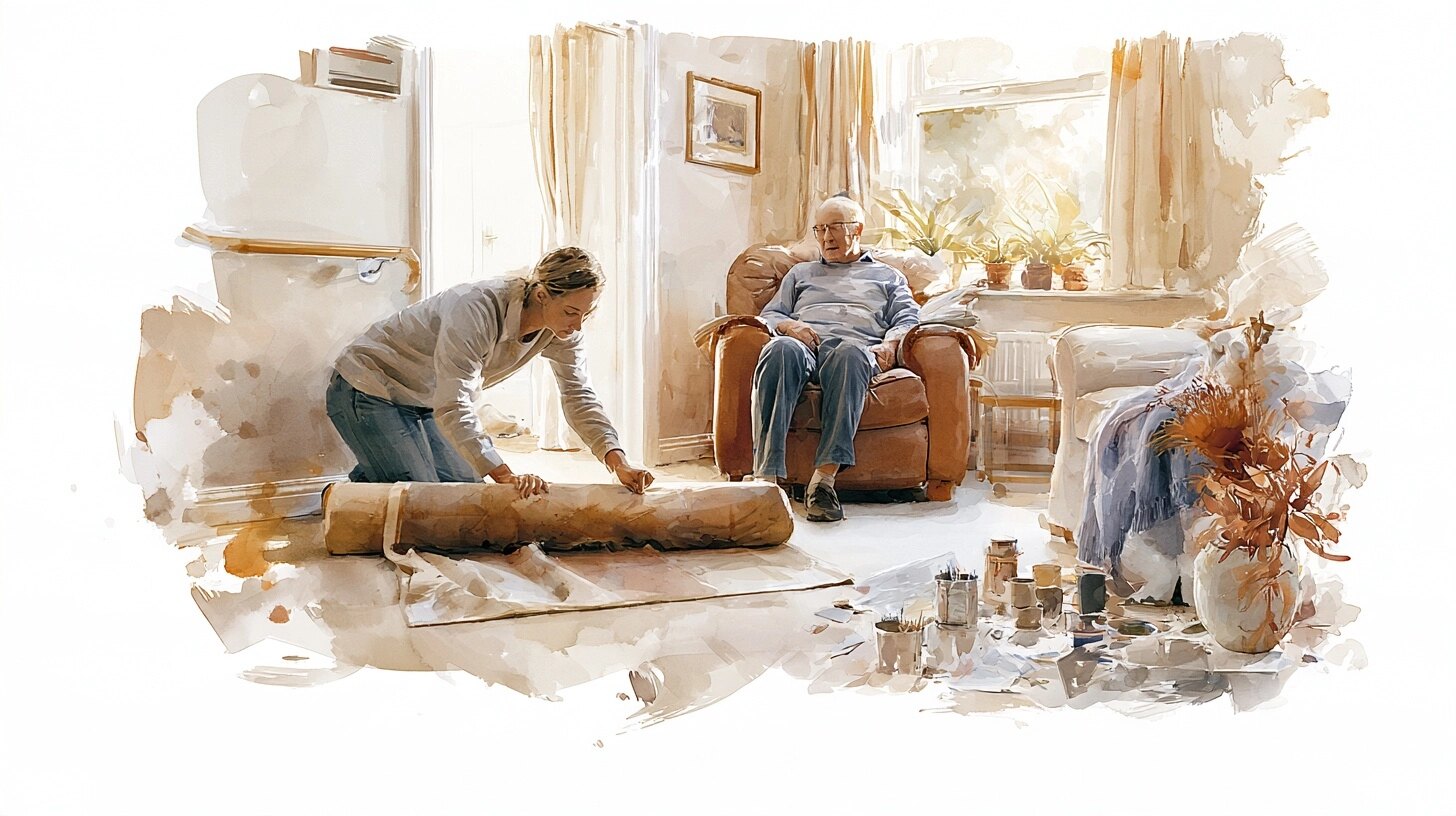
A list of tips read at the kitchen table rarely matches the house it is meant to protect. Walking through each room the way your parent moves through it, ideally with them, shows up things a list would not: the rug that only catches a foot going one way, the switch on the wrong side of a doorway, the step that has been there for years and stopped being noticed.
- 1Entrance, hallway and stairsWhere a fall does the most damage, because there is further to fall and less to break it.Loose rugsTrailing cablesPoor lighting
- 2The bathroomWet floors, hard surfaces and getting in and out of the bath make this the room where most in-home falls start.No grab railA slippery matA high bath edge
- 3Bedroom, kitchen and living roomLess about wet floors here, more about reaching, standing up and moving around in the dark.Reaching a shelfGetting up at nightA low, soft chair
Age UK's guide to preventing falls covers a similar walk-through for someone doing it alone. Doing it together tends to catch more, because your parent can show you the moment that feels unsteady, carrying a tray from the kitchen, or reaching up for something on a high shelf, in a way a checklist on its own cannot describe. It is worth the hour: around a third of people aged 65 and over fall at least once a year, according to the Office for Health Improvement and Disparities, and 250,000 older people in England are treated in hospital after a fall every year, according to Age UK. Three parts of the house account for most of what is worth fixing, and the sections below take them in the order to tackle them.
If it helps to write down what you found and what you did about it as you go, that is the same shape as the written risk assessment carers on PrimeCarers complete before a placement begins. The carer's own risk assessment guide explains what a formal version covers, if a paper record is what your parent's insurer or care plan asks for.
Entrance, hallway and stairs
Get the floor, the lighting and the rails right first
This is the part of the house with the least room for error: a fall here often means falling further, onto a harder surface, with the stairs close by.
Check these in the hallway and on the stairs
0 of 8 ticked
The floor
The stairs
Doors and outside steps
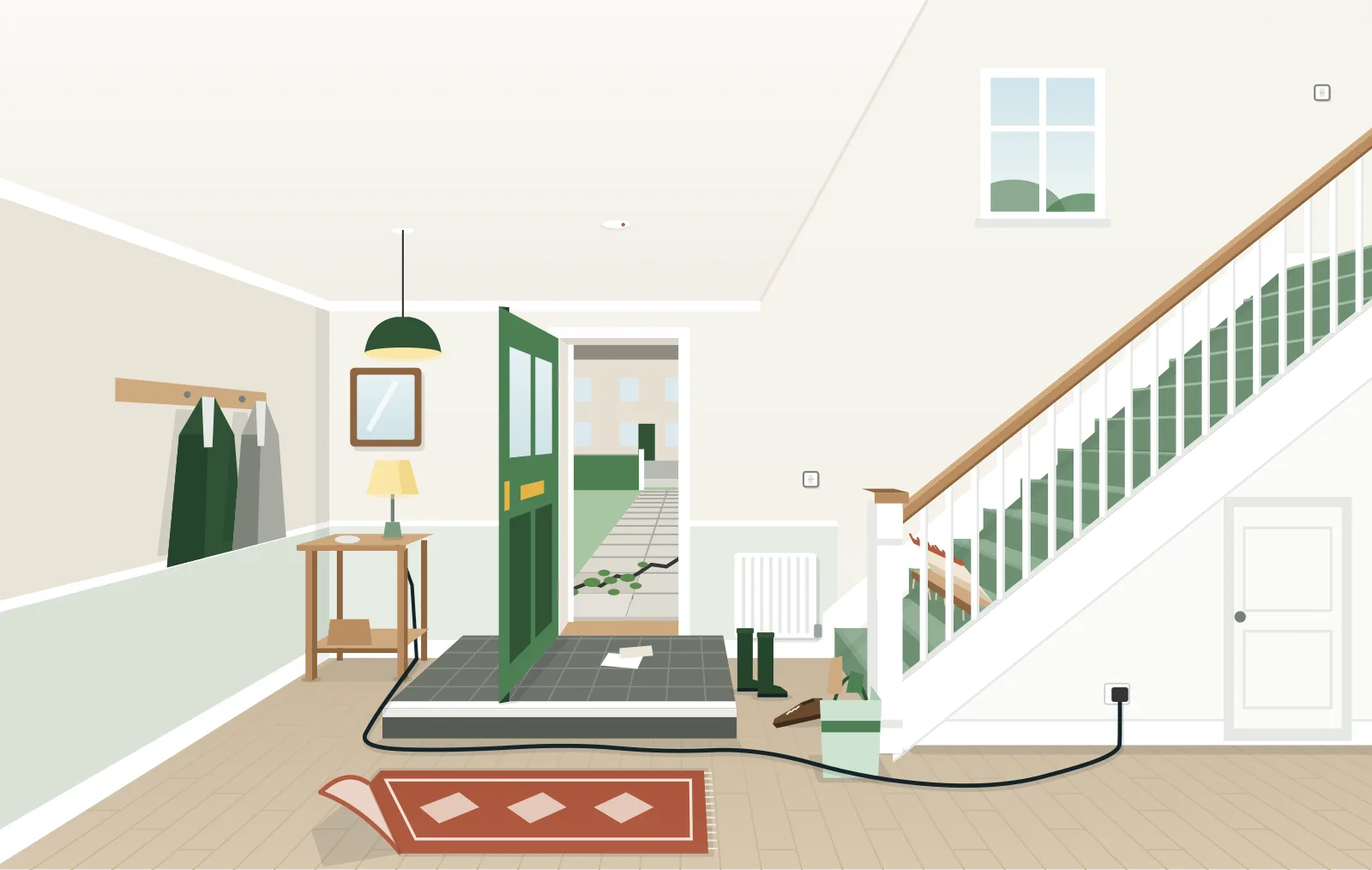
If security rather than trip hazards is the bigger worry at this front door, from doorstep callers to the lock itself, keeping their home secure covers that separately. In winter, ice on this same path is one of the extra risks covered in surviving winter.
The bathroom
Fix the bathroom before anywhere else in the house
Water on a hard floor, a high bath edge and a wet grab at a towel rail instead of a fixed one combine to make the bathroom the room where the most serious falls tend to start.
Getting in and out of the bath or shower
The highest-risk moment
The floor outside the bath
Splashes travel further than expected
The toilet
Often overlooked
A walk-in bath or level-access shower
For a bigger change
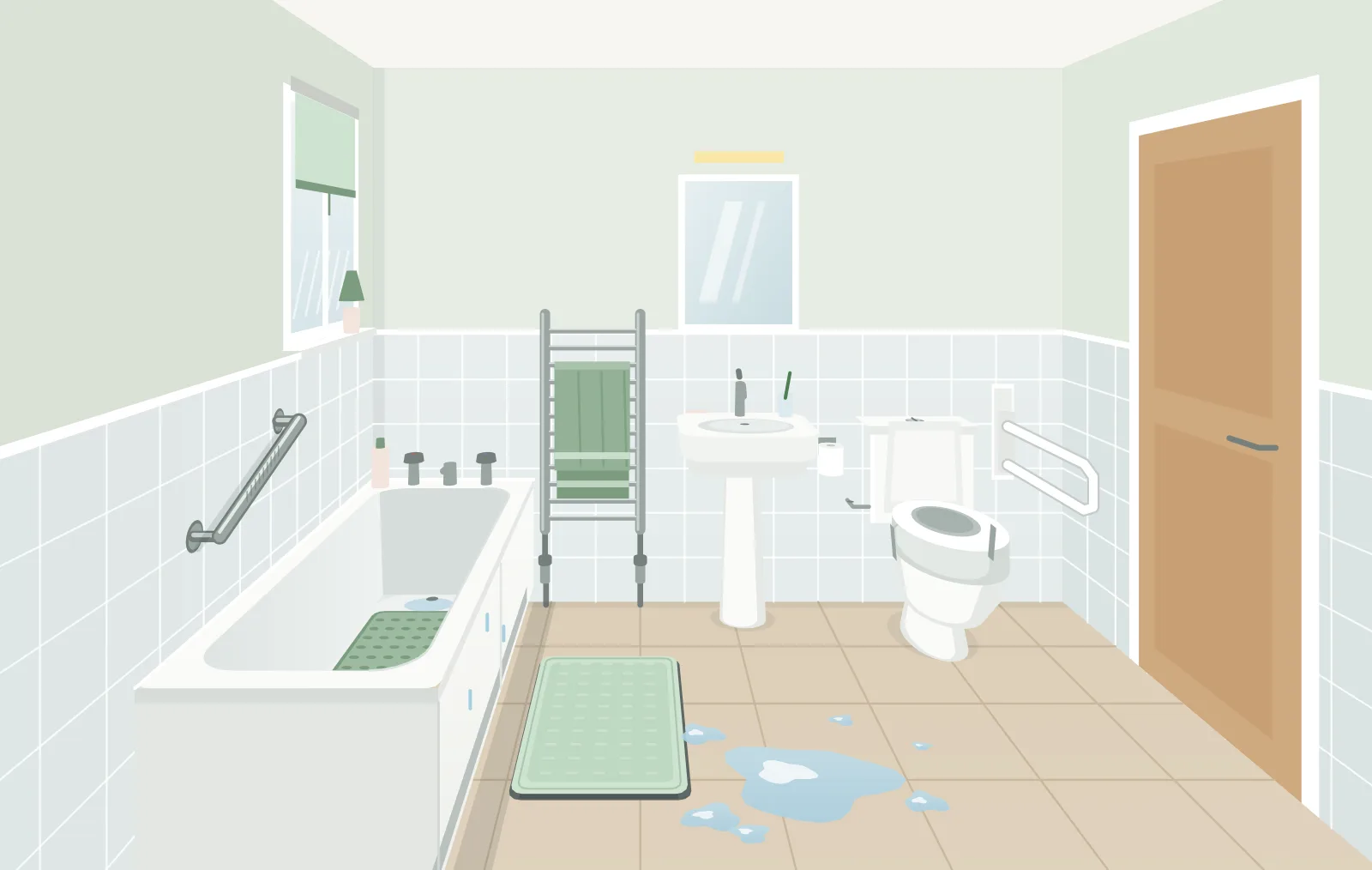
None of this needs to be expensive or disruptive to fit. A grab rail and a raised toilet seat are usually classed as minor adaptations and fitted free by the council once an occupational therapist has assessed the room, and walk-in baths for the elderly sets out what to check before buying a bigger fitting privately.
Bedroom, kitchen and living room
Where reaching, standing up and moving in the dark cause a fall
These rooms carry less risk than the bathroom or the stairs, but the same three things trip people up: something out of easy reach, standing up from too low a seat, and moving around without enough light.
The bedroom
Where night falls happen
The kitchen
Reaching and wet floors
The living room
Standing up and moving around
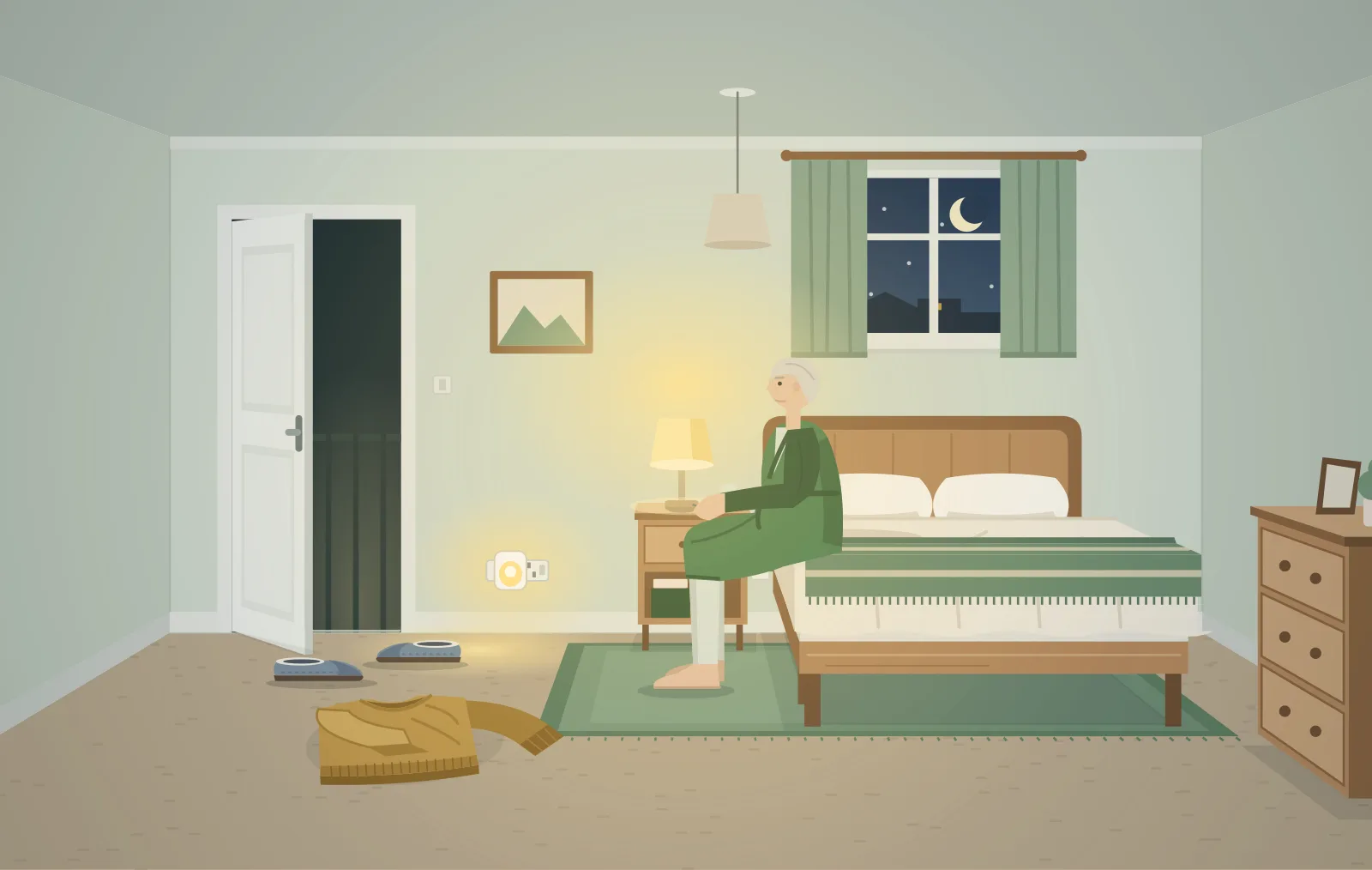
A voice assistant such as Alexa can also turn on a lamp by voice, which helps on the nights getting to a switch feels like the harder job. Where the person living here has dementia, making the home dementia-friendly covers the light, contrast and flooring changes that go alongside the ones above.
You can get the free printable PDF to keep with this guide.
Getting it fixed
Free help, free small fixes, and a grant for the bigger jobs
Some of this is free to do yourself this weekend. The rest has a route through the council that starts with one phone call and does not depend on your parent's savings for the small things.
- 1
Ask the council for an occupational therapy assessment
Free, any incomeContact adult social services at your parent's council and ask for a home assessment by an occupational therapist. It is free regardless of income or savings, and it covers exactly this: what in the house needs to change, and what would help. - 2
Small adaptations are fitted free
Anything under £1,000Grab rails, a raised toilet seat, a second stair rail and similar small jobs the occupational therapist recommends are provided and fitted by the council at no cost if they cost under £1,000, whatever your parent's income or savings. - 3
Bigger work needs a Disabled Facilities Grant
Up to £30,000, means-testedA wet room, a stairlift, a ramp or widening a doorway usually costs more than £1,000 and is covered instead by a Disabled Facilities Grant. It is worth up to £30,000 in England, and how much your parent gets depends on their income and savings. - 4
Ask your local fire and rescue service too
Free, and about more than fireMost fire and rescue services offer a free home safety visit for anyone over a certain age or considered at risk, sometimes called a Safe and Well visit. Alongside checking and fitting smoke alarms, it usually covers general home safety too, including trip hazards like the ones covered on this page.
The right equipment to aid the elderly covers the wider range of aids an occupational therapist might suggest once the assessment has happened, and local authority funding explains how the wider council assessment process works if money for care, not just equipment, is also part of the conversation. NHS guidance on home adaptations and Independent Age's guide to home adaptations both set out the same process in more detail, and the Disabled Facilities Grant page on GOV.UK has the application details for England.
A carer visiting regularly is also a way of catching a new hazard before it causes a fall, simply by being in the house often enough to notice a rug has slipped or a bulb has gone. Hourly care visits for personal care and daily tasks cost around £18 to £25 an hour on PrimeCarers, with our fee included, and a companionship visit for company and an extra pair of eyes costs around £15 to £20.
Questions
Questions families ask about home hazards
Walk through the house with them, room by room, from the front door to the bed. Move or fix down any loose rugs, tuck away trailing cables, and clear the floor of anything left lying around. All three cost nothing and take an afternoon, and together they remove some of the most common trip hazards in the home.
The bathroom and the stairs. Wet floors, a high bath edge and hard surfaces make the bathroom the room where the most serious falls tend to start, and a fall on the stairs is often worse because there is further to fall. Both are usually the cheapest rooms to fix, with a grab rail, better lighting and a firm handrail.
Often, yes. Small adaptations an occupational therapist recommends, such as a grab rail or a raised toilet seat, are fitted free by the council if they cost under £1,000, whatever your parent's income or savings. Bigger work, such as a walk-in shower or a stairlift, usually needs a Disabled Facilities Grant, worth up to £30,000 in England and means-tested by income and savings.
Contact adult social services at your parent's local council and ask for a home assessment, sometimes called a care needs assessment. It is free to ask for one regardless of income, and an occupational therapist will visit, look at what your parent struggles with, and recommend the changes that would help. How to ask for one.
Not usually free outright, because it costs more than the £1,000 threshold for a free minor adaptation. Most families fund a stairlift through a Disabled Facilities Grant, which is means-tested and worth up to £30,000 in England, or pay for one privately if the wait or the means test rules it out.
Start with the changes that do not look like changes: moving a rug, adding a lamp, tucking away a cable. None of these ask your parent to accept they are less able than they were, and most of the risk in a home comes from things like this rather than from anything more visible. The bigger conversations, a grab rail or a stairlift, are often easier once your parent has seen a smaller fix work.
Yes. Most fire and rescue services offer a free home safety visit for anyone over a certain age or considered at risk, sometimes called a Safe and Well visit. Alongside checking and fitting smoke alarms, it usually covers general home safety too, including some of the same trip hazards covered on this page. Contact your local fire and rescue service to ask.
A carer visiting regularly does help, simply by being in the house often enough to notice a rug has slipped, a bulb has gone, or a new hazard has appeared since the last visit. It is not a substitute for the occupational therapist's assessment, but it catches the small changes that build up between one visit and the next. Hourly care and companionship visits both work this way.