
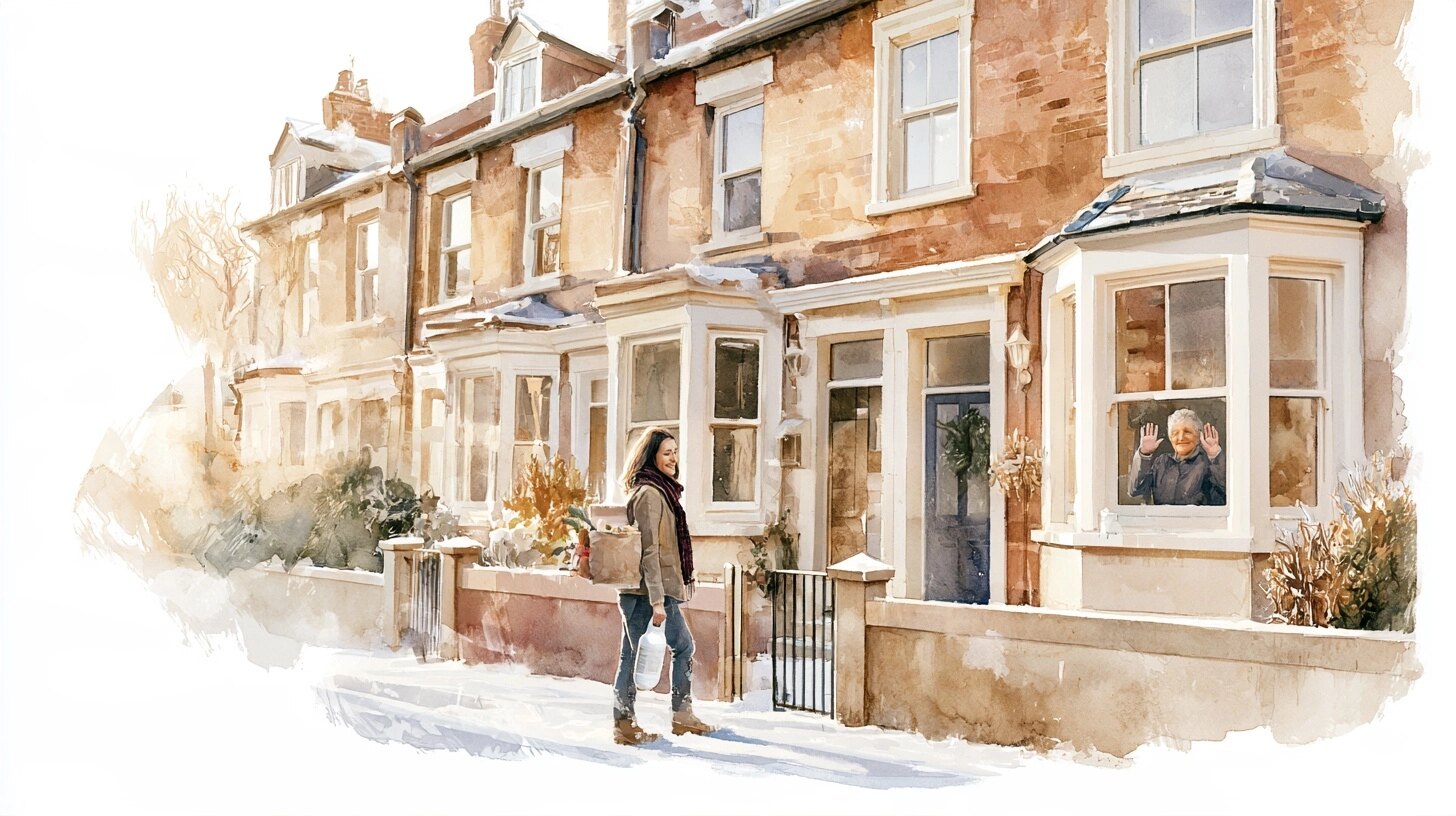
The short answer
- Heat the rooms they use to at least 18°CA cold home raises the risk of a stroke, a heart attack or a chest infection well before anyone feels cold enough to complain about it.
- Learn the early signs of hypothermia, not just the late onesCold hands, slurred speech and confusion come before someone looks obviously unwell, and catching it early is what keeps it from becoming an emergency.
- The flu jab is free from 65, and worth havingA bad flu is often what tips somebody from managing on their own into needing help, and the jab is free on the NHS from 1 October.
- Watch what they drink, not just what they eatOlder people feel thirsty less in the cold, so dehydration in winter is easy to miss until it causes a fall or confusion.
None of this replaces somebody seeing your relative often enough to notice a change. Where a daily visit is not possible, a companionship visit costs around £15 to £20 an hour on PrimeCarers, with our fee included.
Where to start
The five things winter adds, and where to start
None of this is exotic. Five problems get harder every winter for somebody older or less mobile, and most of them are straightforward to manage once you know to look for them.
- 1A cold, damp houseThe biggest risk on this list, and the easiest to put right with the heating and the right alarms.18°C in living roomsCarbon monoxide alarmDry clothing
- 2HypothermiaA dangerous drop in body temperature that is easy to miss until it is well under way.Cold hands, confusionCall 999Never a hot bath
- 3Flu and other winter illnessOrdinary winter bugs hit older people harder, and the flu jab is the best single protection.Free flu jab at 65+Regular visitsMeals ready to reheat
- 4DehydrationEasy to miss in the cold, because the sense of thirst fades just when the body still needs the fluid.Dark urineConfusionA drink kept in reach
- 5Power cuts, ice and snowLess common than the others, but each one can cut off heating, light or the ability to get outside safely.Torch and batteriesPriority Services RegisterA stocked cupboard
This guide sits inside PrimeCarers' mobility and falls care pages, alongside the wider advice on reducing the risk of a fall, on keeping the home secure and on keeping an older person safe in the summer heat. If the equipment in the house needs a wider look, from grab rails to raised toilet seats, the right equipment to aid the elderly covers that separately.
Warm and dry
Heat the home properly, and check the carbon monoxide alarm
Cold and damp do more harm over a winter than almost anything else here, and both are simple to put right once you know what to check.
Check these at the start of the season
0 of 5 ticked
Heating
Carbon monoxide
Allowing a house to get properly cold to save money is a false economy: the NHS's full guidance on carbon monoxide poisoning covers the symptoms to watch for, which include headaches, dizziness and tiredness that can easily be mistaken for a winter bug. If money is the reason the heating is turned down, two separate government payments can help. The Winter Fuel Payment is worth £100 to £300 a year and is paid automatically to almost everyone of state pension age, born on or before 27 June 1960 for the 2026/27 winter, with no benefit needed; only those with an income over £35,000 have it clawed back later through HMRC. The Cold Weather Payment is different: it pays £25 for each seven-day spell of freezing weather, but only to someone already getting a qualifying benefit such as Pension Credit, and it too is automatic once that benefit is in payment. If money is a wider worry than winter fuel alone, local authority funding explains how a council needs assessment works and what it can lead to.
The one to take seriously
Recognising hypothermia early, and what to do
Hypothermia is a dangerous drop in body temperature, and it can be fatal. Catching the early signs is what keeps it from becoming an emergency.
Signs to watch for
0 of 6 ticked
Early signs
Later signs: call 999 now
Flu and other illness
The flu jab, and keeping a regular eye on them
Ordinary winter illnesses hit older people harder than they hit everyone else, and most of what helps is simple: the flu jab, and somebody checking in often enough to notice a bad day early.
The flu jab
Free from 1 October, aged 65+
Somebody checking in
Daily is best in a cold snap
Food in the house, ready to reheat
Not just food to cook from scratch
A voice assistant such as Alexa can also give a reminder to eat, drink or take medication at the same time each day, which helps on the days a visit is not booked. Companionship care covers what a regular visit for company looks like, and hourly care covers visits built around personal care and meals. If a winter illness or a fall has already led to a hospital stay, what to arrange before they come home covers the days that matter most, and short-term night care after hospital is worth reading if the first nights home are the worry.
Dehydration
Why dehydration is easy to miss in winter
Without the sweat of a hot day to notice, it is easy to assume nobody needs to think about fluids until summer. Older people are still very much at risk in the cold, because the sense of thirst fades with age and the weather blunts it further.
What to watch for
0 of 8 ticked
Worth a call to 111 if it does not settle
Call 999 or go to A&E
Older adults living alone tend to eat and drink less than they realise, and diabetes, kidney disease and heart failure all raise the risk further. How much somebody with heart failure should drink is set by the heart failure nurse rather than by a general rule, and heart failure at home explains how that plan is written. On dialysis the kidney team sets a fluid allowance, and fitting care round the dialysis week explains how it works. Even an ordinary cold makes somebody less likely to feel like drinking. The most reliable prevention is keeping a drink within reach, whatever it is, tea and squash count, and checking rather than assuming it has been drunk.
The practical extras
Power cuts, ice and snow: the practical extras
Less common than the risks above, but each of these can cut off heating, light or the ability to get outside safely, usually with little warning.
A power cut
Call 105, free, any network
Ice and frost
Weaker bones, higher risk
Snow
Plan to stay in, not to cope
The free Priority Services Register is run by every electricity network, and anyone elderly, disabled or reliant on power for medical equipment can join, whether that is your relative or you registering on their behalf. Where somebody uses home oxygen, the power supply is not the only thing to sort out before winter, and living safely with oxygen at home covers the fire safety rules that come with it, heaters and naked flames among them. If a fall does happen, whether on ice or anywhere else, how to deal with a fall covers what to do next.
Questions
Questions families ask about winter safety
At least 18°C in the rooms they use most, such as the living room and the bedroom. This is the NHS guidance for anyone aged 65 or over, or with a heart or lung condition, because a colder home raises the risk of a stroke, a heart attack or a chest infection.
Yes. Anyone aged 65 or over gets the flu vaccine free on the NHS, and the current season's vaccination starts from 1 October. It is also free for younger people with certain long-term health conditions, unpaid carers and care home residents. A GP surgery or a participating pharmacy can give it, and there is no need to wait for an invitation letter.
Cold hands and feet, pale skin, slurred or slow speech, and unusual tiredness or confusion. These come before someone looks obviously unwell, which is why hypothermia is easy to miss until somebody else notices a change. If later signs appear, such as slow or jerky movements, a slow heartbeat, shallow breathing or loss of consciousness, call 999 immediately.
Look for thirst, a headache, dizziness, dark or strong-smelling urine, peeing less than usual, unusual tiredness, or breathing quickly with a fast heartbeat: these are worth a call to 111 if they do not settle. Older people feel thirst less than younger people, and the cold weather reduces it further, so dehydration can build up without anyone noticing. Confusion, unusual drowsiness, difficulty breathing or grey, blotchy skin need a 999 call or a trip to A&E, not a wait-and-see.
Yes, in two separate ways. The Winter Fuel Payment of £100 to £300 is paid automatically to almost everyone of state pension age, by age alone, with no benefit needed, though anyone with an income over £35,000 has it clawed back later through HMRC. The Cold Weather Payment of £25 for each seven-day spell of freezing weather is different: it only goes to someone already getting a qualifying benefit such as Pension Credit, and it is automatic once that benefit is in payment.
In every room that has a boiler, gas fire, wood burner or open fire, not just one for the whole house. Test it and change the battery at the start of each winter, and get the appliance or chimney serviced within the last year, since a blocked or faulty flue is one of the most common causes of carbon monoxide poisoning.
Call 105, a free number that connects to the local electricity network wherever you are in England, Scotland or Wales, to report the cut and get an estimate of when it will be fixed. Signing up to the free Priority Services Register in advance means extra help and a direct line during any future cut. Keep a torch and spare batteries to hand, since a mobile phone can run low on charge just when it is needed most.