
The short answer
- A self-contained annexe gets its own billOnce an annexe has its own kitchen, bathroom and space to sleep, the Valuation Office bands it separately, whether or not it shares pipework with the main house.
- A relative living there can halve the billIf a relative moves into the annexe as their main home, or the household uses it as part of the main home, England gives a mandatory 50% discount on the annexe.
- A dependent parent can remove it completelyIf the person in the annexe is 65 or over, severely mentally impaired, or substantially and permanently disabled, and related to the person in the main house, the annexe is exempt.
- None of it happens on its ownThe council will not spot a discount or an exemption for you. You have to apply, with evidence, and tell them again if the arrangement changes.
Rules here are for England. Wales and Scotland run separate council tax systems with their own figures, and Northern Ireland has no council tax at all, it uses a domestic rates system instead. There is a short note on Scotland further down.
The rule
What decides whether an annexe is taxed at all
Building or owning a granny annexe does not create a council tax bill by itself. Two separate questions decide it, asked in this order.
- 1
Is the annexe self-contained: its own kitchen, bathroom and space to sleep?
NoNo separate bill
It is treated as part of the main house, on the main house's existing band, whatever it is used for.
Yes: keep reading, the next question decides it.
- 2
Is it the main home of a dependent relative, someone 65 or over, severely mentally impaired, or substantially and permanently disabled, who is related to the person in the main house?
No: keep reading, the next question decides it.
YesFully exempt
No council tax on the annexe at all, for as long as they live there as their main home.
- 3
Is any other relative living there as their main home, or does the household use it as part of the main home?
No
No: then it comes down to whether it is standing empty under a planning condition.
Empty, and a planning condition or legal agreement stops it being let separately
Fully exempt
No council tax while it stays empty and the restriction stands (Class T).
Let to somebody unrelated, or standing empty with nothing stopping it being let
Full council tax charge
Billed in its own band, the same as any other home of a similar size nearby.
Yes50% discount
Half off the annexe's own council tax bill, however its band compares with the main house.
The Valuation Office Agency decides the first question, and it looks at what the annexe was built or adapted to do, not at how the family happens to use it today. A finished annexe with its own kitchen, bathroom and somewhere to sleep counts as separate living accommodation and gets its own band, even if it is currently used as a study or a guest room rather than lived in full time. How an annexe gets its own council tax band below covers that test in full.
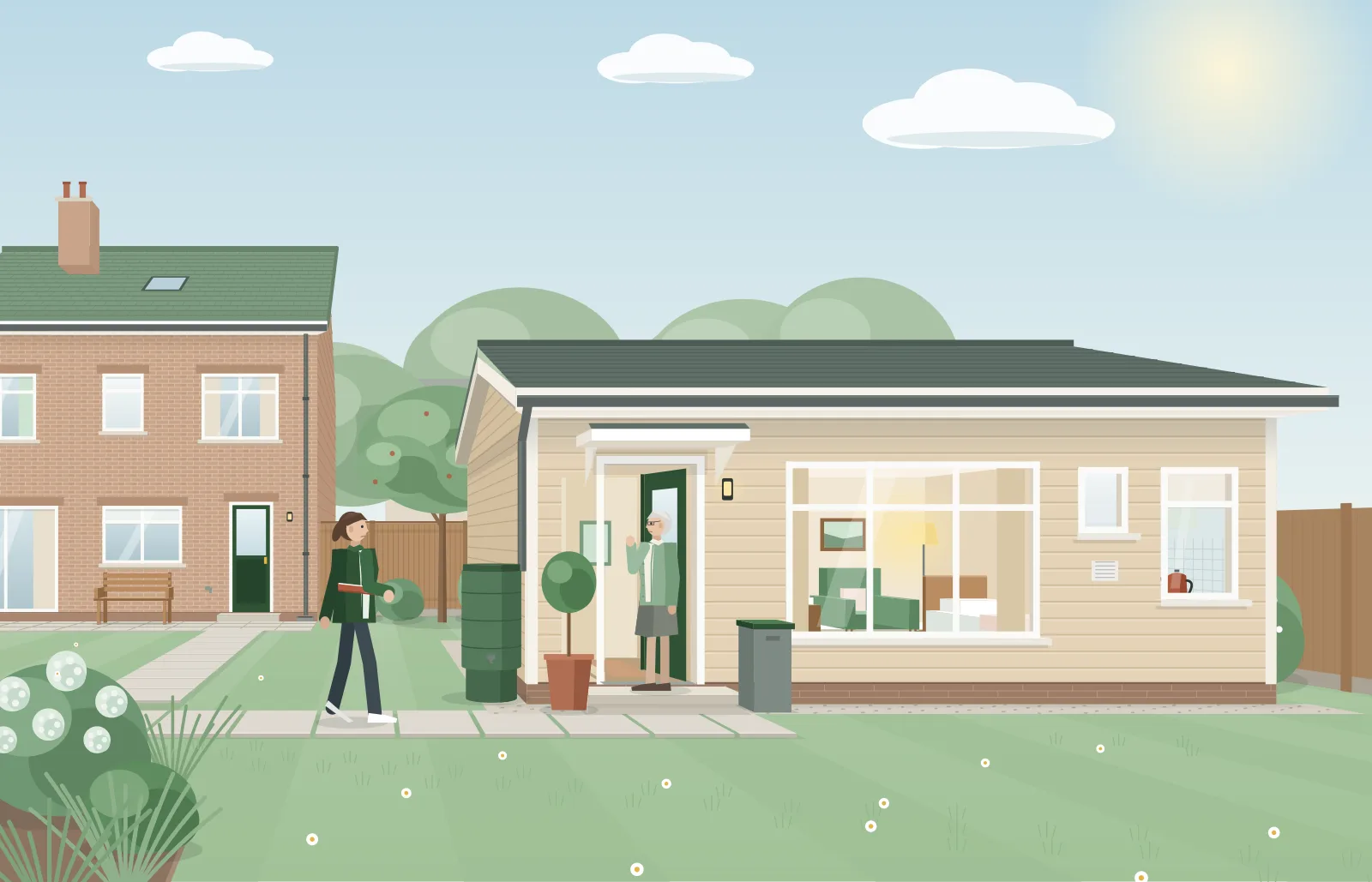
The second question, who lives there, is where most of the money is either saved or lost. A dependent parent moving in can remove the bill entirely. A grown-up child or another relative moving in, or the household using the annexe as extra space rather than letting anyone live in it separately, still halves it. Only a stranger renting the annexe, or nobody living there with no planning restriction stopping that, leaves the full charge in place.
If you are still weighing up whether to build one, how much it would cost to build a granny annexe and the complete guide to granny annexes cover the decisions that come before this one.
Getting a band
How an annexe gets its own council tax band
A band is not something a family applies for. The Valuation Office Agency looks at the building itself and applies one test, and it is worth knowing before the annexe is finished rather than after the first unexpected bill.
Would the Valuation Office call it self-contained?
0 of 3 ticked
The test it uses
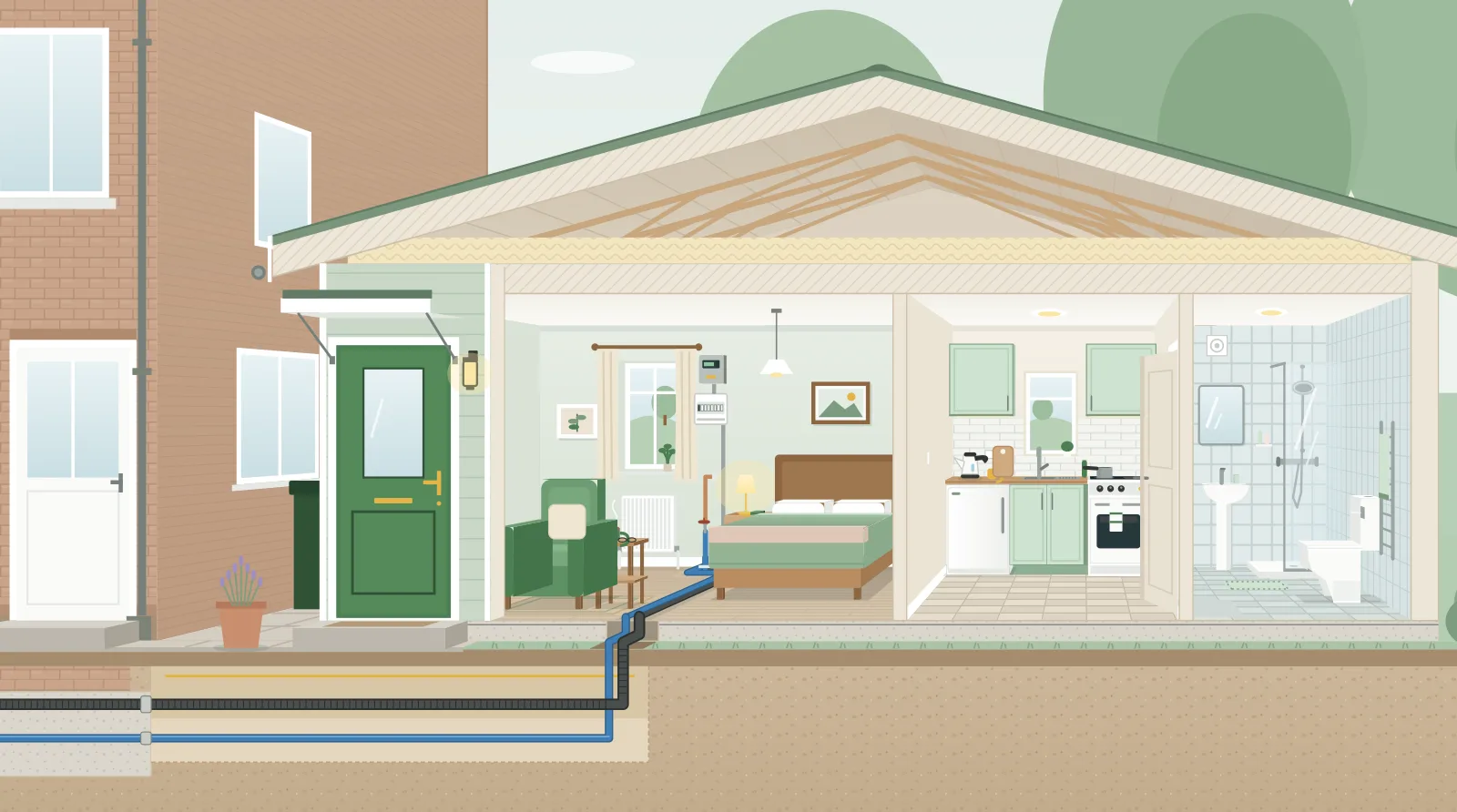
If an annexe has all three, the Valuation Office will normally band it separately. It makes no difference that it shares a boiler, a water supply or a single meter with the main house, that it could not be sold on its own, or that the family currently uses it as a study rather than somewhere to live. Built or adapted for separate living accommodation is what decides it, not how it happens to be used this month.
Nobody applies for a band the way you would apply for a discount. In practice a band gets assigned when the council learns about the annexe, for example from building control paperwork or because you tell the council yourselves once the annexe is finished. Telling the council straight away is worth doing anyway, because a claim that reaches back months is harder to prove, and the council will want evidence of the date the arrangement started. If you think an annexe, or the main house, has been given the wrong band altogether, gov.uk's band checker lets you look it up and challenge it, with evidence, free of charge.
Whether the annexe needs planning permission before you can build it at all is a separate question, decided by its size and how self-contained it will be. Do you need planning permission for a granny annexe covers that, and is worth reading before a design is finalised.
Discounts and exemptions
What the living arrangement is worth on the bill
Once an annexe has its own band, what a family pays after that comes down to who is living there and how. Five situations cover the usual arrangements.
| Who is living there | What happens to the bill | What the council asks for | |
|---|---|---|---|
| A dependent relative | 65 or over, severely mentally impaired, or substantially and permanently disabled, and related to whoever is in the main house | Fully exempt (Class W) | Proof of the relationship, and for a mental impairment, a doctor's certificate |
| Any other relative | A grown-up child, a parent who is not yet a dependent relative, a sibling, or further family covered by the rules | 50% discount | Proof the annexe is their main home, and how they are related |
| The household itself | Used as part of the main home, a study, a gym, a room for visiting family, rather than lived in separately | 50% discount | Confirmation it is used as part of the main home rather than let out |
| Nobody, held back by a planning condition | Empty, and a planning condition or agreement stops it being let separately | Fully exempt (Class T) | A copy of the condition or agreement |
| A tenant, or nobody with no restriction | Let to somebody unrelated, or standing empty with nothing stopping it being let | Full council tax charge | No discount to apply for |
A dependent relative
- Who is living there
- 65 or over, severely mentally impaired, or substantially and permanently disabled, and related to whoever is in the main house
- What happens to the bill
- Fully exempt (Class W)
- What the council asks for
- Proof of the relationship, and for a mental impairment, a doctor's certificate
Any other relative
- Who is living there
- A grown-up child, a parent who is not yet a dependent relative, a sibling, or further family covered by the rules
- What happens to the bill
- 50% discount
- What the council asks for
- Proof the annexe is their main home, and how they are related
The household itself
- Who is living there
- Used as part of the main home, a study, a gym, a room for visiting family, rather than lived in separately
- What happens to the bill
- 50% discount
- What the council asks for
- Confirmation it is used as part of the main home rather than let out
Nobody, held back by a planning condition
- Who is living there
- Empty, and a planning condition or agreement stops it being let separately
- What happens to the bill
- Fully exempt (Class T)
- What the council asks for
- A copy of the condition or agreement
A tenant, or nobody with no restriction
- Who is living there
- Let to somebody unrelated, or standing empty with nothing stopping it being let
- What happens to the bill
- Full council tax charge
- What the council asks for
- No discount to apply for
A discount and an exemption are not the same thing on the bill: a 50% discount still leaves half the annexe's council tax to pay, while an exemption removes it completely for as long as the qualifying person lives there.
Relative is defined broadly for both the discount and the exemption: a spouse or civil partner, a parent, grandparent, child or grandchild, a brother or sister, and further relations such as an aunt, uncle, niece or nephew, along with the equivalent for an unmarried couple. Where the confusion usually starts is between the 50% discount, which applies to almost any relative living in the annexe as their main home, and the full exemption, which only applies once that relative also meets the dependent relative test on age, mental impairment or disability. A daughter in her thirties living in the annexe qualifies the household for the 50% discount. Her mother moving in a few years later, once she is 65, moves the same annexe from a discount to a full exemption, without anything about the building itself changing.
You can get the free printable PDF to keep with this guide.
A carer living in
What a live-in carer changes on the council tax bill
When a parent needs a carer living with them, council tax has a rule for that too. It is called the carer disregard, and it applies to some live-in carers and some homes, not to every arrangement.
A disregarded person is simply not counted when the council works out how many adults live in a home. Gov.uk's list of people who are disregarded includes a live-in carer for someone who is not their partner, spouse or child under 18. The regulations behind it for England and Wales set four conditions, and all four have to be met:
When a live-in carer is not counted
0 of 4 ticked
The conditions in the regulations
Being disregarded changes the count of adults, and the bill follows the count: if your parent is then the only adult counted, the home gets the 25% discount for somebody living alone, and if everyone living there is disregarded it is 50%. You still have to apply to the council.
How this plays out depends on where your parent and the carer live:
- Your parent and the carer both live in the annexe. If your parent qualifies as a dependent relative, the annexe is usually already exempt under Class W. That exemption depends on your parent living there, so a carer sharing the annexe does not by itself remove it, but tell the council about the change.
- Your parent and the carer live in the main house. The carer can be left out of the count there, which can bring the 25% discount if your parent is then the only adult counted.
- The carer has the annexe and your parent lives in the main house. The carer is not living in the same dwelling as the person they care for, so the disregard does not apply, and nor do the family discount and exemption, since the carer is not a relative. Ask the council in writing how it will bill the annexe before the carer moves in.
A live-in carer in a granny annexe covers both set-ups in full, including the room and breaks a carer needs, and tax and live-in care explains what a carer's room and meals mean for tax and benefits, with a link to council tax discounts for carers in the funding guide.
While it is empty
The bill before, or between, anyone moving in
An annexe can stand empty for a while: while you decide who will move in, between one relative moving out and the next moving in, or because it was built with a planning condition attached rather than for a specific person.
If a planning condition or a legal agreement stops the annexe being let or occupied separately from the main house, an empty annexe is exempt under Class T for as long as it stays empty and the restriction stands. Councils can grant planning permission for an annexe on the condition that it is used by a family member and never sold or let independently, and where that condition exists it is what qualifies the annexe for the exemption while nobody is living there. Your planning decision notice will say whether yours has one.
The practical answer is not to let the annexe sit empty for long. If nobody is ready to move in yet, ask the council in writing what the annexe's status is and whether a planning condition applies to it, rather than assuming it is covered.
Applying
How to tell the council, and what to do if they say no
None of the discounts or exemptions above are automatic. The council has to be told, in writing, with evidence, and told again whenever the arrangement changes.
- 1
Tell the council once the annexe is occupied or finished
Before the first billThe council website will say how to report a new self-contained annexe or a change of circumstances. Do this as soon as it happens, and keep a note of the date the arrangement started, since the council will want evidence of it before applying a discount or exemption. - 2
Send evidence for the discount or exemption you are claiming
With the applicationProof of the family relationship for a 50% discount or a Class W exemption, and for severe mental impairment, a doctor's certificate confirming the diagnosis and when it began. For an empty annexe, a copy of the planning condition that stops it being let separately. - 3
Report any change within 21 days
OngoingA discount or exemption follows the person living in the annexe, not the annexe itself. If your parent moves into a care home, a different relative moves in, or the annexe is let out, the law gives you 21 days to tell the council. Missing that deadline can mean a fixed penalty on top of the council tax owed once the discount or exemption no longer applies. - 4
Ask the council to review a refusal, or challenge the band itself
If it goes wrongYou can ask your council to look again at a discount or exemption decision, and appeal to the free Valuation Tribunal for England if you still disagree. A band you think is wrong is challenged with the Valuation Office rather than the council, and gov.uk's band checker is the place to start.
If you are weighing up building an annexe against buying a house that already has one, do granny annexes add value and finding a house with an annexe for sale cover the two routes families take before council tax ever comes into the decision.
Questions
Questions families ask about annexe council tax
Only once they are self-contained, with their own kitchen, bathroom and space to sleep. An annexe that is just an extra room, or shares a kitchen and bathroom with the main house, is not treated as a separate home and does not get its own council tax band. A self-contained annexe is banded separately whether or not the family shares services with the main house, and what happens next depends on who lives in it.
A mandatory discount that halves the annexe's own council tax bill. It applies where a relative of the person liable for council tax on the main house lives in the annexe as their main home, or where the household uses the annexe as part of the main home rather than as a separate residence. It is set out in the Council Tax (Reductions for Annexes) (England) Regulations 2013 and applies across England.
Yes, if the parent counts as a dependent relative: aged 65 or over, severely mentally impaired, or substantially and permanently disabled, and related to whoever lives in the main house. The exemption removes the annexe's council tax entirely for as long as they live there as their main home. A parent under 65 who is not disabled or severely mentally impaired and living in the annexe still qualifies the household for the 50% discount rather than a full exemption.
It depends on whether a planning condition stops it being let or occupied separately from the main house. If one does, the annexe is exempt while it stays empty. If it does not, the annexe is charged as a normal empty home, and after a year some councils add a premium on top rather than a discount, so an empty annexe with no planning restriction can end up costing more than an occupied one. Gov.uk covers how the empty homes premium works.
The Valuation Office Agency decides, using a test based on the building rather than how it is used: does it have somewhere to live and sleep, somewhere to prepare food, and somewhere to wash. If it has all three it is normally banded separately, even if it shares a boiler with the main house or has never been lived in on its own. Tell the council once the annexe is finished or occupied, and keep evidence of the date, since the council will want to know when the arrangement started.
No. Sharing services, such as a water supply, a boiler or a single electricity meter, does not stop an annexe being self-contained for council tax purposes, and neither does sharing an outer front door, as long as the annexe has its own door onto its own living space beyond it. What matters is whether the annexe has its own kitchen, bathroom and sleeping space, not what it is physically joined to.
Ask the council to review a discount or exemption decision first, in writing, with whatever evidence they asked for the first time. If you still disagree, you can appeal to the Valuation Tribunal for England, which is free. A council tax band you believe is wrong is challenged with the Valuation Office rather than the council, and gov.uk's band checker is where that starts.