
The short answer
- Ask for the accessibility guide before you payThe old National Accessible Scheme has ended. A good cottage or hotel will send photographs and measurements of the route from the car, the bedroom and the shower, so you can judge them against what your relative needs.
- Book help for the journey in advanceRail assistance can be booked up to two hours ahead, and Cornwall Airport Newquay asks passengers to arrange assistance with the airline 48 hours before flying.
- Nine places with checked access, across the countyGardens, a gallery, a museum, a castle, a cathedral and two flat trails, each with what its own access information says about paths, toilets and wheelchairs to borrow.
- A carer can come on the trip with youTell us the dates, where you are staying and the help your relative needs. You agree one price for the carer before anything is booked, with their travel, room and meals settled at the same time.
Place details come from each venue's own access information, checked in 2026.
Where to stay
Choosing a cottage or hotel that works for your relative
The place you stay decides how the week goes. A level route from the car, a bedroom on the ground floor and a shower your relative can use safely matter more than a sea view.
Some of Cornwall's holiday cottages sit at the bottom of steep lanes, up a flight of granite steps, or in old buildings with narrow doors and a bath rather than a shower. That is part of the county's charm, but a cottage like that can leave an older relative unable to get to bed or wash on the first evening. Choose the base before you choose the places to visit, and choose it for the person who will find it hardest to get around.
This guide is one of our guides to holidays with an older relative who needs care, part of companionship care. If you are still deciding where to go, holidays for older people with limited mobility in the UK compares seven other regions.
The old access ratings, and what to ask for nowSection titled The%20old%20access%20ratings%2C%20and%20what%20to%20ask%20for%20now
For many years the tourist boards ran the National Accessible Scheme, which gave accommodation a grade for mobility, hearing and sight from someone who can manage a few steps to a wheelchair user who needs a hoist. VisitBritain closed the scheme to new members, and it ended on 31 July 2025. You may still see the old logo on some listings, but the scheme has ended, so ask for the newer accessibility guide instead.
What has replaced it is the accessibility guide: a written description of the property with photographs and measurements, so you can decide for yourself whether it suits. Ask every place you are considering for theirs. If a business cannot tell you the width of the bathroom door or the height of the bed, ask them to measure it before you pay a deposit.
Visit Cornwall, the county's tourist board, has an accessibility page and lets you filter its accommodation listings for accessible places. It asks visitors to check with the owner that their particular needs can be met. Tourism for All UK, a charity, gives information on accessible places to stay and visit across the country.
Questions to ask before you pay a deposit
0 of 7 ticked
Arriving and getting in
Inside the property
Around the property
Getting there
Getting to Cornwall by car, train or plane
Cornwall is a long way from most of England, so the journey can be the most tiring part of the holiday. Whichever way you travel, arrange help before the day and plan for breaks.
Driving means the car can carry the wheelchair, the equipment and the luggage, and you can get about once you arrive. It is a long day from the Midlands or the North, so plan stops every couple of hours, with toilets and somewhere your relative can stretch their legs. If your relative has a Blue Badge, bring it: the Blue Badge scheme works across the UK. Cornwall Council's disabled parking page explains that on-street parking restrictions are relaxed for badge holders, and that free parking in council car parks applies only to some badge holders, depending on the vehicle. Read it before you go, because each council sets its own car park rules.
If driving the whole way is too much, the train is a good option. Trains run to stations across Cornwall, including Truro and Penzance. Passenger Assist, the national rail scheme, arranges help getting on and off trains, ramps, and help with up to three bags, and you can book it up to two hours before you travel. Book it as far ahead as you can, especially in summer. If your relative is eligible, a Disabled Persons Railcard gives a discount to one adult companion travelling with them as well as to your relative.
There are flights to Cornwall Airport Newquay from some UK airports. The airport's accessibility page asks passengers to register for assistance with their airline 48 hours before flying, and describes airport wheelchairs that can be used through the terminal and the car parks.
| What to arrange first | What to plan for | |
|---|---|---|
| By car | The Blue Badge, stops every couple of hours, and a parking plan for the first evening | A long day in the car. Agree in writing beforehand if a carer will drive, including any mileage. |
| By train | Passenger Assist for every change, booked as far ahead as you can and at least two hours before | A taxi or lift from the station to the cottage, and one booked for the way home too. |
| By plane | Assistance registered with the airline at least 48 hours before you fly | A hire car or taxi from Newquay, and telling the airline about the wheelchair when you book. |
By car
- What to arrange first
- The Blue Badge, stops every couple of hours, and a parking plan for the first evening
- What to plan for
- A long day in the car. Agree in writing beforehand if a carer will drive, including any mileage.
By train
- What to arrange first
- Passenger Assist for every change, booked as far ahead as you can and at least two hours before
- What to plan for
- A taxi or lift from the station to the cottage, and one booked for the way home too.
By plane
- What to arrange first
- Assistance registered with the airline at least 48 hours before you fly
- What to plan for
- A hire car or taxi from Newquay, and telling the airline about the wheelchair when you book.
From National Rail, Cornwall Airport Newquay and Cornwall Council, checked October 2026.
Nine places to visit
Nine places in Cornwall with checked access information
These nine are taken from our list of places to visit in Cornwall, which records what each venue says about its own access. They cover gardens, museums, a castle, a cathedral and two level trails, spread across the county so there is one within reach of most places you might stay.
Each place below has something that makes it easier for somebody with limited mobility, and something to plan around, such as a long slope from the car park. One or two places a day is plenty. A morning out and a quiet afternoon at the cottage will leave your relative with more energy for the rest of the week than a full itinerary.
Nine places in Cornwall with checked access
The county’s boundary, numbered as on this page, with the main towns for reference.
- 1Tate St Ives, St Ives
- 2Trengwainton Garden, Penzance
- 3National Maritime Museum Cornwall, Falmouth
- 4Pendennis Castle, Falmouth
- 5Truro Cathedral, Truro
- 6Eden Project, St Austell (Bodelva)
- 7Camel Trail, Wadebridge and Padstow
- 8Bude Canal and Marshes, Bude
- 9Mount Edgcumbe House and Country Park, Torpoint (Cremyll)
West Cornwall
Penzance and St Ives

Photo: Marika Reinholds, CC BY-SA 2.0, via Wikimedia Commons
Tate St Ives
St Ives
- A ramp into the main entrance and lifts to every gallery floor
- Three wheelchairs to reserve free, with a day’s notice
- Folding stools and seating in the galleries, and an accessible toilet
Plan around: The wheelchairs need a day’s notice, so ring the day before you plan to go. The top-floor café looks over Porthmeor Beach.
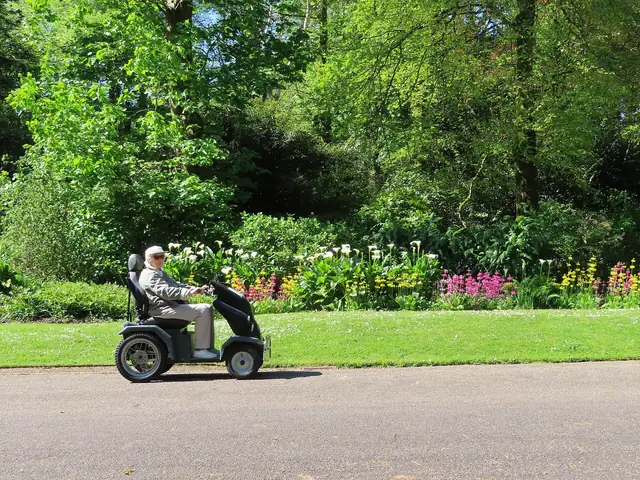
Photo: David Hawgood, CC BY-SA 2.0, via Wikimedia Commons
Trengwainton Garden
Penzance
- Accessible toilets in the car park, at the café and in the garden
- An all-terrain wheelchair to borrow free, if booked ahead
Plan around: The garden climbs for half a mile on a steady incline, on tarmac and gravel. Ask about being dropped off near reception.
Falmouth, Truro and St Austell
The middle of the county, on the south side
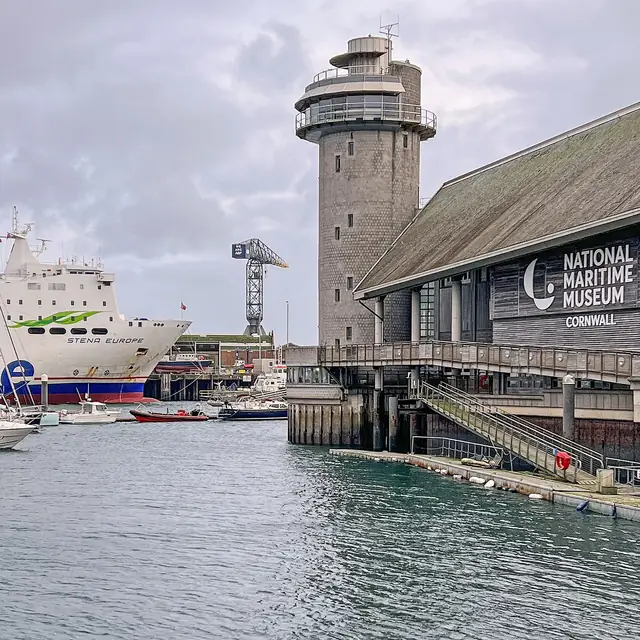
National Maritime Museum Cornwall
Falmouth
- The museum describes itself as fully accessible to wheelchair users
- Level access at the entrance, and all five levels reached by lift or ramp
- Wheelchair accessible toilets and a self-propelled wheelchair to borrow
Plan around: There is a lot to see on five floors. The Waterside Café makes a good place to break the visit up.

Photo: Willhsmit, Public domain, via Wikimedia Commons
Pendennis Castle
Falmouth
- Disabled parking and a drop-off point at the castle gates
- A lift to the first floor of the Royal Artillery Barrack Block
- Benches around the site
Plan around: The keep itself is reached only by steps and spiral staircases, so leave it out and enjoy the lawns and the views instead.

Truro Cathedral
Truro
- Ramp access at the front, on High Cross
- A wheelchair kept by the ramp entrance for visitors to use
- An accessible toilet near the Chapter House
Plan around: It sits in the city centre, so it pairs well with a short, flat walk and lunch nearby.

Photo: Jürgen Matern, CC BY-SA 2.5, via Wikimedia Commons
Eden Project
St Austell (Bodelva)
- Manual and powered wheelchairs to borrow free at the Apple car parks
- Accessible facilities in all the toilets
- Covered Biomes and indoor cafés if the weather turns
Plan around: The route down from the car park is a slope of about 400 metres. Use the drop-off point at Apple 1, or ring the access line to arrange help.
The north coast
Wadebridge, Padstow and Bude
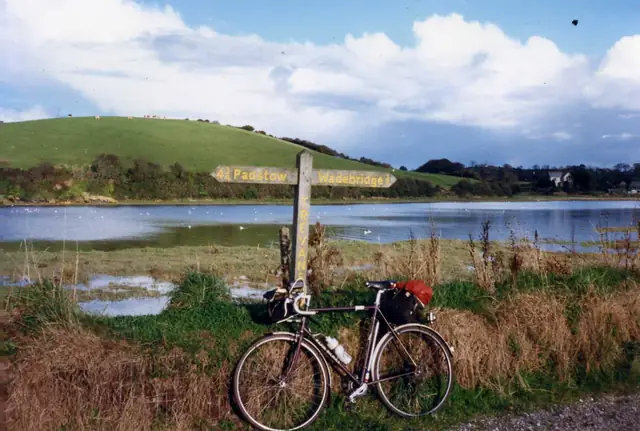
Photo: Sludge G, CC BY-SA 2.0, via Wikimedia Commons
Camel Trail
Wadebridge and Padstow
- Cornwall Council describes the trail as surfaced, virtually level and suitable for wheelchair users
- Toilets at Wadebridge and in Padstow town centre
- An accessible bird hide beside the trail near Wadebridge
Plan around: The whole trail is 18 miles long. Start at Wadebridge or Padstow, go out as far as suits, and turn back.
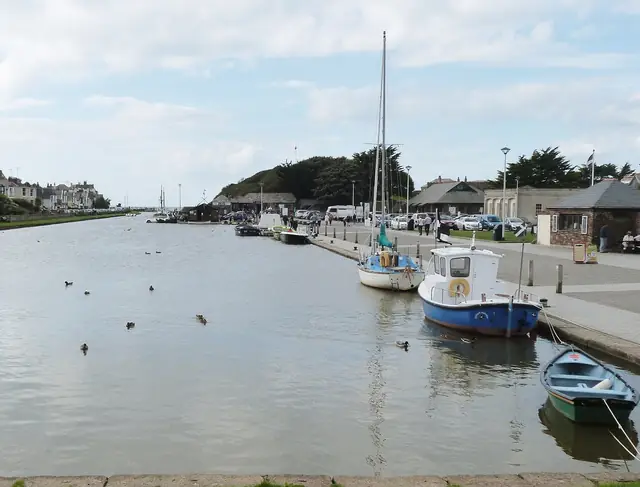
Photo: Derek Voller, CC BY-SA 2.0, via Wikimedia Commons
Bude Canal and Marshes
Bude
- A level, surfaced towpath of about two and a half miles beside the canal
- A wheelchair accessible bird hide on Bude Marshes nature reserve
Plan around: The bird hide doubles as a sheltered place to sit. Park on the Crescent by the tourist information centre and go as far as suits.
South east Cornwall
The Rame Peninsula, across the water from Plymouth

Photo: Derek Harper, CC BY-SA 2.0, via Wikimedia Commons
Mount Edgcumbe House and Country Park
Torpoint (Cremyll)
- A disabled car park on the driveway to the house
- Accessible toilets at the Orangery restaurant and the main car parks
- A passenger lift inside the house
Plan around: The wider park has steeper paths. The formal gardens and the Orangery can be visited without them.
Access details come from each venue’s own information, checked in 2026. Facilities and opening times change, so ring the venue before a long drive. Photographs are from Wikimedia Commons, credited under each one.
Our page of places to visit in Cornwall with a companionship carer has more about each of these, and about other places across the county.
Beaches with wheelchairs to borrow or hireSection titled Beaches%20with%20wheelchairs%20to%20borrow%20or%20hire
If you would like to get your relative onto the sand, a standard wheelchair will not do it, but some Cornish beaches have beach wheelchairs, sometimes called sand chairs, with wide wheels that roll over sand. Visit Cornwall's accessibility page lists the beaches that have them, with phone numbers for most, so ring ahead to check one is available on the day. The same page explains Changing Places toilets, which have an adult-sized changing bench, a hoist and room for up to two carers. The Changing Places map shows every one in the country.
Checking a place that is not on this listSection titled Checking%20a%20place%20that%20is%20not%20on%20this%20list
If you have a particular place in mind, look at the venue's own access page first and ring them if something is unclear. AccessAble publishes detailed access guides to venues across the UK, and Euan's Guide collects reviews of places to visit from disabled visitors.
Bringing a carer
Bringing a carer with you to Cornwall
If your relative needs help with washing, dressing or getting about, a week away can mean a week of hard work for the family member who usually helps. A carer who comes on the trip shares that work, so the rest of the family has a holiday too.
If your relative already has a carer they know and like, ask whether they would come away for the dates you need. Otherwise a carer can travel with your relative and help through the journey, the days out and the evenings at the cottage, the way they would at home. Can you take a carer on holiday with you? goes through what to agree with them, and taking a live-in carer on holiday covers a carer who stays for the whole week, with their own room and a daily break.
There is no published price for a holiday carer, because no two trips are alike: a long weekend in Bude is not the same as a fortnight in a cottage near Land's End. Tell us the dates, where you are staying and the help your relative needs, and you will know the price for the carer before anything is booked. Their travel, room and meals are agreed in writing at the same time. If the carer will drive your relative around Cornwall, agree beforehand in writing whether mileage or travel time is paid, because neither applies unless it was agreed in advance. If your relative receives Attendance Allowance, they can spend it as they choose, including on a carer for a trip.
Help on the days out
Gardens, galleries and the coast
Help at the cottage or hotel
Mornings and evenings
Travel, room and meals
Agreed before you book
One price for the trip
Known before anything is booked
If the family is going together and needs help only for part of each day, such as the morning wash in an unfamiliar bathroom, say so when you tell us about the trip. Start early if your dates fall in the summer holidays, and ask what happens if the trip has to be cancelled before you agree the price.
Every carer on PrimeCarers has had the same checks: an ID check, a right to work check, an enhanced DBS check (or PVG in Scotland, Access NI in Northern Ireland) issued within the last 2 years, and an online interview. We do not check qualifications, training or references. References a carer has collected from past families and employers appear on their profile alongside reviews, and neither is verified by us, so ask the carer about the skills your relative needs, such as transfers or help with a hoist. Carers are self-employed, and the arrangement for the trip is between you and the carer. Separately from these checks, for visits booked through PrimeCarers we arrange insurance cover for the carer, depending on the policy terms, eligibility and exclusions, so check that it covers the work you agree, including work away from home.
Take a carer with you
Tell us the dates, where you are going and what the carer would do, and we will set your account up as you go.
Health and a bad day
Health, medicines and what to do if your relative is unwell
A little planning before you leave means a bad day in Cornwall is an inconvenience rather than a crisis. These are the steps to take, in the order you are likely to need them.
Pack more medication than the trip needs, in its original boxes, with a written list of what your relative takes and when. Take a copy of their repeat prescription too. If they need a GP while you are away, a practice near your holiday address can see them. The NHS says you can register with a GP surgery as a temporary patient for up to 3 months if you are away from home, which is worth knowing for a longer stay.
For urgent advice, call NHS 111 or use it online. It will tell you which service to go to. The Royal Cornwall Hospitals NHS Trust lists waiting times for its minor injury units and urgent treatment centres, and says the emergency department in Truro is for serious, life or limb threatening injury or illness only. In an emergency, call 999.
- 1
Before you leave
Pack extra medication in its original boxes, a written list of it, the repeat prescription and the GP's phone number. Note the address and postcode of where you are staying. - 2
When you arrive
Find the nearest pharmacy and its opening hours, and the nearest minor injury unit. Put both in your phone. - 3
If your relative feels unwell
Call NHS 111 or use it online. It will tell you whether to see a pharmacist, a GP, a minor injury unit or the emergency department. - 4
If they need a GP during the stay
Ring a surgery near the holiday address and ask to be seen as a temporary patient. - 5
If it is an emergency
Call 999. Tell them the postcode of where you are staying and the conditions and medicines on your list.
Travel, new surroundings and broken sleep can leave someone tired and out of sorts, and for somebody with dementia a change of place can bring on confusion. Keep the first day free, keep mealtimes close to usual, and have a quieter plan ready for any day that starts badly. If your relative has dementia, dementia-friendly holidays and should someone with dementia go on holiday? go through what to plan for.
Questions
Questions families ask about accessible holidays in Cornwall
It can be, with planning. Parts of the coast are steep, and some cottages are in old buildings with steps, so the place you stay matters more here than in flatter counties. Choose a base with a level route from the car and a ground-floor bedroom and bathroom, and plan days around places with step-free routes, such as the Camel Trail, the National Maritime Museum in Falmouth and the Eden Project, which lends wheelchairs.
Start with the accessible filter on Visit Cornwall's accommodation listings, then ask each place for its accessibility guide, with photographs and measurements of the route from the car, the bedroom and the shower. Some places still show the National Accessible Scheme logo, but that scheme ended on 31 July 2025. Ask about anything the guide does not cover before you pay a deposit.
Yes. Some beaches have beach wheelchairs, or sand chairs, with wide wheels that can cross the sand. Visit Cornwall's accessibility page lists the beaches that have them, with phone numbers for most. Ring ahead to check one is free on the day you want to go.
Gardens, galleries, museums and level trails are good choices, especially places with a lift, a ramp or wheelchairs to borrow. This guide lists nine with checked access, including Tate St Ives, Trengwainton Garden near Penzance, Truro Cathedral and the canal towpath at Bude. One place a day, with a rest in the afternoon, is a good pace.
Yes. A self-employed carer can travel with your relative and help with the journey, the days out and personal care at the cottage or hotel. Tell us the dates, where you are staying and the help needed, and you agree one price for the carer before anything is booked. Holiday carers explains how it works.
You do, and it is agreed in writing before anything is booked, at the same time as the price for the carer, the hours each day and their breaks. Mileage or travel time for driving your relative around Cornwall is paid only if it was agreed in advance and in writing.