
The short answer
- The tablets work only if they are taken every dayBlood pressure tablets, statins and blood thinners do not make your relative feel different. The Stroke Association says to keep taking them and to ask the GP or pharmacist about side effects rather than stopping.
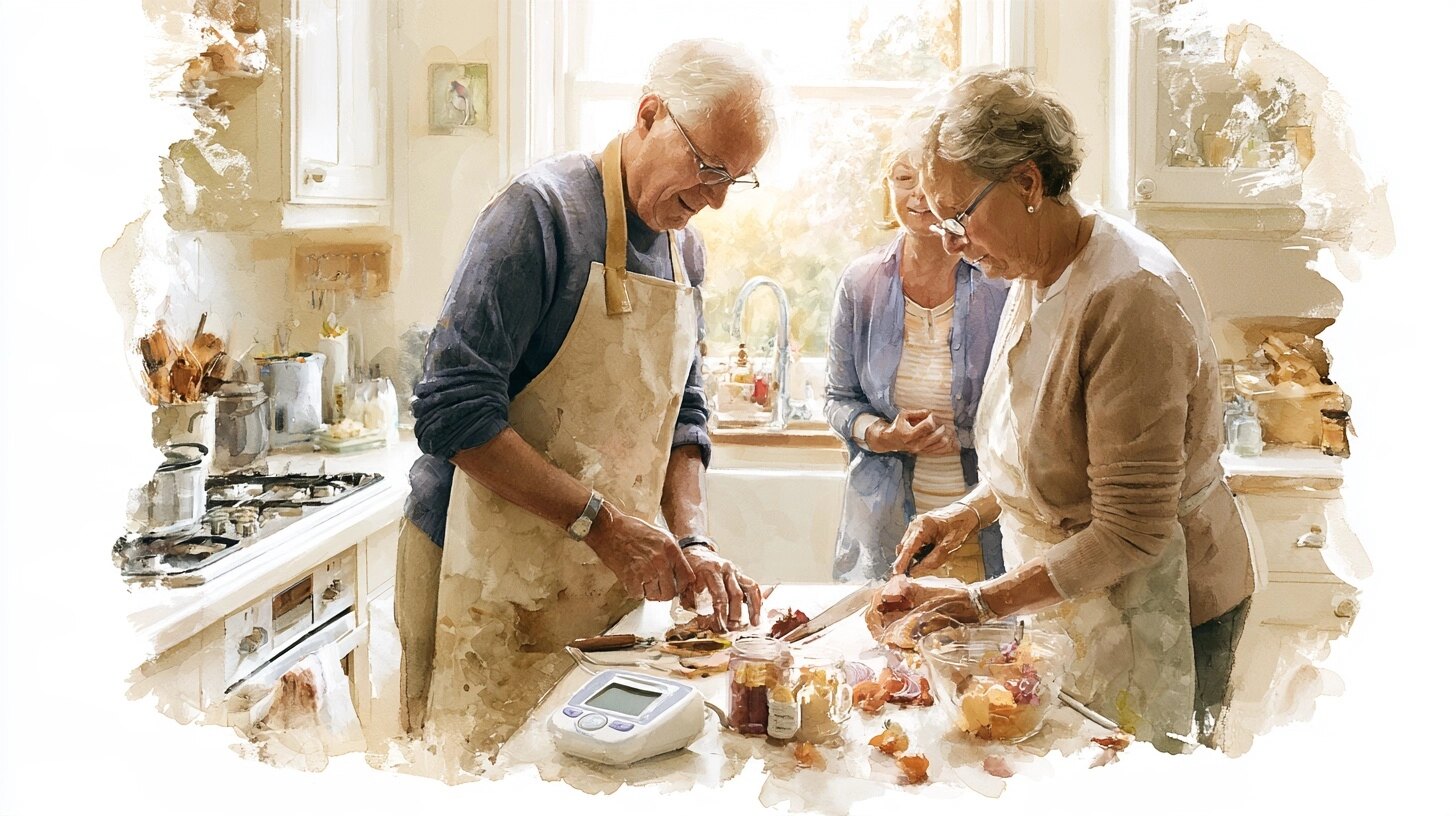
- Blood pressure is the one to watch at homeIf the GP asks for home readings, take them as asked, write each one down and bring the record to the appointment.
- If stroke signs come back, ring 999 at onceThe NHS says to call 999 even if the signs have stopped. The NHS describes a TIA as a sign that a stroke may follow.
- A carer helps with the daily part of preventionPrompting tablets, cooking, walking together and getting to appointments are ordinary tasks that keep the plan going between GP visits.
Clinical information on this page comes from the NHS, NICE guidelines NG128 and NG236, and the Stroke Association, linked beside each point. It is general information, and your relative's GP and stroke team decide what applies to them.
What raises the risk
What raises the risk of another stroke, and who does what about it
The NHS names the conditions and habits that make a stroke more likely. Some are treated by the GP with medicines, some are changed at home, and most need both.
The NHS page on preventing a stroke lists the medical conditions that raise the risk: high blood pressure, diabetes, atrial fibrillation (an irregular and fast heartbeat), high cholesterol, and a previous TIA. It then lists what lowers it: stopping smoking, a balanced diet, exercise, cutting down on alcohol, and remembering to take the medicines for those conditions. The Stroke Association, the UK charity for people affected by stroke, adds staying a healthy weight, and says plainly that although the risk is higher after a stroke or TIA, it can be reduced.
Your relative will not have all of these. The discharge letter or the GP will say which apply, so ask if nobody has told you.
| The risk | What the NHS does | What the family and a carer can do |
|---|---|---|
| High blood pressureNamed by the NHS as a condition that raises the risk of stroke. | The GP checks it and offers blood pressure tablets (antihypertensives) where it is high. They may ask for readings taken at home. | Prompt the tablets at the same time each day. Take home readings if the GP asks, write each one down and take the record to the appointment. Cook with less salt. |
| Atrial fibrillationAn irregular and fast heartbeat, which the NHS lists among the conditions that raise stroke risk. | Where a heart condition like this caused the stroke, doctors may prescribe an anticoagulant to lower the risk of clots, with regular checks while it is taken. | Make sure the anticoagulant is taken as prescribed and never stopped without the GP. Keep the check appointments, and pass any side effects on to the GP or pharmacist. |
| High cholesterolRaises the risk of heart problems and stroke, according to the NHS. | A statin is offered, usually taken long term. If side effects are a problem, the doctor can change the statin or the dose. | Prompt the statin with the other tablets. Cook food lower in fat and higher in fibre, with plenty of fruit and vegetables. |
| DiabetesOn the NHS list of conditions that raise stroke risk. | The GP practice checks and treats it, and the NHS says not to forget medicines for conditions such as diabetes. | Keep to the meals the GP or diabetes team has advised, prompt the diabetes medicines, and keep the diabetes check appointments in the diary. |
| SmokingThe NHS says smoking significantly increases the risk of a TIA or stroke. | Local NHS stop smoking services are free, and the GP or a pharmacist can refer your relative to one. | Back the decision to stop, keep the house smoke-free, and do not buy cigarettes on the shopping run. |
| AlcoholThe NHS advises no more than 14 units a week on a regular basis. | The GP can talk through cutting down and what help there is locally. | Plan several drink-free days a week. Keep alcohol off the shopping list if your relative has asked you to, and tell the GP if cutting down is hard. |
| Not moving enoughThe Stroke Association lists being more active among the changes that lower risk. | The physiotherapist sets exercises that suit the person. For over-65s the NHS guideline is to be active every day and to break up long spells of sitting. | Walk together, at the pace the physio has agreed, and do the exercise sheet between therapy visits. Ask the GP before starting anything new. |
| WeightStaying a healthy weight is one of the Stroke Association’s lifestyle changes. | The GP can check weight and give advice. The NHS says a healthy diet with regular exercise is the best way to keep to a healthy weight. | Cook from scratch in sensible portions, and keep walking as part of the day rather than a one-off. |
High blood pressure
Named by the NHS as a condition that raises the risk of stroke.
Atrial fibrillation
An irregular and fast heartbeat, which the NHS lists among the conditions that raise stroke risk.
High cholesterol
Raises the risk of heart problems and stroke, according to the NHS.
Diabetes
On the NHS list of conditions that raise stroke risk.
Smoking
The NHS says smoking significantly increases the risk of a TIA or stroke.
Alcohol
The NHS advises no more than 14 units a week on a regular basis.
Not moving enough
The Stroke Association lists being more active among the changes that lower risk.
Weight
Staying a healthy weight is one of the Stroke Association’s lifestyle changes.
NICE describes the medical side of prevention as "best medical treatment": control of blood pressure, antiplatelet medicines, cholesterol lowering through diet and drugs, and lifestyle advice (NICE guideline NG128, recommendation 1.2.4). The GP can prescribe and review, but what happens with the tablets and the meals from one day to the next is up to the household.
For the wider picture, stroke recovery care gives the wider picture of the months after a stroke, and the first weeks home after a stroke covers the period straight after discharge, when the new medicines usually start.
The medicines
The medicines usually prescribed after a stroke, and why they are taken every day
Which medicines your relative takes depends on the kind of stroke they had and what caused it. These are the usual groups, described in general terms. The doses and the choice of medicine belong to the doctor.
Antiplatelets
For strokes caused by a clot
Anticoagulants
Where the heart caused the clot
Blood pressure tablets
Antihypertensives
Statins
To lower cholesterol
The NHS page on TIA treatment says most people who have had a TIA will need to take one or more medicines every day, long term, to reduce the chance of a stroke or another TIA, and the NHS stroke treatment page lists anticoagulants, blood pressure medicines and statins among the long-term treatments after a stroke.
Why the daily routine matters so muchSection titled Why%20the%20daily%20routine%20matters%20so%20much
None of these medicines is there to make your relative feel better, and that is what makes them easy to let slip. The Stroke Association's article on taking medication to reduce your risk of stroke says that blood thinners typically will not make somebody feel different, because they are prescribed to reduce the risk of future strokes. It asks people to keep taking them for as long as they are prescribed, and, if there are side effects, not to stop but to contact the GP, a pharmacist or 111. The NHS says the same of statins: talk to a doctor or pharmacist before stopping.
A missed tablet now and then is a question for the pharmacist, who can tell you what to do about that particular medicine. A pattern of missed tablets, or a relative who has decided to stop one, is a question for the GP. If swallowing tablets has become hard since the stroke, say so: NICE guideline NG236 asks for the medicine to be reviewed and, if it is still needed, for its form to be changed. The dysphagia diets page explains the swallowing side.
If your relative also has another heart condition, such as heart failure, the list gets long. Ask the pharmacy for a printed list of everything prescribed and keep it where anybody helping can see it.
If signs come back
If stroke signs come back: FAST, 999, and the TIA as a warning
Everyone who spends time with your relative should know the signs of a stroke and know that the answer is 999. That includes the family, a carer, and your relative themselves.
Face
F
Arms
A
Speech
S
Time
T
That is the NHS wording from the stroke symptoms page, which also lists other signs: weakness or numbness down one side of the body, blurred vision or loss of sight, finding it hard to speak or think of words, confusion and memory loss, dizziness or falling over, a severe headache, and feeling or being sick. The NHS says to call 999 if you think somebody is having a stroke or has had one, and if there have been signs of a stroke in the last 24 hours even if they have now stopped.
After a first stroke it can be hard to tell a new sign from the weakness that was already there, so watch for change. A face that droops more than it did this morning, or speech that is suddenly worse, is a 999 call rather than a call to the GP.
Put a note by the phone with your relative's name, date of birth, address, GP surgery and the list of medicines, including any blood thinner. A carer or visitor who has to ring 999 in a hurry can then read it out. The blood thinner matters: NICE lists anticoagulant treatment among the reasons for an immediate brain scan when a stroke is suspected (NG128, recommendation 1.3.2).
Food, drink and moving
Food, drink, smoking and moving more, in plain words
None of this is a diet plan or a fitness regime. It is the everyday advice the NHS gives after a stroke or TIA, and it is easier to keep up when somebody else in the house is doing it too.
Everyday changes the NHS recommends
0 of 6 ticked
Food
Drink
Smoking
Moving
For food, the NHS Eatwell Guide shows a balanced plate, and our guide to elderly nutrition covers appetite, weight and cooking for an older person. If your relative's swallowing has been affected, the speech and language therapist's advice on food and drink comes first, even where it seems to sit awkwardly with the advice above.
For activity, the NHS physical activity guidelines for older adults are the starting point, but after a stroke the physiotherapist decides what is safe. Rehab at home after a stroke explains how the exercise sheet works between therapy visits, and how far an 80-year-old should walk each day is a gentle place to begin once walking is allowed.
The NHS explains what 14 units of alcohol looks like and how to get free help to stop smoking.
Changing habits is hard at a time when your relative may be low or frightened, and the Stroke Association notes that for many survivors another stroke is their greatest fear. If mood is getting in the way of any of this, emotional changes after a stroke is the page to read next, and the GP should hear about it.
Reviews and checks
The GP review, the six-month review and the checks after that
Prevention is not settled at discharge. The medicines and the readings are looked at again, and NICE sets out regular reviews for everyone who has had a stroke.
- At discharge
The discharge letter and the medicines list
Read the list of new medicines and what each one is for before your relative leaves hospital. Ask which risks were found, such as high blood pressure or atrial fibrillation, and who will follow them up.
- First weeks
A GP appointment to go over the medicines
Ask the surgery whether the GP or practice pharmacist wants to see your relative after discharge. Take the medicines list and any home blood pressure readings.
- While taking blood thinners
Regular checks
The Stroke Association says people should have regular checks while taking blood thinners. Put the dates in the diary and keep them.
- About 6 months
The six-month review
NICE says the health and social care needs of people after a stroke, and of their carers, should be reviewed at six months. The NHS says to speak to the team if it does not happen.
- Every year
The annual review, and ongoing GP checks
NICE says the review should then happen every year. The GP can also check blood pressure, cholesterol and diabetes and review the medicines.
- Any time
New signs of a stroke
Call 999, even if the signs stop. This does not wait for a review.
The six-month and annual reviews come from NICE guideline NG236 (recommendation 1.17.5), which also asks for the needs of family carers to be reviewed at the same time. The NHS page on stroke recovery says you should get a review after about six months, and to speak to your team if you do not.
Before each appointment, write down any missed tablets, any side effects, the home blood pressure readings if you have them, and anything that has changed, such as falls or low mood. The Stroke Association also encourages going back to the GP to ask about your relative's own risk of another stroke if it has not been explained.
Help at home
What help at home can do to lower the risk
The medicines are prescribed at the surgery, but whether they are taken, and what is on the plate, is decided at home. A carer who comes regularly can take on much of that.
Medication prompts
Every visit
Cooking
Lunch or evening visits
Walking together
At the pace the physio agreed
Noticing change
Written down each visit
Getting to appointments
GP, clinic and reviews
Keeping the routine going
Week to week
Prompting and helping with tablets is ordinary work for a carer. Taking the dose out of the pack and giving it is a different job, which needs clear written directions and a carer trained to do it. Can a private carer give medication? explains where the line sits and what to agree before the first visit. Write what the carer will do with medicines into the care plan, which writing a care plan together covers, and brief them on FAST and the note by the phone on their first day.
Seeing the same carer every time is what makes the noticing possible, and the same carer every visit explains how to arrange it. If your relative would like someone to help with tablets, meals and walks, you can search for carers near you and compare their rates. Hourly visits on PrimeCarers run from £18 to £25 an hour with our fee included, against £28 to £35 an hour at an agency. If the help needed is closer to round the clock, live-in care after a stroke explains that option, and a council care needs assessment is free to ask for.
Questions
Questions families ask about preventing another stroke
Not with certainty, but the risk can be lowered. The Stroke Association says that although the risk is higher after a stroke or TIA, it can be reduced by taking the medicines that are prescribed and making the lifestyle changes that are needed. The NHS lists stopping smoking, a balanced diet, exercise, cutting down on alcohol and remembering the medicines as the main ways to lower it.
Encourage her to talk to the GP or pharmacist before she stops anything. The Stroke Association points out that blood thinners do not make you feel different, because they are there to lower the risk of a future stroke, and says to keep taking them and ask about side effects rather than stop. The NHS gives the same advice about statins. There may be a different medicine that suits her better.
Ask the GP first. The NHS says a doctor or nurse who needs home readings may lend a machine, and that you can also buy your own. What matters is taking readings when and for as long as the GP asks, and bringing the written record to the appointment. Ask the GP what reading should make you ring the surgery.
Still go to hospital. The NHS says to call 999 if there have been signs of a stroke in the last 24 hours even if they have stopped, and that somebody whose TIA symptoms disappear while waiting for an ambulance still needs to be assessed in hospital. A TIA is a warning that a stroke may follow.
A carer can remind him, read the label, open the pack and stay while he takes a dose, which is ordinary care work. Taking the dose out and giving it is a separate agreement that needs clear written directions and a carer trained to do it. PrimeCarers does not check training, so ask the carer what training they have done and when, and agree what they will do before the first visit.
Yes. NICE guideline NG236 says the health and social care needs of people after a stroke, and of their carers, should be reviewed at six months and then every year. The GP can also check blood pressure, cholesterol and diabetes and review the medicines between those reviews. If the six-month review does not happen, the NHS says to speak to the team.