
The short answer
- A pet can be a good reason to stay at homeCompany, a daily routine and a reason to go out are worth protecting when help starts coming in.
- Each worry has a practical answerTrip hazards can be moved, walks can be shared, and a stay in hospital can be covered by a named person.
- A carer can help if you agree it firstFeeding a cat or a short walk can be part of a visit. Ask each carer before the first visit whether they are happy to do it.
- Write down who takes the petOne page naming who feeds it, who collects it at short notice and who gives it a home for good avoids a scramble later.
Visit figures are what carers on PrimeCarers charge with our fee included: £15 to £20 an hour for companionship and £18 to £25 for personal care, against £28 to £35 through an agency.
What a pet gives
What a pet can mean to an older person
When somebody needs more help, the pet can look like one more thing to manage. For the person who owns it, the animal may be one of the main reasons the day has a shape.
Company in the house
Somebody to talk to
A reason to get up
A routine that belongs to them
A reason to go out
Walks, and the people met on them
Something to talk about
With visitors and carers
Age UK's page on owning a pet says that pets can help with loneliness and isolation, and that walking a dog helps to keep you fit and gives you more chances to meet people. Walking is one of the moderate activities in the NHS physical activity guidelines for older adults, which suggest at least 150 minutes of moderate activity a week.
So think carefully before suggesting a pet is rehomed because care has started. The elderly care guide covers helping somebody live well at home, and helping someone who is lonely is the page to read if company is what your relative is short of.
The worries
The worries families have, and what helps with each
These are the four concerns that come up when an older person with a pet begins to need care. None of them has to mean the pet goes.
| Why it matters | What helps | |
|---|---|---|
| Tripping over the pet | A cat that winds round the ankles or a dog asleep at the foot of the stairs is one more thing to trip on, along with bowls and toys on the floor. | Keep beds, bowls and toys out of walkways and off the stairs. Leave a light on for night-time trips to the toilet. Well-fitting slippers with a good grip help too. |
| Walking a dog in bad weather | Rain, ice and dark evenings make a walk harder for somebody who is unsteady on their feet. | Share the walks. A carer, a neighbour, a family member or a volunteer can take the icy mornings, and your relative can take the walks they enjoy. |
| Vet bills | An older animal can need treatment that is hard to pay for on a pension. | Pet insurance, set up while the animal is healthy. Some animal charities give help with vet costs, and each sets out who it can help. |
| A stay in hospital | An emergency admission can leave a pet alone in the house with nobody knowing it is there. | Name a person who will collect or feed the pet at short notice, and make sure the hospital, the carer and the neighbours know who that is. |
Tripping over the pet
- Why it matters
- A cat that winds round the ankles or a dog asleep at the foot of the stairs is one more thing to trip on, along with bowls and toys on the floor.
- What helps
- Keep beds, bowls and toys out of walkways and off the stairs. Leave a light on for night-time trips to the toilet. Well-fitting slippers with a good grip help too.
Walking a dog in bad weather
- Why it matters
- Rain, ice and dark evenings make a walk harder for somebody who is unsteady on their feet.
- What helps
- Share the walks. A carer, a neighbour, a family member or a volunteer can take the icy mornings, and your relative can take the walks they enjoy.
Vet bills
- Why it matters
- An older animal can need treatment that is hard to pay for on a pension.
- What helps
- Pet insurance, set up while the animal is healthy. Some animal charities give help with vet costs, and each sets out who it can help.
A stay in hospital
- Why it matters
- An emergency admission can leave a pet alone in the house with nobody knowing it is there.
- What helps
- Name a person who will collect or feed the pet at short notice, and make sure the hospital, the carer and the neighbours know who that is.
The NHS advice on preventing falls is to keep clutter down and remove things you could trip on, and to wear shoes or slippers that fit well and have a good grip. It does not mention pets, but a food bowl in the kitchen doorway is exactly the kind of thing it means. If your relative has already fallen, fear of falling explains how to rebuild confidence without giving up the things they enjoy, walking the dog included.
On vet bills, Age UK suggests pet insurance, which covers illness and accidents but not routine care. PDSA is a veterinary charity for pets whose owners cannot afford treatment, and its site explains who it can help.
Help from a carer
How a visiting carer or companion can help with the pet
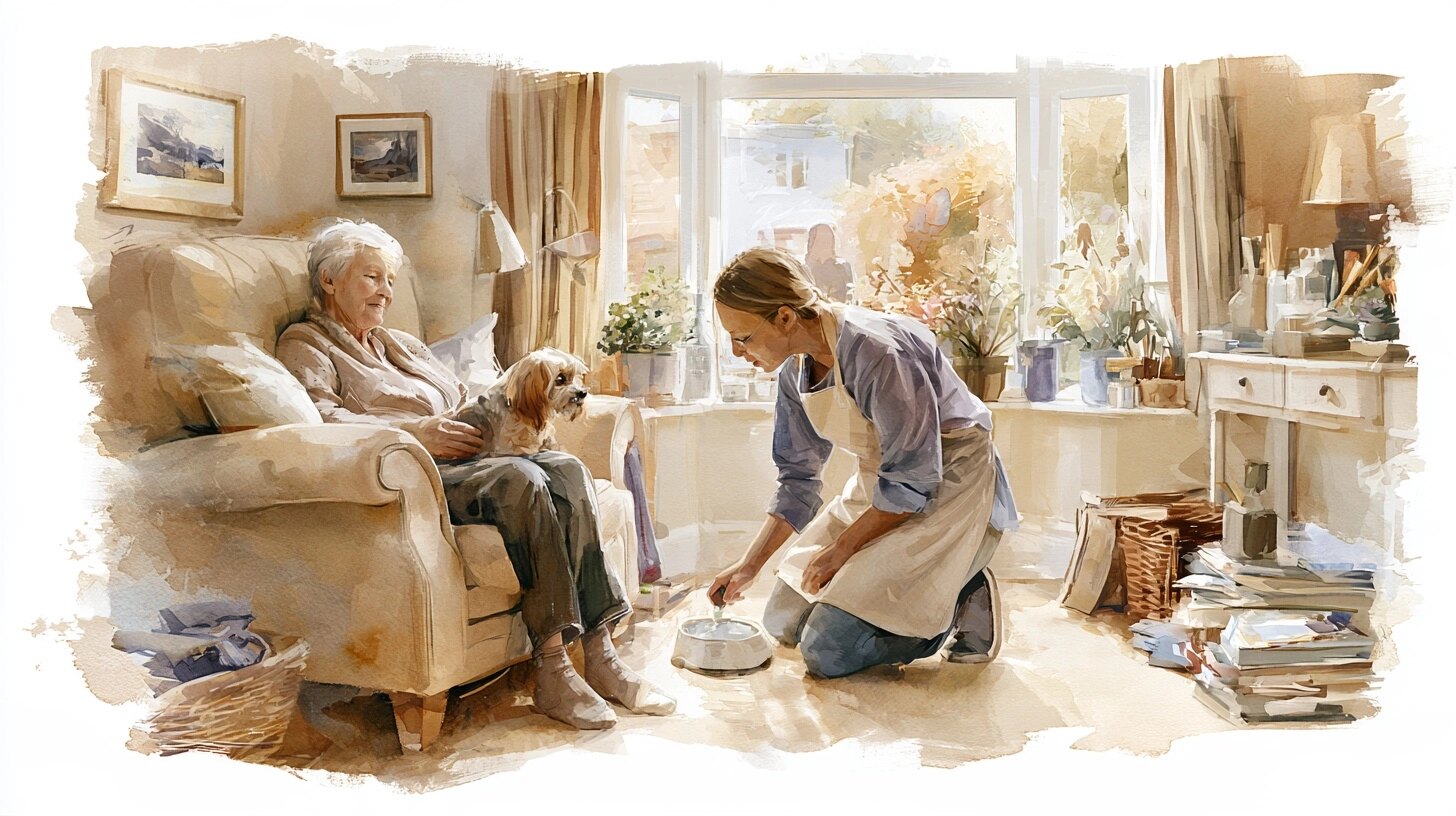
If your relative has a carer or a companion calling in, putting down food, changing a litter tray or taking the dog for a short walk can be part of the visit, as long as the carer has agreed to it.
Agree before the first visit
- Tell each carer about the pet when you first message them, including its size and temperament
- Say exactly what you would like done, such as breakfast at 8am and a walk round the block
- Mention a dog that guards the door or does not like strangers, so the carer can decide how to come in
- Say if anybody in the house has an allergy, and ask whether the carer has one
What leads to problems
- Adding a long walk to a visit that was booked for washing and dressing
- Assuming a carer is comfortable with dogs because they have looked after other clients
- Asking a carer to do anything with the animal they have said they are not happy doing
Carers on PrimeCarers are self-employed, and under the client contract the carer decides how the work is done and should not take on work they do not feel able to do. The same contract asks the family to tell the carer in advance about anything in the home that could affect their safety, which includes a dog that is nervous with visitors. Some people are afraid of dogs or allergic to cats, so ask early.
Pet tasks take time, so they need to fit the visit. A visit on PrimeCarers is a minimum of one hour. Companionship visits cost £15 to £20 an hour with our fee included, and visits that include personal care cost £18 to £25. A companion visit with a walk in it can be a good use of that hour if your relative walks too, and can carers take you out explains how trips out work.
When you are ready to look for someone, you can search for carers near you and compare their rates, then ask each one about the dog or cat before you agree anything. Every carer on PrimeCarers has had an identity check, a right to work check, an accepted criminal-record check (Enhanced DBS issued within the last 2 years, DBS Update Service, Scottish PVG or Access NI) and an online interview. Visits booked through PrimeCarers are insured while the carer works. References sit on a carer's profile for you to read. We do not check training or experience with animals, so talk through anything a carer says about pets with them.
If your relative has a live-in carer, or is thinking about one, can a live-in carer look after a pet covers what to agree when the carer lives in the house with the animal.
A plan for the pet
Write down a plan for the pet before it is needed
A pet plan is one page that says who feeds the animal, who collects it at short notice, and who gives it a home if your relative can no longer keep it. The example below shows the kind of detail that helps.
Example pet plan
Bramble, a ten-year-old Border terrier, living with Margaret
- Every day
- Breakfast at 8am and tea at 5pm, half a tin with a scoop of dry food. Fresh water twice a day. Two short walks round the green, on the lead.
- Vet and health
- The vet practice name and phone number go here. One joint tablet with breakfast. The insurance policy number is in the kitchen drawer with the vaccination card.
- The carer's part
- The Tuesday and Friday carer puts down breakfast and takes Bramble round the green during the visit. Agreed with the carer before the first visit.
- If Margaret goes into hospital
- Her daughter Jane collects Bramble the same day. If Jane is away, Mr Patel next door has a key and feeds her until Jane arrives.
- If Margaret cannot keep her
- Jane has agreed to give Bramble a home. Margaret's will says so, and Bramble is registered with a charity scheme as a second option.
- Where this plan is kept
- On the fridge, with copies for Jane, Mr Patel and the carer.
The most important line in the plan is a named person who has said yes. A neighbour with a key is more use in an emergency than a vague family agreement that somebody will sort it out. Ask them properly, and give them a copy.
The plan should also cover the longer term: a move into a care home that does not take pets, or the pet outliving your relative. The gov.uk guide to making a will explains that a will decides what happens to your money, property and possessions, and that you should get advice if it is not straightforward. Your relative can say in their will who should have the pet. A solicitor can advise on leaving money for its care. Will writing and protecting assets explains the options.
Several charities run schemes that owners can register with in advance:
- The Cinnamon Trust is the national charity for older people, people who are terminally ill, and their pets. Its site describes help with day-to-day pet care, temporary care during hospital stays and lifelong care for pets. Read its page with your relative, as it sets out who can ask for help and how to register.
- Dogs Trust's Canine Care Card is a scheme for dog owners planning for a time when they cannot look after their dog.
- Cats Protection's Cat Guardians is a free scheme for cat owners who want their cat looked after and rehomed if they die.
Care homes and pets
If your relative moves into a care home
Some care homes accept residents' pets and some do not, and the rules vary from home to home. The only reliable way to know is to ask each home you are considering.
- 1
Ask on the first call
Before you visitAsk whether the home accepts residents' pets, which animals, and whether the pet can live in your relative's room. - 2
Ask who looks after it
At the visitAsk who feeds and walks the pet if your relative cannot, what happens if its health changes, and who pays the vet. - 3
Get the answer in writing
Before the moveIf the home agrees, ask for it in the contract or a letter, so a change of manager does not change the answer. - 4
If the answer is no
Keep them in touchAsk whether the pet can visit. The person named in the pet plan can bring it in, and your relative still sees the animal.
Choosing a care home has the full list of questions to ask on a visit, and moving a parent into a care home covers the move itself. The Cinnamon Trust's page on pet-friendly care homes explains where to look for homes that accept pets.
If the pet is one reason your relative wants to stay put, ageing in place sets out what staying at home longer takes.
On allergies and hygiene, the NHS lists pets like cats and dogs among common allergens and advises washing your hands after touching animals and their food, so tell a carer or a care home about any allergy early.
Questions
Questions families ask about pets and care
A carer can walk the dog as part of a visit if they are happy to and you have agreed it before the visit. Ask each carer when you first get in touch, tell them about the dog\'s size and temperament, and make sure the walk fits in the hour alongside anything else the visit is for. Can carers take you out explains how trips out work.
Whoever is named in the pet plan feeds the cat or collects it. If there is no plan yet, ring a neighbour or family member with a key on the day and tell the hospital staff there is a pet at home. Under the client contract, a visit cancelled because of an unplanned hospital stay is not charged. Charities such as the Cinnamon Trust describe temporary pet care during hospital stays; register early rather than on the day.
It depends on the home. Some accept residents' pets and some do not, so ask each home on the first call and get the answer in writing if it is yes. Choosing a care home lists the other questions to ask.
That is what the pet plan is for. It should name a person who has agreed to give the pet a home, and your relative can repeat that in their will. Charities including the Cinnamon Trust, Dogs Trust and Cats Protection run schemes that owners can register with in advance. A solicitor can advise on the will.
It can be, if they have the energy and money for it and somebody has agreed to take the animal if they cannot keep it. Rehoming charities can advise on which animal suits them. Age UK's page on owning a pet covers the costs and time to think about first.