
The short answer
- Choose the town by its promenadeA long, level seafront with benches lets your relative enjoy the sea without reaching the sand at all. Hornsea, Plymouth Hoe and Newbiggin are examples.
- Beach wheelchairs can be borrowedCouncils and local groups lend chairs with wide wheels for sand at Bournemouth, Exmouth, Weston-super-Mare, Cromer, Bridlington and other beaches. Book ahead where you can.
- Plan around the toiletsFind the accessible and Changing Places toilets before you go, and get a RADAR key if your relative needs one.
- A carer can come with youA self-employed carer can travel with your relative for the trip. Tell us the dates and where you are going, and you agree one price for the carer before anything is booked.
Access facts were checked on each council's, attraction's or tourist board's own page in October 2026.
What to look for
What makes a seaside town easier for an older or disabled visitor
Seaside towns can look alike on a holiday website. For a parent who uses a wheelchair, walks with a frame or needs the toilet often, a handful of practical things decide whether the day works.
The first is the shape of the seafront. Some towns sit at the bottom of a steep hill or behind a cliff, so the walk back from the beach to the car or the hotel is the hardest part of the day. Others have a long, flat promenade at the same level as the road, with the car park, the café and the toilets all on it. That second kind of town suits an older visitor who tires quickly, even one who never sets foot on the sand, because the sea is right there from a bench.
The second is how your relative gets onto the beach, if they want to. A ramp, a boardwalk or matting laid over the sand lets them sit near the water rather than watch from the promenade, and a beach wheelchair goes further still.
A level promenade
The thing to check first
A way onto the sand
Ramps, matting or a beach wheelchair
Toilets they can use
Accessible, or Changing Places
Parking near the front
Blue Badge bays and drop-off points
Places to sit and shelter
Somewhere to rest
A town with a level promenade and a toilet you can rely on can give your relative a good day even if the beach itself is out of reach. If your parent is still deciding what kind of trip they could manage, where to take an older person on holiday in the UK covers inland choices too.
Towns with checked access
Seaside towns where the access has been checked
These towns and beaches come from the places we research for our county days-out pages. Each one stayed on the list only where the council, the attraction or the tourist board confirms the access facts on its own page.
18 seaside towns and beaches with checked access
A tick means the council, the attraction or the tourist board says so on its own page, checked October 2026. No tick means we could not confirm it, not that it is missing.
South West England
South East and East of England
Yorkshire and the North East
Northern Ireland
South West England

Photo: this version: Smalljim, original: Mark.murphy, CC BY 3.0, via Wikimedia Commons
1Plymouth Hoe
- Level or step-free route
- Accessible toilets
- Disabled or Blue Badge parking
Plymouth City Council says the paths across the Hoe and along the seafront are wide tarmac and suitable for wheelchairs, with plenty of seating. There is a disabled toilet near the café on Hoe Road and disabled parking on the Hoe promenade.
Access details: Plymouth City Council
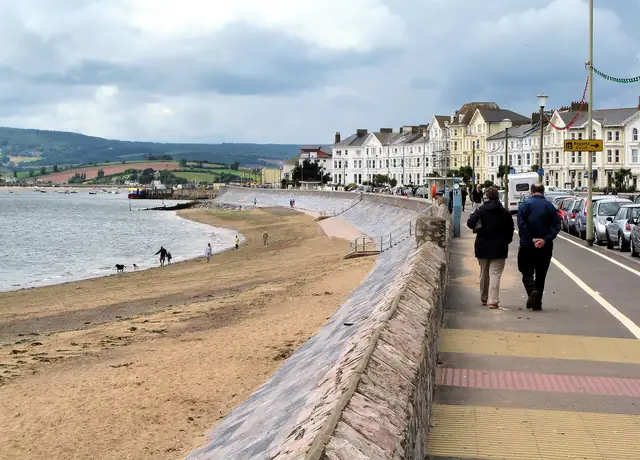
Photo: Photographed by Adrian Pingstone (on a chilly Monday before the school holidays,, Public domain, via Wikimedia Commons
2Exmouth
- Beach wheelchair to borrow
Exmouth Town Council runs a beach wheelchair service staffed by volunteers, booked online or by phone. A hoist and a stand aid are there for moving from one chair to the other, but the staff cannot help with the hoist, so whoever is with your relative needs to be able to use it.
Access details: Exmouth Town Council
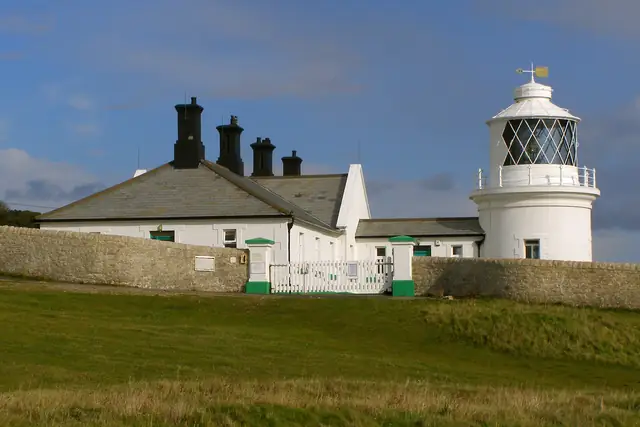
Photo: JimChampion, CC BY-SA 3.0, via Wikimedia Commons
3Swanage, Durlston Country Park
- Level or step-free route
- Accessible toilets
Durlston sits on the headland above Swanage. A gently sloping ramp of about 75 metres runs from the car park to the castle, which has platform lifts and accessible toilets on every level. Two all-terrain mobility buggies, called Trampers, can be booked before your visit for the paths across the park.
Access details: Durlston Country Park
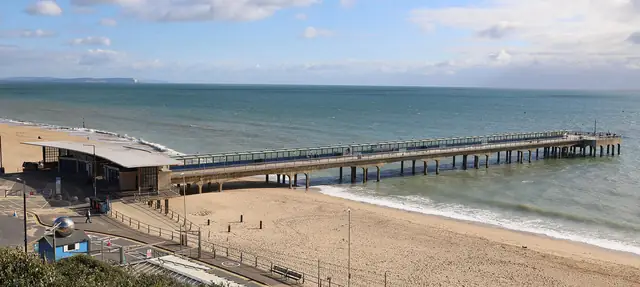
Photo: Geni, CC BY-SA 4.0, via Wikimedia Commons
4Bournemouth, Boscombe and Sandbanks
- Ramp, matting or boardwalk to the sand
- Accessible toilets
- Changing Places toilet
- Beach wheelchair to borrow
BCP Council lends beach wheelchairs from its beach offices at Bournemouth, Boscombe and Sandbanks in the summer season, first come, first served. Boscombe has access matting on the sand and Sandbanks a wooden boardwalk. Accessible toilets opened with a RADAR key run along the seafront, and there is a Changing Places toilet at Boscombe.
Access details: BCP Council

Photo: tsaiproject from Canada, CC BY 2.0, via Wikimedia Commons
5Weston-super-Mare
- Beach wheelchair to borrow
North Somerset Council lends a beach wheelchair from its seafront office on Marine Parade for a set session, and recommends booking ahead with the form on its page.
Access details: North Somerset Council
South East and East of England

Photo: Diliff, CC BY-SA 3.0, via Wikimedia Commons
6Brighton Palace Pier
- Level or step-free route
- Accessible toilets
There are no steps onto the pier, and every building on it is reached on the flat or by a ramp. It has three accessible toilets. The pier is a listed Victorian structure and some of its boards are uneven, which is worth knowing with a wheelchair.
Access details: Brighton Palace Pier
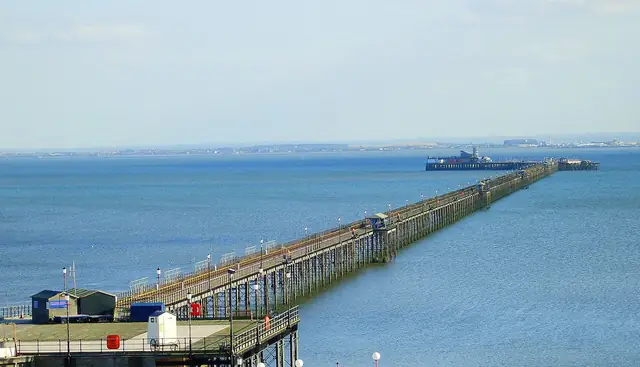
Photo: Southend_Pier_Autumn_2007.jpg: Damian Dukarski The original uploader was Dammmmi, CC BY-SA 3.0, via Wikimedia Commons
7Southend-on-Sea
- Level or step-free route
- Accessible toilets
All three entrances to the pier are step free. The pier train has level access from the platforms and a carriage with wider doors for wheelchairs and scooters, so your relative can reach the far end without walking it. The pier toilets all have disabled facilities. The deck boards can be hard going for wheelchairs with narrow wheels.
Access details: Southend Pier
- 8
Wells-next-the-Sea
- Beach wheelchair to borrow
A tarmac path runs from the quay to the beach, a walk of 15 to 20 minutes, and the tourist board warns that the ramp down onto the sand is steep. A beach wheelchair can be hired through Coastal Health and Wellbeing in the town.
Access details: Visit North Norfolk
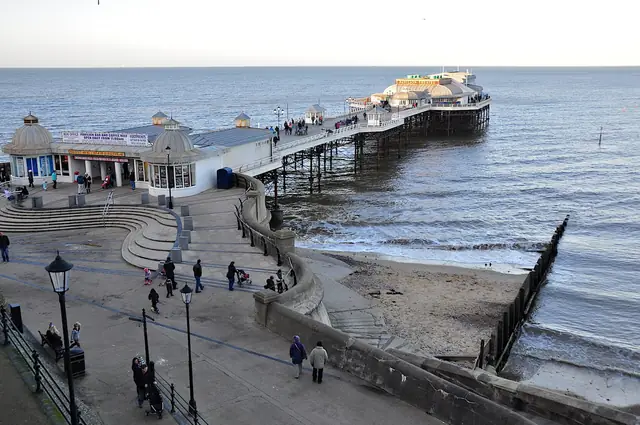
Photo: rodtuk from UK, CC BY-SA 2.0, via Wikimedia Commons
9Cromer
- Ramp, matting or boardwalk to the sand
- Disabled or Blue Badge parking
- Beach wheelchair to borrow
There is Blue Badge parking on the west side of the promenade and a lift from the clifftop down to the east promenade. Ramps lead onto the beach, though how easy they are changes as the sand moves. A beach wheelchair is hired from Cromer Pier, and the district council says booking ahead is essential.
Access details: Visit North Norfolk, North Norfolk District Council
Yorkshire and the North East
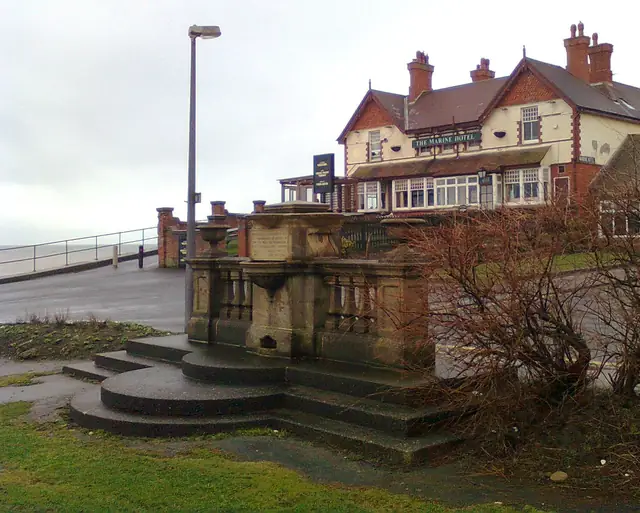
Photo: David Rogers, CC BY-SA 2.0, via Wikimedia Commons
10Hornsea
- Level or step-free route
- Accessible toilets
- Disabled or Blue Badge parking
A long, level promenade suited to wheelchairs and mobility scooters, with accessible parking bays close to the seafront and toilets for disabled visitors.
Access details: Visit East Yorkshire
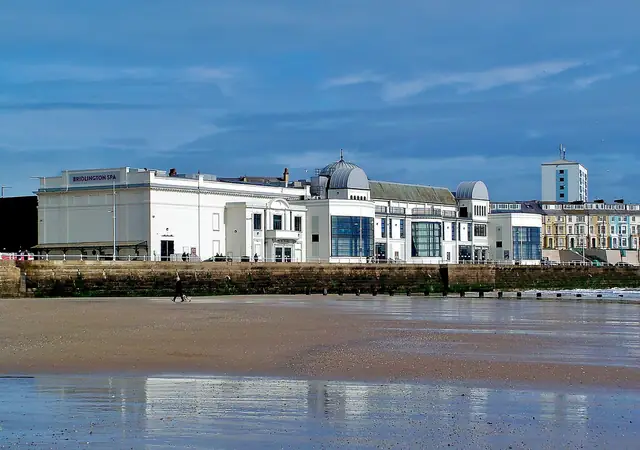
Photo: JThomas, CC BY-SA 2.0, via Wikimedia Commons
11Bridlington
- Ramp, matting or boardwalk to the sand
- Accessible toilets
- Changing Places toilet
- Beach wheelchair to borrow
Ramps lead from the promenade onto South Beach, and beach wheelchairs can be hired. There are toilets opened with a RADAR key, and a Changing Places toilet on the South Promenade near the lifeboat station.
Access details: Visit East Yorkshire
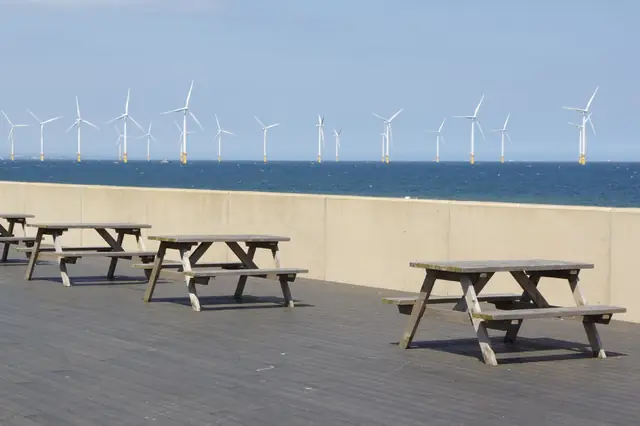
Photo: Stephen McKay, CC BY-SA 2.0, via Wikimedia Commons
12Redcar
- Accessible toilets
- Changing Places toilet
The Redcar Beacon, a viewing tower on the seafront, is reached by a ramp and has a lift to the top. The council lists accessible and Changing Places toilets in the town, including on Moore Street near the front.
Access details: Redcar and Cleveland Council
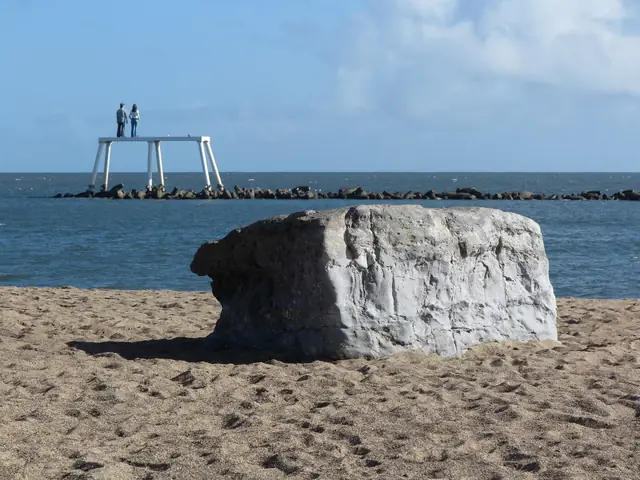
Photo: Geoff Holland, CC BY-SA 2.0, via Wikimedia Commons
13Newbiggin-by-the-Sea
- Level or step-free route
Northumberland County Council describes the promenade as accessible to disabled visitors, with flat paths and no gradients. There are public toilets in the Maritime Centre, and the main car park is at Church Point.
Access details: Northumberland County Council
Wales
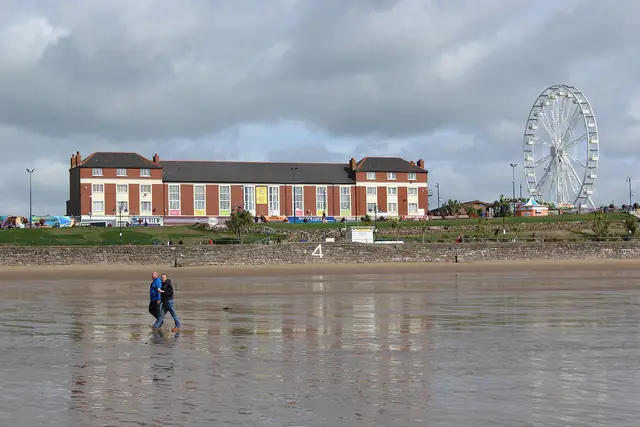
Photo: M J Roscoe, CC BY-SA 2.0, via Wikimedia Commons
14Barry Island
- Beach wheelchair to borrow
A promenade runs the whole length of Whitmore Bay with cafés along it, and beach wheelchairs are available to borrow. The tourist board lists disabled facilities on the seafront.
Access details: Visit the Vale
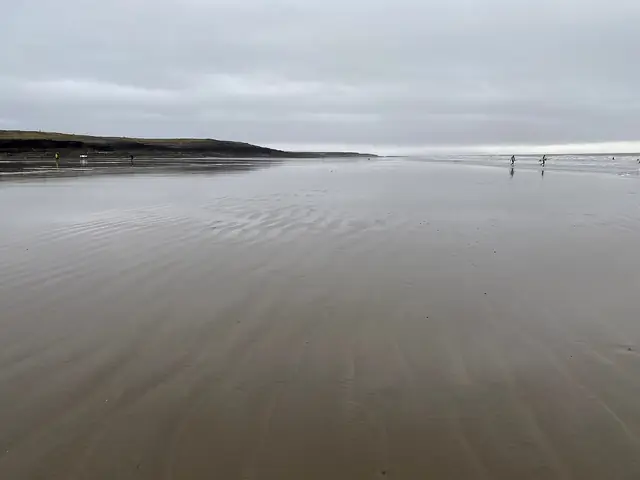
Photo: Alan Hughes, CC BY-SA 2.0, via Wikimedia Commons
15Porthcawl
- Accessible toilets
- Disabled or Blue Badge parking
Visit Wales describes plenty of benches along the promenade, with accessible parking and toilets at Rest Bay. The same page lists other smooth, flat seafront paths in Wales, including Aberavon and Swansea Bay to Mumbles.
Access details: Visit Wales
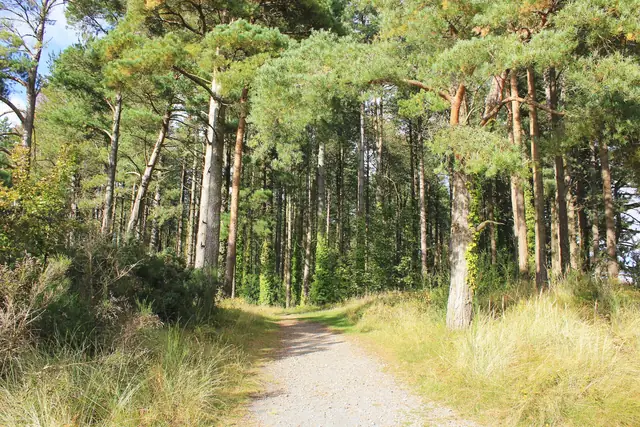
Photo: Jeff Buck, CC BY-SA 2.0, via Wikimedia Commons
16Newborough beach, Anglesey
- Level or step-free route
- Disabled or Blue Badge parking
- Beach wheelchair to borrow
Natural Resources Wales has a beach wheelchair to borrow from the Beach car park. The Lake View Trail, from the Llyn Parc Mawr car park, is flat and well surfaced with a place to rest every 50 metres. The page sets out parking for Blue Badge holders.
Access details: Natural Resources Wales
Northern Ireland
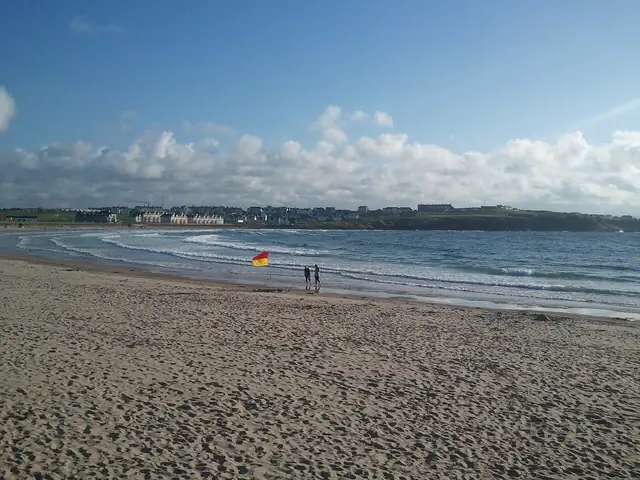
Photo: Aaron Keys, CC BY-SA 3.0, via Wikimedia Commons
17Portrush, East Strand
- Ramp, matting or boardwalk to the sand
- Accessible toilets
- Disabled or Blue Badge parking
- Beach wheelchair to borrow
Concrete ramps lead onto the sand at both ends of the promenade, and there are disabled toilets and parking. It is one of the Mae Murray Foundation’s inclusive beaches, and beach equipment, including all-terrain wheelchairs, is booked through the foundation.
Access details: Visit Causeway Coast and Glens
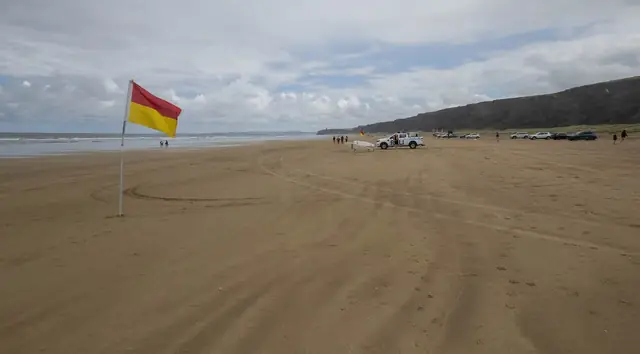
Photo: Carroll Pierce, CC BY-SA 2.0, via Wikimedia Commons
18Benone Strand
- Accessible toilets
- Disabled or Blue Badge parking
- Beach wheelchair to borrow
Benone was named Northern Ireland’s first fully inclusive beach in 2017, through the Mae Murray Foundation’s work with the council. There are disabled toilets and parking, and specialist beach equipment for people with limited mobility, which has to be booked ahead.
Access details: Causeway Coast and Glens Borough Council
The list is not a ranking, and it is not every accessible beach in the UK. It is the coast places where a source responsible for the access confirms what it is like. A town without a tick for toilets may well have them, so check the council's page before you set off.
Each town links to its county page, where other days out nearby, such as a garden or a museum for a wet afternoon, have the same kind of access notes. Scotland does not appear because none of the Scottish coast places in our research had their access confirmed on a council or attraction page. That is a gap in our checking, not a judgement on Scottish beaches.
Seasons, opening hours and charges change from year to year, so read the linked page for the dates you plan to visit. Some facilities are only there in summer: at Bournemouth, Boscombe and Sandbanks, for example, the beach wheelchairs are lent from May to September and the matting is laid for the summer.
Beach wheelchairs
How to borrow a beach wheelchair
A beach wheelchair has large, soft tyres that roll over sand where an ordinary wheelchair would sink. Several councils, a national body and local charities lend them, and the way to ask differs in each place.
| Who lends it | How to ask | |
|---|---|---|
| Bournemouth, Boscombe and Sandbanks | BCP Council, from its beach offices | Ask at the beach office on the day. They go first come, first served. |
| Exmouth | Exmouth Town Council, run by volunteers | Book online or by phone. Walk-ins are taken when a chair is free. |
| Weston-super-Mare | North Somerset Council, seafront office on Marine Parade | Book ahead with the form on the council’s page. |
| Cromer | Cromer Pier, listed by North Norfolk District Council | Book ahead through the pier. The council says this is essential. |
| Wells-next-the-Sea | Coastal Health and Wellbeing | Contact details are on Visit North Norfolk’s accessible beaches page. |
| Bridlington | Coastal Services Office, South Beach | Book by phone through the office. The number is on Visit East Yorkshire’s accessibility page. |
| Barry Island | Listed by Visit the Vale | Ask through the details on the Whitmore Bay page. |
| Newborough, Anglesey | Natural Resources Wales, Beach car park | Details are on the Newborough page. |
| Cornish resort beaches | Local providers at beaches such as Summerleaze in Bude, Fistral and Towan in Newquay, Perranporth and Porthminster in St Ives | Visit Cornwall lists each beach with its own contact. |
| Northern Ireland inclusive beaches | Mae Murray Foundation, at Benone, Portrush East Strand and its other inclusive beaches | Book through the foundation, which sets out how on its own site. |
Bournemouth, Boscombe and Sandbanks
- Who lends it
- BCP Council, from its beach offices
- How to ask
- Ask at the beach office on the day. They go first come, first served.
Exmouth
- Who lends it
- Exmouth Town Council, run by volunteers
- How to ask
- Book online or by phone. Walk-ins are taken when a chair is free.
Weston-super-Mare
- Who lends it
- North Somerset Council, seafront office on Marine Parade
- How to ask
- Book ahead with the form on the council’s page.
Cromer
- Who lends it
- Cromer Pier, listed by North Norfolk District Council
- How to ask
- Book ahead through the pier. The council says this is essential.
Wells-next-the-Sea
- Who lends it
- Coastal Health and Wellbeing
- How to ask
- Contact details are on Visit North Norfolk’s accessible beaches page.
Bridlington
- Who lends it
- Coastal Services Office, South Beach
- How to ask
- Book by phone through the office. The number is on Visit East Yorkshire’s accessibility page.
Barry Island
- Who lends it
- Listed by Visit the Vale
- How to ask
- Ask through the details on the Whitmore Bay page.
Newborough, Anglesey
- Who lends it
- Natural Resources Wales, Beach car park
- How to ask
- Details are on the Newborough page.
Cornish resort beaches
- Who lends it
- Local providers at beaches such as Summerleaze in Bude, Fistral and Towan in Newquay, Perranporth and Porthminster in St Ives
- How to ask
- Visit Cornwall lists each beach with its own contact.
Northern Ireland inclusive beaches
- Who lends it
- Mae Murray Foundation, at Benone, Portrush East Strand and its other inclusive beaches
- How to ask
- Book through the foundation, which sets out how on its own site.
Checked on each organisation's own page in October 2026. Seasons, deposits and any charges are set by each scheme and are on its page.
Each town's card in the list above links to its scheme's page. For Cornwall, Visit Cornwall's accessibility page lists the beaches with sand chairs, and days out in Cornwall has other places with checked access. For a longer stay, accessible holidays in Cornwall covers where to base yourselves. In Northern Ireland, the Mae Murray Foundation is a charity that runs inclusive beaches with the councils.
A beach wheelchair is pushed, not self-propelled, and pushing one across soft sand is hard work. Whoever goes with your relative needs to be fit enough to do it, and two people make it far easier. Your relative also has to move from their own chair into the beach chair. Some schemes have a hoist or a stand aid for the transfer, as Exmouth does, but staff there cannot help with the hoist, so whoever is with your relative does the lifting. If your parent cannot help with a transfer, ask the scheme before you travel what is there and who can help.
Book ahead wherever the scheme allows, and have a second plan for the day in case the chair is already out. BCP Council, for example, has one chair at each of its three beach offices, lent first come, first served.
Somewhere to stay
Choosing somewhere to stay by the sea
An accessible hotel or cottage in the right town matters as much as the beach. The word accessible on a booking site can mean anything from one grab rail to a fully adapted room with a ceiling hoist.
Ask the questions that matter to your relative before you pay a deposit, and ask for photographs of the bathroom and the entrance. A ground floor room with a walk-in shower may suit someone who walks with a stick but not someone who needs a hoist. A cottage that looks close to the sea on a map can be at the top of a steep street.
Three organisations help with the detail. Tourism for All is a charity that gives information on accessible accommodation and travel. AccessAble publishes detailed access guides to venues. Euan's Guide collects reviews of venues by disabled people and their families. None of them replaces a phone call to the place itself.
Ask before you book
- Whether the route from the car park to the room is step free, including the front door and any lift
- The bathroom: a level walk-in shower or a bath, grab rails, a shower seat, the height of the toilet
- The bed height, and whether there is space beside it for a wheelchair or a hoist
- How far it is to the promenade, and whether the way there is flat
- Where a carer would sleep: a second bedroom, or a room nearby
Do not rely on
- A wheelchair symbol on a booking site without the details behind it
- "Ground floor" meaning step free, as some ground floors have a step up to the entrance
- A sea view room being an accessible room, as sea view rooms can be on upper floors
- Photographs of a different room from the one you are booked into
If your relative needs help getting washed and dressed, the room has to work for whoever is helping too, with space beside the bed and a shower they can reach. Holidays as a disabled person in the UK covers specialist holiday providers that offer adapted rooms and care on site.
Planning the day
Planning a seaside day that does not wear your relative out
A day by the sea is tiring even for people in good health. Wind and walking take more out of an older person than a day at home, so plan for less than you think they can manage.
If you are going by train, Passenger Assist lets you book help through the stations and onto and off the train, and National Rail advises booking as far ahead as you can. If you are driving, find the Blue Badge bays on the council's page before you leave.
The day below is an example built around one long rest and two short outings. Change the times to suit your parent, but keep the shape: the toilet first, short stretches of promenade, and home before they are exhausted.
- 10.30am
Arrive and park close to the front
Use the Blue Badge bays or a drop-off point, and go to the accessible toilet first, before anything else.
- 11am
A short stretch of the promenade
Fifteen or twenty minutes, then a bench. Choose a stretch you can turn back from at any point, rather than a loop.
- 12pm
Lunch indoors
A café or restaurant with a step-free entrance and a toilet, booked ahead if it is a busy day. Allow an hour and a half.
- 1.30pm
The beach, if your relative wants it
A booked beach wheelchair or a seat on the boardwalk. Keep it short in the sun or wind, with water, a hat and a blanket.
- 2.30pm
Watch for tiredness
Quieter answers, shivering, or wanting to sit down more often are the signs to start heading back.
- 3pm
A last cup of tea and home
Leave before the end of the day rather than at it. The journey home is the part your relative will be most tired for.
If your relative has dementia, a crowded beach, loud arcades and changing light can be unsettling, and a quieter town or a weekday outside the school holidays may suit better. Dementia-friendly holidays and should someone with dementia go on holiday? cover how to plan around the condition. If walking is the worry, choosing a walking aid explains what suits a longer day out.
Blue Badges and toilets
Blue Badges, RADAR keys and Changing Places toilets
Three things make a day at the seaside easier to plan, and each has its own rules. These are the terms you will meet on council and attraction pages.
What the terms on seafront access pages mean
- Blue Badge
- A parking permit for disabled people, issued by the council. It costs up to £10 in England and £20 in Scotland, and is free in Wales. Councils usually decide within 12 weeks, so apply well before a trip. It can be used in any car your relative is travelling in, or by someone dropping them off or collecting them.
- RADAR key
- A key for the National Key Scheme, which locks many accessible public toilets so they stay clean and free for the people who need them. Disability Rights UK sells the official key to people who need these toilets because of a disability or a health condition.
- Changing Places toilet
- A larger accessible toilet with a ceiling or mobile hoist, an adult-sized changing bench that adjusts in height, and space for the disabled person and up to two carers. The Changing Places website has a map of where they are.
- Beach wheelchair
- A wheelchair with wide, soft tyres for sand, pushed by a companion. Lent by some councils and charities, usually in summer.
- Access matting
- Rolling matting or a boardwalk laid over soft sand so a wheelchair or walking frame can reach further down the beach.
- Tramper
- An all-terrain mobility scooter lent at some country parks and nature reserves, such as Durlston above Swanage, after a short training session.
The Blue Badge figures and rules are from GOV.UK's Blue Badge application page and its guidance on Blue Badge rights and responsibilities in England. The badge belongs to your relative rather than to a car, so it can go in a carer's car too. Using it when your relative is not with you is a criminal offence, even for an errand on their behalf. If you are going abroad, using a Blue Badge abroad explains where it is recognised.
A RADAR key is sold by Disability Rights UK, and the toilets that take it are in shopping centres, pubs, cafés and stations as well as on seafronts. For Changing Places toilets, the Changing Places map shows each one with its location, and it is worth checking before you choose between two towns.
Bringing a carer
Bringing a carer with you to the seaside
If your relative needs help with washing, dressing, the toilet or getting about, a carer can come on the trip. That gives the rest of the family time to enjoy the holiday too, and means someone is there to push the beach wheelchair and help with transfers.
The holiday carers guide explains how this works. A carer who already visits your relative may be willing to travel with you, and taking a live-in carer on holiday covers a carer who stays for a longer trip, with their rest and their room. Every carer on PrimeCarers is self-employed, and the arrangement for the trip is between your family and the carer.
Help on the day
What a carer can do by the sea
Help at the hotel or cottage
Mornings and evenings
Travel, room and meals
Agreed before you book
One price for the trip
Known before anything is booked
There is no published price for a holiday carer, because no two trips are alike: a weekend in a seafront hotel an hour from home is not the same as a week in a cottage at the other end of the country. Tell us the dates, the town you have in mind and what help your relative needs, and you will know the price for the carer before anything is booked. Can you take a carer on holiday with you? has a full list of what to agree with the carer, including their hours each day and their breaks. If your relative receives Attendance Allowance, they can spend it as they choose, including on a carer for a trip.
Talk to the carer about the weather before you go. Agree beforehand whether a wet day can become a visit to a museum or a garden instead, and ask what happens if the trip has to be cancelled before you agree the price.
Take a carer with you
Tell us the dates, where you are going and what the carer would do, and we will set your account up as you go.
Questions
Questions about accessible seaside towns
There is no official ranking, and the right town depends on what your relative needs. Look for a level promenade at road level, accessible toilets near the front, parking close by and a way onto the sand. Of the towns we checked, Bournemouth and Bridlington have the most confirmed on their own pages: a way onto the sand, beach wheelchairs to borrow, accessible toilets and a Changing Places toilet. See the full list.
Beaches with ramps, matting or a boardwalk onto the sand, such as Boscombe, Sandbanks, Bridlington South Beach, Cromer and Portrush East Strand, are the easiest. A standard wheelchair will still struggle on soft sand, so a beach wheelchair is the better way to reach the water. Councils and charities lend them at the beaches in our table.
Yes. Visit Cornwall lists beaches with sand chairs, including Summerleaze in Bude, Fistral and Towan in Newquay, Perranporth and Porthminster in St Ives, each with its own contact for booking. Some Cornish beaches sit below steep slopes, so check the route from the car park as well as the chair.
Yes. At Cromer there is Blue Badge parking on the promenade, a lift from the clifftop to the east promenade, ramps to the beach and a beach wheelchair to book through Cromer Pier. At Wells-next-the-Sea a tarmac path runs from the quay to the beach and a beach wheelchair can be hired through a local health and wellbeing group. Visit North Norfolk lists the details.
Some schemes lend chairs without a hire charge and some ask for a deposit, and the terms change from year to year. Check the council or charity page for the beach you plan to visit, which is linked from the table on this page, and book ahead where you can.
Ask whether the route from the car park to the room is step free, what the bathroom has, how high the bed is, whether there is room for a wheelchair or hoist, and how flat the way to the seafront is. Ask for photographs of your room, and where a carer would sleep.
Yes. A self-employed carer can travel with your relative and help with the journey, the days out and personal care. Tell us the dates, the town and the help needed, and you agree one price for the carer before anything is booked. Their travel, room and meals are agreed in writing at the same time. Holiday carers explains how it works.