
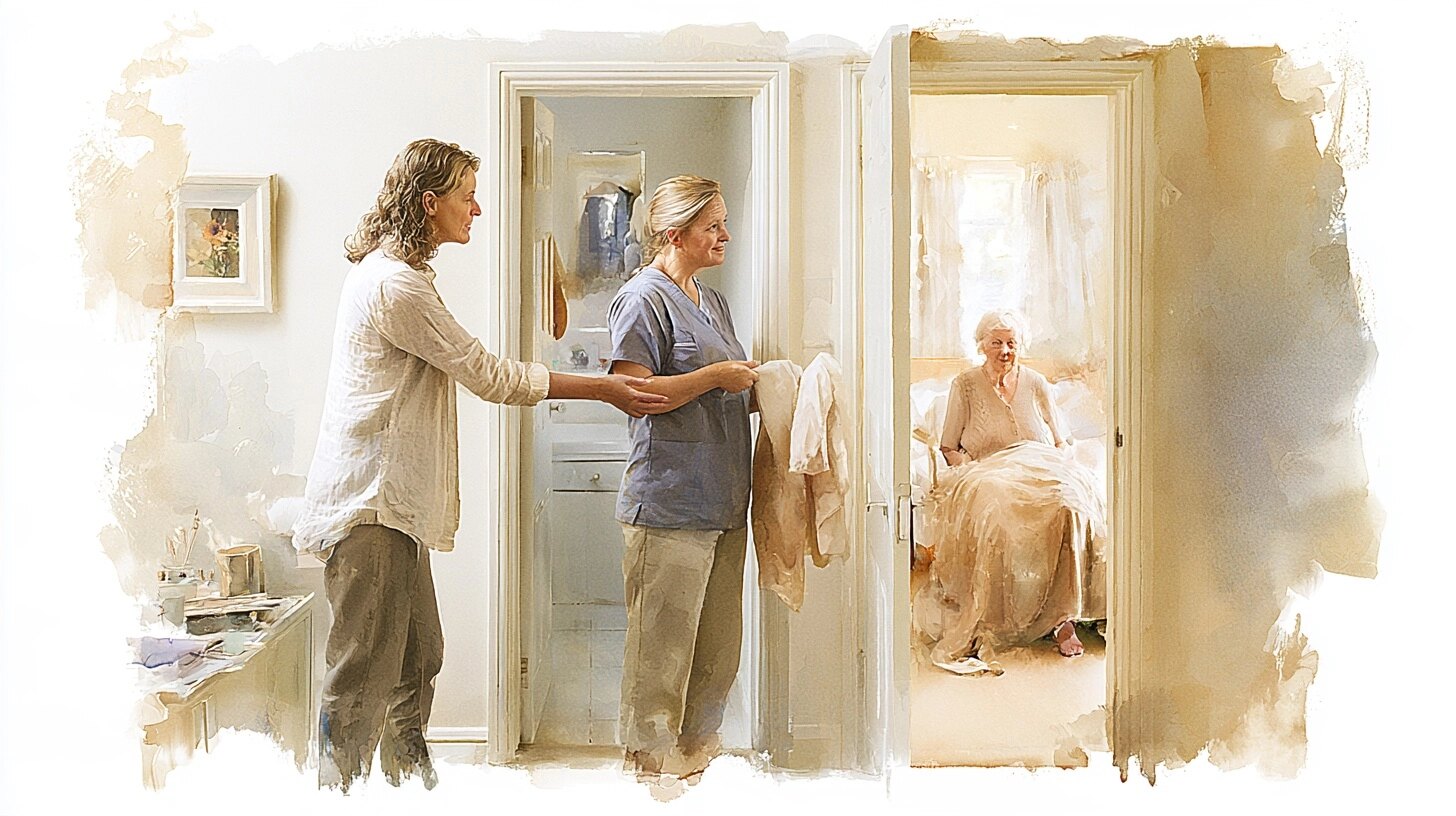
The short answer
- Handing it over is a choice about the relationshipSome parents and partners find it easier to be washed by a carer than by their child or husband or wife, and you are allowed to want to be the son, daughter or partner again.
- Their view comes firstAsk the person you care for what they would prefer, in private, and about the bathroom by name. They may have been hoping you would raise it.
- A carer can do all of the intimate careWashing, the toilet, continence care and dressing are the core of a personal care visit, at £18 to £25 an hour with our fee included.
- Hand it over a step at a timeLet them meet the carer first, start with one task, be in the house for the first visits, and then step out.
PrimeCarers is an introductory service, not a care agency. Carers are self-employed and set their own rates. You choose the carer and agree the visits with them.
Why a stranger can be easier
Why intimate care can be easier from somebody outside the family
Washing somebody, helping them on the toilet and changing a pad are skills that can be learned. What is harder is what they do to two people who already have a long history with each other.
For a parent
Being cared for by the child they raised
For a partner
When a husband or wife becomes a carer
For you
What it takes out of the family carer
Why a stranger can help
What some people say they prefer
None of this is true of every family. Some people are relieved to keep the personal care in the family and would find a stranger harder. The point is that neither preference is wrong, and wanting to stop is a reasonable thing to want, as is not wanting to start when your history with a parent is difficult. When to hand over to a professional covers the wider question of handing over care; this page is about the washing and the toilet.
Carers UK, the charity for unpaid carers, says that it can be very difficult to deal with the change in your relationship when you care for a partner, and suggests talking to somebody about it. Their page on caring and your relationships lists where to find that help. If your partner is the person you look after, caring for a husband, wife or partner covers the rest of that change.
Asking them first
The person you care for should be asked first
This is their body and their bathroom, so what they want matters more than what anybody else thinks. The conversation can be easier than you expect, because the person may have been feeling the same thing.
Before you look for anyone
0 of 6 ticked
How to ask
What to find out
If they say no, that is their decision to make. The Mental Capacity Act 2005 says a person must be assumed to have capacity unless it is shown that they lack it, and that a decision is not a sign of lacking capacity just because others think it unwise. A refusal can soften with time, and it may change once they have met a carer they like. When a parent refuses to wash covers what can sit behind a no, and talking to your family about a carer covers raising it in the first place. Where dementia means your relative can no longer weigh the question up, asking for a male or female carer explains how a decision is made in their best interests.
What a carer does
What a carer does in a personal care visit, and how dignity is kept
Personal care is the practical help somebody needs with their body: washing, the toilet, continence and dressing. A carer can do all of it, and the way it is done matters as much as the task.
| What a carer can do | How dignity is kept | |
|---|---|---|
| Washing | A shower, a bath with equipment, a strip wash at the sink or a wash in bed, and hair, teeth and shaving. | The door shut, a towel over whatever is not being washed, and the person doing what they can for themselves. |
| The toilet | Help getting to and from the toilet or a commode, with clothing, and with wiping and washing hands afterwards. | Privacy while they go wherever it is safe, and no comment or hurry. |
| Continence care | Changing pads and wet clothes or bedding, washing and drying the skin, and noticing soreness. | Treated as ordinary, with the change done calmly and skin problems passed on to the family. |
| Dressing | Help choosing clothes and getting them on, including tights, buttons, shoes and any support stockings. | Their choice of clothes, dressed in stages, and never left sitting half undressed. |
Washing
- What a carer can do
- A shower, a bath with equipment, a strip wash at the sink or a wash in bed, and hair, teeth and shaving.
- How dignity is kept
- The door shut, a towel over whatever is not being washed, and the person doing what they can for themselves.
The toilet
- What a carer can do
- Help getting to and from the toilet or a commode, with clothing, and with wiping and washing hands afterwards.
- How dignity is kept
- Privacy while they go wherever it is safe, and no comment or hurry.
Continence care
- What a carer can do
- Changing pads and wet clothes or bedding, washing and drying the skin, and noticing soreness.
- How dignity is kept
- Treated as ordinary, with the change done calmly and skin problems passed on to the family.
Dressing
- What a carer can do
- Help choosing clothes and getting them on, including tights, buttons, shoes and any support stockings.
- How dignity is kept
- Their choice of clothes, dressed in stages, and never left sitting half undressed.
Agree which of these each visit covers before the first one, and write it down for the carer.
The NHS reminds anyone helping with a wash that many people become self-conscious when undressed in front of others, and to be sensitive to the situation; its guide to helping someone keep clean has more on this. Privacy and dignity of the elderly covers the habits that protect it, managing incontinence covers the GP and the NHS continence service, and what personal care covers sets out the wider list of tasks.
If your relative would rather a woman or a man did this, say so from the start. You can ask for a female or male carer and read each profile before you get in touch; asking for a male or female carer covers how.
Every carer on PrimeCarers has had an identity check, a right to work check and an accepted criminal-record check (Enhanced DBS issued within the last 2 years, DBS Update Service, Scottish PVG or Access NI), and an online interview, before they appear in a search. Every visit booked through PrimeCarers is insured, by the carer's own policy or by cover PrimeCarers arranges where they do not hold one. PrimeCarers does not check training or qualifications, so ask each carer about their experience with personal care and continence care, and read what they say on their profile. How we vet every carer sets out the checks.
A gentle handover
How to hand it over gently, and what stays with you
Handing over does not have to happen in one morning. Going stage by stage gives your relative time to get used to a new person, and lets you see that it is going well before you step back.
Meet the carer before any washing
Before personal care starts
The carer
Comes for a short visit with no personal care in it. Sits and talks with your relative and hears how they like things done, from the temperature of the water to which towel is theirs.
The family
You are there for all of it. You introduce them, then let your relative ask their own questions and say what matters to them.
One task first, with you in the house
The first visits
The carer
Takes on the one task your relative finds least exposing, such as washing their hair or helping them dress. They say what they are about to do before they do it.
The family
You stay in the house but outside the room, near enough to be called and not watching. Afterwards, ask your relative on their own how it went.
The rest of the routine, a step at a time
Over the next week or two
The carer
Adds the next task only once the last one is going calmly: the full wash, then help with the toilet and continence care.
The family
You arrive as the visit ends rather than at the start. You keep asking your relative, and you tell the carer anything they would rather not say themselves.
Personal care without the family there
Once it is part of the week
The carer
Does the personal care visits on their own at the times you agreed, and tells you if something changes, such as sore skin or a new difficulty on the stairs.
The family
You come at other times, as a son, daughter or partner. The appointments, the decisions and the company stay with you.
Some people want to go faster than this and some need longer at each stage. Go at the pace of the person being washed, and give it a couple of weeks before you judge whether it is working. Adjusting to having a personal carer covers the first weeks in more detail. If the carer is not right for your relative, either of you can end the arrangement with 48 hours' notice for hourly care, and you can look for somebody else.
Handing over the personal care does not hand over your relative. You still know them better than anybody, and you are still the person the carer should hear from about changes in their health, their mood and what they like. The appointments, the decisions, the phone calls and the time spent together all stay with you. Some family carers find they have more to give to those once the bathroom is somebody else's job. If the caring is wearing you down more generally, a carer's assessment from the council is your right in your own name.
Questions
Questions families ask about handing over intimate care
No. Deciding that a carer will do the washing and the toilet is a decision about how you want to be with her, not a sign you care less. Some parents find it easier to be helped by somebody outside the family. Ask her what she would prefer, and keep doing the parts of her care that only you can do.
Start by asking what worries him about it: being seen undressed, who the person will be, or losing a routine that works. A carer he has met first, of the sex he would prefer, doing one small task while you are in the house, can feel very different from the idea of a stranger. If he still says no, it is his decision, and it may change with time.
Whatever you agree with them from washing, help with the toilet, continence care and dressing, usually with breakfast or medication prompts around it. A day in the life of a personal carer walks through a typical morning.
If your relative wants you there, yes. Stay in the house but outside the room, so they have privacy and you can be called. After a few visits, arrive as the visit ends instead, and then not at all for the personal care. Ask your relative what they would like.
PrimeCarers checks identity, right to work and an accepted criminal-record check (Enhanced DBS issued within the last 2 years, DBS Update Service, Scottish PVG or Access NI), and interviews every carer online. It does not check training or qualifications, so read the carer's profile and ask them directly about their experience with washing, continence care and the equipment your relative uses.