
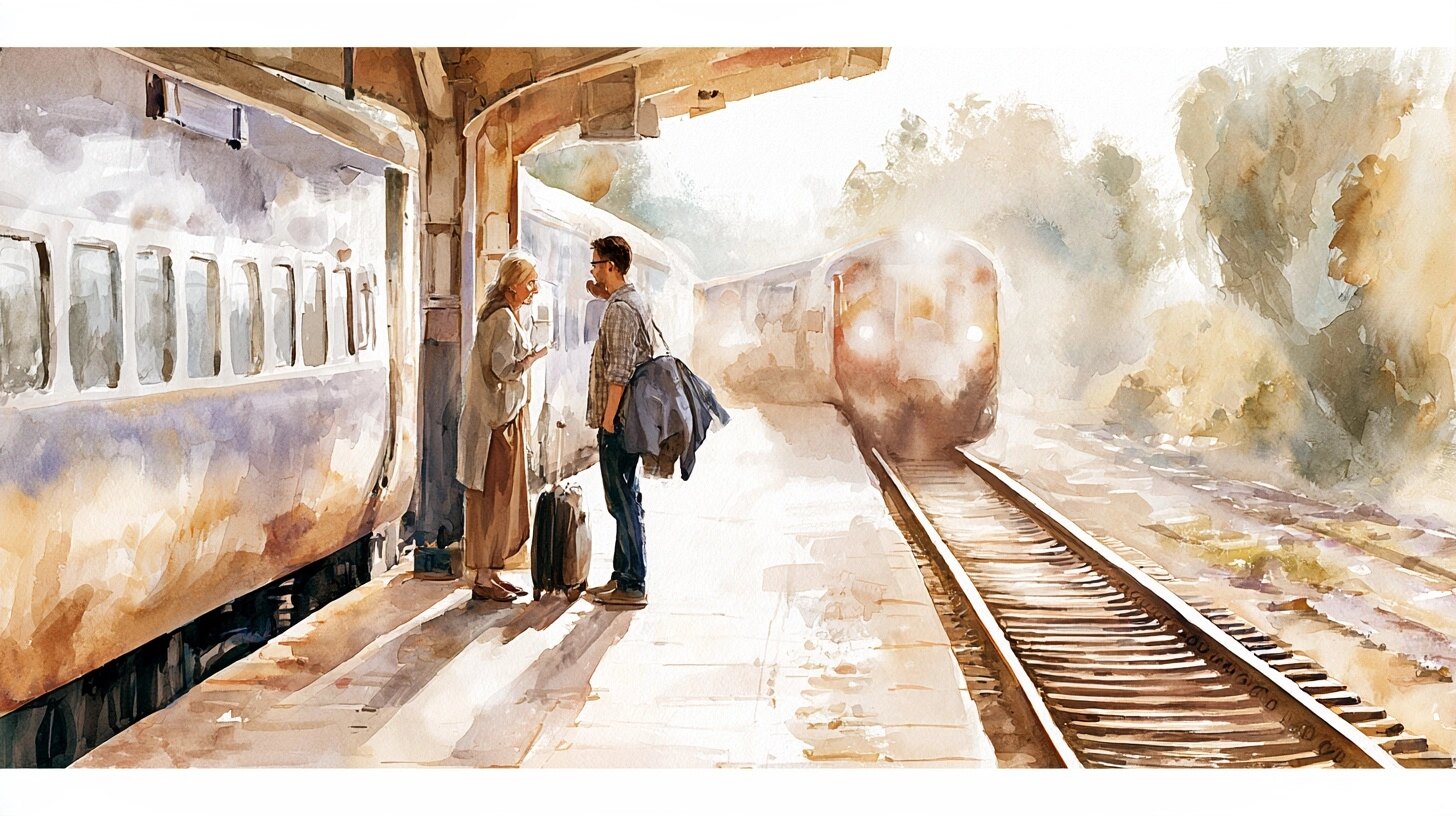
The short answer
- Travel the day beforeA long journey and a long wedding on the same day is too much for many older guests. Arriving the afternoon before gives them a night to recover.
- Assistance on trains and at airports is freeRail staff can be booked up to 2 hours before a journey. Airport help should be requested when you book, or at least 48 hours before the flight.
- Book the accessible room firstReserve it as soon as the date and venue are fixed, and ask the hotel the specific questions that matter for your relative.
- Decide who is with them at nightA relative in the same room, a connecting room, or a carer staying over. Settle it before the day, along with how they call for help.
Travel rules are from National Rail, Network Rail and the Civil Aviation Authority, and health advice abroad from the NHS and gov.uk, checked October 2026.
Plan three days
Plan it as three days rather than one
A wedding that is a long way from home is a trip as well as a party. The guest who copes with a four-hour wedding in their own town can struggle when there is a long journey and a strange bedroom on either side of it.
The simplest change you can make is to split the travelling from the celebrating. Arriving the afternoon before means your relative does the long part of the journey on a quiet day, sees the room in daylight and has a night's sleep before the ceremony. The morning after then becomes part of the plan too, rather than a rushed check-out with a tired guest.
For each of the three days, name the person responsible at each stage. When everyone assumes someone else has it in hand, the gaps appear: nobody has booked help for the return train, or the person meant to be sleeping next door is also the best man. The plan below is a starting point to copy and adjust. If you are earlier in the planning, where to start with an older or disabled wedding guest covers the invitation, the venue and the people involved.
The day before
Arrive with an afternoon and an evening in hand, so the long journey and the wedding fall on different days.
Morning
Set off after the usual routine
Keep breakfast, washing and the morning medicines at their normal times, then leave. Medicines, a change of clothes and any continence supplies go in the bag that stays with them, not in the suitcase.
Whoever usually helps them in the morning
Journey
Help booked at every change
Station or airport assistance booked for the way there and the way back, seats together, and a stop with an accessible toilet every couple of hours by road.
The person travelling with them
Arrival
Walk the room before they sit down
Check the route from the car to the bed and the bathroom. Ask for anything missing now, while the hotel staff have time to sort it.
The person travelling with them
Evening
A quiet supper and an early night
Leave the pre-wedding drinks if they are tired. Lay out tomorrow’s clothes and medicines, and leave the bathroom light on.
Whoever is sleeping in or next to their room
The wedding day
A slow start, someone beside them from the first photograph until they leave, and a plan for when that will be.
Morning
Dressed with time to spare
Allow twice as long as at home for washing and dressing in a strange bathroom. Medicines go into a small bag with the timings written on a card.
Whoever is sleeping in or next to their room
Afternoon
One named person beside them
Someone whose job is this guest: toilets, drinks, medicines, a seat near the door and a quiet room to rest in between the ceremony and the meal.
A family member who is not in the wedding party, or a carer
Evening
Leave when they are ready
Agree a rough leaving time in advance and keep to it if they tire. If the hotel is not the venue, book the lift back before the day.
The person beside them all day
The morning after
Expect them to be tired after a long wedding, so build in a late start and a short, simple journey home.
Morning
A late breakfast and a late check-out
Ask the hotel for a late check-out when you book the room. Keep medicines on time even if breakfast moves.
Whoever stayed in or next to their room
Home
A call or a visit that evening
Someone checks they got in, have eaten and have their evening medicines. Expect a slow couple of days afterwards.
The usual family carer, or a neighbour
It helps to write this down with names next to each line and share it with everyone involved, so the person travelling with your relative knows who takes over at the hotel. A wedding day care plan you can print has space for the routine, medicines and contacts.
Train, plane or car
Getting there by train, plane or car
Each way of travelling has its own system for asking for help. Booking it is free in each case, and it makes a long journey far more manageable for someone who is frail or easily confused.
| How to ask for help | Notice | What to watch for | |
|---|---|---|---|
| Train | Passenger Assist, through the train company, the Passenger Assistance app or website, or by phone. Staff can meet you, put out a ramp and help with changes. | Up to 2 hours before the journey. You can also turn up and ask staff. | Book the return journey at the same time. Reserve seats together and near the toilet if you can. |
| Plane | Tell the airline, travel agent or tour operator when you book. The airport provides the help on the ground, including a wheelchair to the gate. | When you book, or at least 48 hours before the flight. | Ask for seats together. Tell the airline about any wheelchair or walker, as up to two mobility items travel free. |
| Car | No booking needed, but plan the stops before you leave. | None. | A Blue Badge only counts when the holder is in the car. Hotel and venue car parks set their own rules on parking. |
Train
- How to ask for help
- Passenger Assist, through the train company, the Passenger Assistance app or website, or by phone. Staff can meet you, put out a ramp and help with changes.
- Notice
- Up to 2 hours before the journey. You can also turn up and ask staff.
- What to watch for
- Book the return journey at the same time. Reserve seats together and near the toilet if you can.
Plane
- How to ask for help
- Tell the airline, travel agent or tour operator when you book. The airport provides the help on the ground, including a wheelchair to the gate.
- Notice
- When you book, or at least 48 hours before the flight.
- What to watch for
- Ask for seats together. Tell the airline about any wheelchair or walker, as up to two mobility items travel free.
Car
- How to ask for help
- No booking needed, but plan the stops before you leave.
- Notice
- None.
- What to watch for
- A Blue Badge only counts when the holder is in the car. Hotel and venue car parks set their own rules on parking.
Sources: National Rail and Network Rail on Passenger Assist, and the Civil Aviation Authority on assisted travel and mobility equipment, October 2026.
By trainSection titled By%20train
Passenger Assist is the rail industry's free booking service. Staff can meet your relative at the entrance, help them through the station and onto the train, and meet them at each change and at the other end. Train companies accept bookings up to 2 hours before the journey, and you can still turn up and ask, but booking ahead gives the station time to have someone ready. You can book on the National Rail Passenger Assist page, through the train company or with the Passenger Assistance app. If your relative travels by train more than once or twice a year, look at the Disabled Persons Railcard to see whether they qualify.
Flying with elderly parentsSection titled Flying%20with%20elderly%20parents
The Civil Aviation Authority says passengers are entitled to free assistance when flying from any UK airport, and when flying into the UK on a UK or EU airline. That includes people with hidden conditions such as dementia. Ask for it when you book the tickets, or at least 48 hours before you fly. The help can start at the car park or drop-off point and includes a wheelchair to the gate, help through security and help boarding. A family member can go with them, and your relative's own wheelchair can usually be used up to the gate and should be returned at the arrival gate.
People with a stable condition do not usually need clearance to fly. If your relative has been unwell recently, or the airline has concerns, it may ask for a form or a doctor's note, so raise anything significant when you book.
By carSection titled By%20car
A long drive can be the easiest option for someone who tires quickly, because you can stop whenever they need to. Plan stops with accessible toilets every couple of hours. If your relative uses a hoist or needs a changing bench, the Changing Places map lists toilets with the equipment and space for a carer. Getting an older guest to and from the wedding covers the shorter trips between the hotel, the ceremony and the reception.
A wedding abroad
Extra steps when the wedding is abroad
A destination wedding adds paperwork and a longer day of travel. These are the things to settle in the weeks before, in the order they tend to come up.
- 1
Buy travel insurance and declare every condition
When you bookGovernment guidance is to declare existing conditions and any pending tests or treatment, because failing to declare something can invalidate the policy. That includes memory problems and mental health conditions. - 2
Apply for a GHIC if the wedding is in Europe
FreeA UK Global Health Insurance Card covers necessary state healthcare in the EEA and some other countries, on the same basis as a local resident. It is free from the NHS website, and it is not a replacement for travel insurance. - 3
Sort out the medicines
A few weeks beforeCarry medicines in hand luggage in their pharmacy packaging, with a copy of the prescription or a letter from the GP. Take enough for delays. Check controlled drugs are allowed with the embassy of the country you are visiting. - 4
Check the Blue Badge and the ground at the venue
Before you goA UK Blue Badge can be used in some EU countries, Liechtenstein, Norway and Switzerland, and the concessions vary. Ask the venue about slopes, steps, sand and gravel, which are harder to manage abroad.
Time differences can move medicine times. Ask the GP or pharmacist how to shift the doses across the trip, and write the new times on the card that travels with your relative. The Foreign, Commonwealth and Development Office travel advice lists the entry rules for each country, and the NHS guide to healthcare abroad explains what is covered and where.
If a long flight looks like too much, the couple may prefer to hear that early. A video call from the ceremony or a second celebration at home can include them instead, and the holidays guides look at which kinds of trip suit an older person.
The hotel room
Booking an accessible hotel room for the wedding early
The room is where your relative will spend the most time on the trip, apart from the wedding itself. A good one makes the evening, the night and the morning far easier.
Book the accessible room as soon as the date and venue are fixed, before the rest of the wedding party fills the hotel. Hotels describe accessible rooms in different ways, so ask about the features your relative needs rather than relying on the word "accessible". Ring and speak to someone, then confirm what they told you by email.
Questions to ask the hotel
0 of 9 ticked
Getting to the room
Inside the room
Equipment and timings
Under the Equality Act 2010, businesses that provide services to the public, hotels among them, have a duty to make reasonable adjustments for disabled people, such as changing the way they do things or providing equipment or help. The Act also says a business cannot make a disabled person pay the cost of making a reasonable adjustment. Citizens Advice explains the duty to make reasonable adjustments and what to do if a business refuses. Tourism for All is a charity that gives information on accessible places to stay.
If the hotel is also the venue, use the same call to cover the day itself. The accessible wedding venue checklist has the questions about the ceremony room, the toilets and the seating, and hiring a wheelchair or commode for the wedding explains how to arrange equipment near the venue.
Who stays overnight
Who stays in the room, next door, or overnight as a carer
At home your relative has a routine for the night. In a hotel, after a long and exciting day, they may need more help than usual, so decide in advance who will be close by.
Think about what happens at home now. If your relative manages the night alone, a room next door with a phone number to ring may be enough. If they get up to use the toilet, have fallen at night, or are confused when they wake in a strange place, someone should be in the room or in a connecting room. Some people living with dementia become more unsettled in the late afternoon and evening, which our page on sundowning explains, so the end of a wedding is a time to have help nearby.
A relative in the same room
Closest help, least sleep
A connecting or next-door room
Privacy, with help nearby
A carer staying over
Agreed separately in advance
Going home the same night
When the trip allows it
For a relative who already has a carer at home, ask that carer whether they would come on the trip, since they know the routine. Waking nights and sleeping nights explains the difference between a carer who stays awake and one who sleeps and is woken if needed, which is the first thing to settle with anyone staying over. If a carer travels with you, the client contract says travel costs are only charged where they have been agreed in advance in writing, and other expenses are reimbursed with receipts when you have agreed them in advance.
The wedding itself is the other half of the question. If the person who usually looks after your relative is also the mother of the bride, it is hard for her to do both. That is the point to think about a wedding carer who stays with them all day, from the journey to the venue to the journey back to the hotel, so the family can be guests. For someone living with dementia, taking a parent with dementia to a wedding has more on keeping the day calm.
The morning after
The morning after and the journey home
It is easy to plan up to the end of the evening and stop there. For an older guest, the day after a wedding can be the hardest part of the trip, because they are tired and the routine has slipped.
What helps
- A late check-out, booked when you reserve the room
- Breakfast brought to the room or a quiet table, with the morning medicines on time
- The return train or flight assistance booked when you booked the outward journey
- A simple journey home, with one person whose only job is your relative
- A phone call or visit that evening to check they have eaten and taken their medicines
What tends to go wrong
- A morning-after brunch that turns into a second long day
- Medicines missed because breakfast was late and the bags were already packed
- Assistance booked one way only, so nobody meets them at the change
- The person driving home being the one who was up latest at the party
- Assuming they will be back to normal the next day
Expect a slow couple of days afterwards. Tiredness, a disturbed night and a change of routine can leave an older person more confused or unsteady for a little while, so it is worth someone checking in more often that week. If they normally have visits at home, let the carer know about the trip so they can look out for anything that seems different. Medicines on the day and on the journey are covered in more detail in toilets, continence and medicines on a wedding day.
Questions
Questions families ask about travelling to a wedding
Yes, a person with dementia can travel with the right planning and someone they know beside them, though it depends on how they cope with change. Travel the day before, at quieter times, and book assistance at stations and airports, which is available for hidden conditions such as dementia. Carry a recent photograph and note what they are wearing. If travel has upset them badly before, talk it through with the couple early. Deciding whether someone with dementia should come may help.
Free assistance is available when flying from any UK airport, and into the UK on a UK or EU airline. Ask the airline or travel agent when you book, or at least 48 hours before the flight. Help can start at the car park or drop-off and includes a wheelchair to the gate, help through security and boarding. Up to two mobility items travel free.
No, but it is better to. Train companies accept Passenger Assist bookings up to 2 hours before the journey, and you can turn up and ask a member of staff. Booking ahead means someone is expecting your relative at each station, including on the way home.
Room prices are set by each hotel. The Equality Act 2010 says a business with a duty to make reasonable adjustments, such as providing a portable ramp or moving furniture, cannot make the disabled person pay the cost of making them. Book early and confirm in writing what the room has.
It depends on what the night is like at home. If they get up in the night, have fallen, or wake confused in strange places, someone should be in the same room or a connecting one. If they manage alone, a room next door and a phone by the bed may be enough.
The family, by agreement with the carer before the trip. Under the PrimeCarers client contract, travel costs are only charged where agreed in advance in writing, and other expenses are reimbursed with receipts where you agreed them in advance. For a wedding carer, overnight support and travel expenses are agreed separately from the day.
Only when the badge holder is in the car, or being dropped off or collected. Hotel and venue car parks set their own rules, so ask whether badge holders park free. A UK badge can be used in some EU countries, Liechtenstein, Norway and Switzerland, with local concessions that vary.