
The journey
Collecting your parent from home, helping them in and out of the car or onto the train, and planning the toilet stops on the way.
Days out with a carer
Checked places to visit in every county, with the toilets, parking and step-free routes confirmed. And if your parent needs a hand, a self-employed carer can come for the day, at one price agreed before you book.
Tell us about the day and what you would like them to do, and we will set your account up as you go.
Prefer to talk it through? Call 0203 369 3624
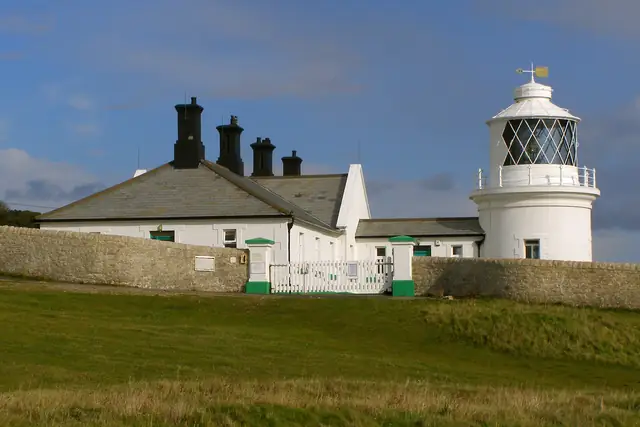
Durlston Country Park, Dorset
Photo: JimChampion, CC BY-SA 3.0, via Wikimedia Commons
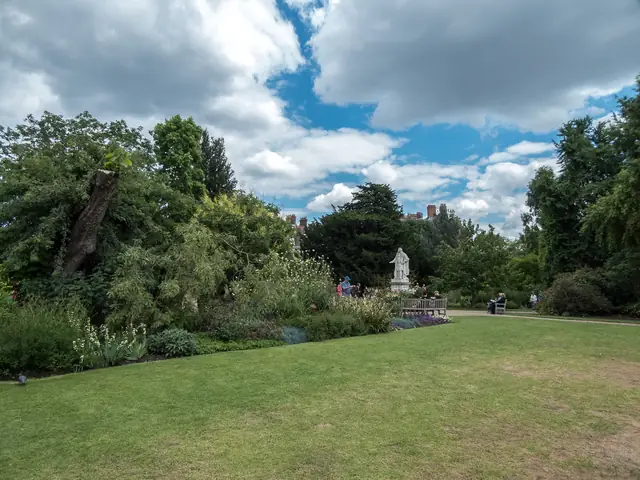
Chelsea Physic Garden, Kensington and Chelsea
Photo: Christine Matthews, CC BY-SA 2.0, via Wikimedia Commons

Brodsworth Hall and Gardens, South Yorkshire
Photo: Christopher Down, CC BY 4.0, via Wikimedia Commons
Find your county
Choose the county your parent lives in, or the one you are visiting, to go straight to its list of checked places. Every county is listed below by region, with the number of places beside it.
Each companionship care county page has a guide to places to visit, written for somebody taking an older parent out for the day. Between them they hold 1,530 places across 191 counties in England, Wales, Scotland and Northern Ireland. A place was listed only if it sits inside the county, its own website names it, and every access fact shown for it is stated on the place's own access page or in its AccessAble guide. Where a place says nothing about a facility, the county page says it is unknown rather than guessing.
32 counties, 264 checked places
14 counties, 127 checked places
15 counties, 127 checked places
10 counties, 82 checked places
9 counties, 73 checked places
8 counties, 71 checked places
8 counties, 69 checked places
8 counties, 60 checked places
8 counties, 64 checked places
21 counties, 173 checked places
32 counties, 245 checked places
26 counties, 175 checked places
The number beside each county is how many places on its page passed our checks. Counties are the ones our county pages use, which in places follow older county names.
Some counties have only a handful of places, because a place that did not pass the checks was left out rather than listed on trust. If your parent lives near a county border, look at the neighbouring county too.
A carer for the day
A carer can take your parent out on their own, or come along with the family. You book one day, and nothing carries on afterwards unless you want it to.
Collecting your parent from home, helping them in and out of the car or onto the train, and planning the toilet stops on the way.
Pushing the wheelchair, finding the step-free way in, and walking at your parent's pace with an arm to lean on.
Going with your parent to the toilet and helping them there if they need it, so a long day is still possible.
Reminders for anything due during the day, and making sure your parent eats and drinks enough while they are out.
Watching how tired your parent is getting, planning the rests, and heading home while there is still energy for the journey.
Coming along with the family, so somebody is with your parent while you park, queue or look after the children.
If your parent already has a companion who visits, ask them first: a familiar face makes a day out easier, and much of what a companion does at home carries over to an outing. If neither of you drives, look for a carer who drives and has use of a car. Not every carer does, and a carer's profile says whether they do.
How it works
The date, the part of the day, what help your parent needs and where you are going. It takes about two minutes.
Create your free account and the day goes to carers who can get there. Read their profiles and reviews, and message the ones you like.
You know the price for the whole day before anything is booked. Asking costs nothing and you are under no obligation.
Pick-up time, where you are going, the rests, and who pays for tickets and lunch. Write it down and enjoy the day.
What it costs
Every day out is different: a morning at a garden ten minutes from home is not the same as a full day at the coast with a long drive each way. So tell us the date, where you are going and what help your parent needs, and you will know the price for the whole day before anything is booked. Asking is free, and you are under no obligation.
Tickets, parking and meals on the day are separate. Agree before the day who pays for what. Anything the carer pays for your parent is refunded at cost against receipts, and mileage is only payable if you have agreed it with the carer in advance and in writing.
If you want regular help after the day out, ongoing visits are booked differently: the companionship care page explains how that works and what carers charge.
Places by type
If you are not sure what kind of day your parent would enjoy, start with the type rather than the place. These are the places in each group that confirm the most access facts, no two from the same part of the country.
Photo: Christine Matthews, CC BY-SA 2.0, via Wikimedia Commons
113 checked across the UK
Paths, benches and somewhere for tea. A garden can be walked in short loops with a sit-down between each one.
Chelsea Physic Garden
Chelsea, Kensington and Chelsea · allow an hour or two
The garden is on one level with flat shingle paths, wheelchairs can be borrowed and there are wheelchair-accessible toilets in the main building and the café.
The Alnwick Garden
Alnwick, Northumberland · allow half a day
The garden has smooth solid surfaces and wheelchair accessible routes, free wheelchairs and hire scooters can be booked, there is an accessible car park by the Treehouse, and a carer goes in free.
The Bishop's Palace
Wells, Somerset · allow half a day
Paths are wide and level throughout, there is a wheelchair-accessible lift, accessible toilets, a mobility scooter and wheelchair to hire, and three Blue Badge spaces that can be booked 48 hours ahead.
Photo: JimChampion, CC BY-SA 3.0, via Wikimedia Commons
100 checked across the UK
A flat promenade with a view does a great deal for somebody who grew up near the sea or always went there on holiday.
Durlston Country Park
Swanage, Dorset · allow half a day · free entry
A short, gently sloping path links the car park to the castle, which has platform lifts, accessible toilets and a café, and all-terrain Tramper buggies can be booked for the park.
Holkham Beach and The Lookout
Wells next the Sea, Norfolk · allow an hour or two · free entry
The Lookout has ramped step-free access, level floors inside and an adapted toilet, and there is Blue Badge parking at its own car park.
Bridlington South Beach
Bridlington, East Riding of Yorkshire · allow half a day · free entry
Ramps lead from the promenade onto the beach, beach wheelchairs can be booked through the Coastal Services Office, and there are RADAR toilets and a Changing Places toilet on the South Promenade.

Photo: Nilfanion derivative work: Pasicles (talk), CC BY-SA 3.0, via Wikimedia Commons
386 checked across the UK
Indoors, warm and dry, and good for a day when the weather turns. Check which floors the lift reaches and where the seats are.
Brading Roman Villa
Brading, Isle of Wight · allow an hour or two
The building is designed for easy access, with level floors, a wheelchair to borrow, three disabled parking spaces, a disabled toilet near the café and free entry for carers.
Glasgow Science Centre
Pacific Quay, Glasgow · allow half a day
The entrances are wheelchair accessible, wheelchairs can be borrowed from the ticket desk, fully accessible toilets are on every level and Blue Badge holders park free.
Hartlepool Art Gallery
Hartlepool, Hartlepool · allow an hour or two · free entry
There is step-free level access throughout, a free wheelchair on request, an accessible toilet by the café, walk-and-rest stools and three Blue Badge bays opposite.

Photo: MrsEllacott, CC BY-SA 4.0, via Wikimedia Commons
202 checked across the UK
Many are a mixture: grounds and tea rooms that are easy, and older buildings with stairs. Look at what each one confirms.
Kenwood
Hampstead, Camden · allow half a day · free entry
The house is step free with a lift to the first floor and indoor wheelchairs to borrow, drop-off is allowed at the front, and there are many benches with backs and armrests around the grounds.
Brodsworth Hall and Gardens
Doncaster, South Yorkshire · allow half a day
The whole ground floor is level, the original Victorian lift reaches the family bedrooms, there is ramped access to the tearoom and a golf buggy runs between the car park and the hall.
Dunham Massey
Altrincham, Manchester · allow half a day
Blue Badge bays are next to Visitor Reception, powered mobility vehicles and manual wheelchairs can be borrowed, a shuttle runs round part of the site and adapted toilets are in three places.
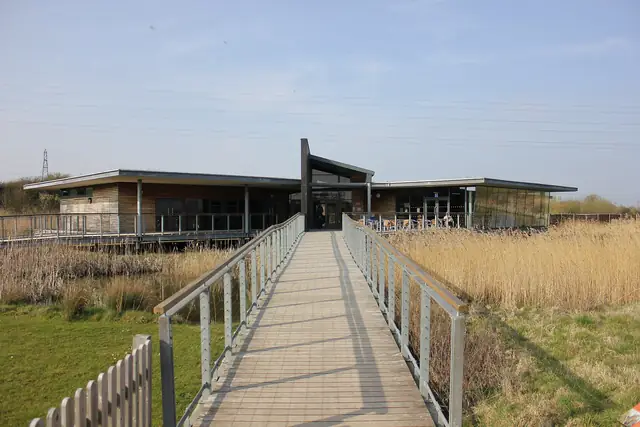
Photo: Mrjohncummings, CC BY-SA 3.0, via Wikimedia Commons
421 checked across the UK
Almost all the parks and most of the nature spots in our research are free to enter, and a visit is easy to cut short if the day is not going well.
RSPB Newport Wetlands
Nash, Newport · allow half a day · free entry
There are 10 Blue Badge spaces, accessible toilets on the ground floor of the visitor centre with step-free access, and three mobility scooters and two wheelchairs to borrow.
Scottish Seabird Centre
North Berwick, East Lothian · allow an hour or two
The centre has level access with a lift between its two floors, an accessible toilet, wheelchairs to borrow if you ask ahead and Blue Badge parking beside the building, although the boat trips are not suitable for people with limited mobility.
Crom Estate
Newtownbutler, Fermanagh · allow half a day
The visitor centre and tearoom have step-free access, there are adapted toilets and Blue Badge bays, and a manual wheelchair, mobility scooter and tramper can be borrowed for the estate paths.

Photo: Diego Delso, CC BY-SA 4.0, via Wikimedia Commons
69 checked across the UK
Quiet, with plenty of seating, and somewhere to sit and listen if a service or a choir practice is on.
Norwich Cathedral
Norwich, Norfolk · allow an hour or two · free entry
There is good level access through the cathedral, lifts to the café and a wheelchair-accessible toilet, free wheelchair loans to book ahead and a few two-hour Blue Badge spaces in the Close.
Westminster Abbey
London, Westminster · allow half a day
Most of the self-guided route is step-free, manual wheelchairs can be borrowed free of charge, there is bench seating throughout the nave and fully accessible toilets in the cloisters.
Bath Abbey
Bath, Bath and North East Somerset · allow an hour or two
There is level access at the main entrance and across the ground floor, a wheelchair can be borrowed free of charge, and accessible toilets are available, so it is an easy stop alongside the Roman Baths next door.

Photo: James Allan, CC BY-SA 2.0, via Wikimedia Commons
24 checked across the UK
A trip where the journey is the outing and your parent can sit for most of it. Ask about steps onto the carriage or boat.
Loch Katrine cruises
Callander, Stirling · allow half a day
Disabled visitors park free in bays by the café and toilets, there is a lift to the café, accessible toilets on site and on the steamship, and up to two carers sail free.
Ravenglass and Eskdale Railway
Ravenglass, Cumbria · allow half a day
At Ravenglass the public areas are level with accessible parking outside the booking office and an accessible toilet, carers of passengers with access needs travel free on standard fares, and an all-terrain Tramper scooter can be hired.
Isle of Wight Steam Railway
Havenstreet, Isle of Wight · allow half a day
Every train has a wheelchair-accessible standard compartment that can be booked online, and there is free parking with disabled bays and level access to the booking office at Havenstreet.
What suits your parent depends on how far they can walk, how long they can manage before they need to rest, and what they have always liked. Somebody who spent every summer at the seaside may get more from an hour on a flat promenade than a whole day at a stately home. A place with the most facilities is a good first trip, but a smaller place closer to home, with less walking, can be the better day. For somewhere with no entry charge, free days out for older people lists them by region. For a garden with level paths, see accessible gardens to visit with an older parent, and for a wet or cold day, indoor days out for older people.
What to look for
Five things decide whether a place works for somebody who tires easily or uses a stick, a frame or a wheelchair. The county pages show each of them for every place.
504
of 1,530 checked places confirm an accessible toilet
On the place's own access page, in its own words.
395
of 1,530 checked places confirm Blue Badge or accessible parking
Close to the entrance, which matters more than the size of the car park.
207
of 1,530 checked places confirm the visit is step-free
A further group are partly step-free, with some areas out of reach.
248
of 1,530 checked places lend wheelchairs to visitors
Ring ahead to ask whether one can be kept for you.
PrimeCarers research into places to visit, each fact kept only where the place's own access page or its AccessAble guide states it, 2026.
Ramps, lifts or level paths from the car park to the main parts of the visit. Partly step-free means some areas are out of reach, such as upper rooms or a woodland walk, so ask which before you go.
The one to check first. Knowing where it is takes away a worry that can stop an older person going out at all. If your parent needs a hoist and a changing bench, look for a Changing Places toilet.
Blue Badge bays close to the door matter more than the size of the car park. A long walk across gravel can use up the energy your parent needed for the visit.
Somebody who walks indoors may manage a garden or a big house far better in a borrowed wheelchair. Places may have only a few, so ring ahead and ask for one to be kept.
A café, benches along the way, and a sheltered seat to rest on. If your parent can only walk a short way, plan the rests in rather than hoping to find them.
Ring and ask three things: how far it is from the Blue Badge bays to the entrance, where the nearest accessible toilet to the café is, and which parts have steps.
The figures count the places that state each facility in their own access information. A place that does not mention a facility may still have it, so treat a gap as a reason to ring, not a reason to cross the place off. The Changing Places map shows where the toilets with a hoist and a changing bench are.
Planning the day
A lot of what makes a day out go well is decided the day before. Check the practical side, then leave the day itself free to go at your parent's pace.
Read its access page
Each county page links to it. Look for the toilets, the parking and any steps.
Check the opening times and booking
Some houses and gardens close for part of the week or the winter, and some ask you to book a time slot.
Ask whether a carer goes in free
Some places let an essential companion in free or at a lower price. Ask what proof they want to see.
Pick a quiet time
A weekday morning outside the school holidays is usually calmer than a sunny Saturday afternoon.
Keep the first trip close to home
A long drive there and back can take more out of somebody than the visit itself.
Plan a toilet stop if the drive is over an hour
A service station or a supermarket with an accessible toilet is easier than a lay-by.
Take the Blue Badge and the parking clock
The badge belongs to your parent and can be shown in any car they travel in, including a carer's.
Medicines for the whole day
And a list of what your parent takes, in a bag that stays with whoever is with them.
A change of clothes, pads if used, and wipes
Packing them means a small accident does not have to end the day.
Water, a snack and a light layer
Offer drinks through the day rather than waiting to be asked.
Agree a time to head home before you arrive
Leaving while your parent still has energy for the journey back is better than leaving when they are worn out.
Sit down every half hour or so
Write the cafés and benches into the plan.
Tell somebody at home where you are going
Especially if a carer is taking your parent and you are not going yourself.
In hot weather, take extra care. The NHS lists people aged 65 and over among those most at risk in a heatwave, and advises keeping to the shade between 11am and 3pm and having cold food and regular cold drinks. On a hot day, choose somewhere indoors or with plenty of shade. The NHS heatwave advice has the full list.
Getting there
The journey is part of the day and can be the hardest part. These schemes make each way of travelling easier, so check which ones your parent can use before you choose where to go.
For parking close to the entrance. Your parent may qualify if they have severe difficulty walking, or find it very hard to plan or follow a journey because of a condition such as dementia. You can apply on their behalf through the council.
Station staff help your parent through the station and onto the train, with a ramp if needed, and meet them at the other end. Book it through National Rail as early as you can.
There is a railcard for disabled people and a separate one for older people. Look at both to see which your parent qualifies for and which saves more.
Free local bus travel from State Pension age in England, and from 60 in Scotland, Wales and Northern Ireland. You apply through the council or the local transport body.
A sunflower lanyard or badge tells staff at stations, shops and attractions that the wearer has a disability that may not be visible, and may need help, time or patience.
The gov.uk Blue Badge page explains who can apply and what it costs in each nation, and in Northern Ireland you apply through nidirect. Councils usually decide within 12 weeks, so apply well before the summer. The badge can be shown in any vehicle your parent travels in, as long as they are in it or being dropped off or collected. Train help is booked through Passenger Assist, and the railcard for disabled people is the Disabled Persons Railcard. The gov.uk bus pass page takes you to your own council's application, and the Hidden Disabilities Sunflower site explains where the lanyard is recognised.
Dementia and tiredness
A day out can still go well for somebody living with dementia or a long-term condition. Keep the plan short, choose somewhere familiar or quiet, and make sure there is an easy way to come home early.
Familiar places tend to work better than new ones for somebody with dementia: a seafront they walked along for years, a park they took their children to, a cathedral they used to visit. Somewhere new, busy and loud can be overwhelming, and some people become more confused later in the day or when they are tired. The guide to activities for people with dementia has ideas for outings and for days at home.
If your parent is frail, unsteady or recently out of hospital, start smaller still: a drive to a favourite view and a cup of tea in the car is a day out. The companionship care activities guide explains how to choose an outing that suits how your parent is feeling that day, and when to stay home instead.
How carers are checked
PrimeCarers is an introductory service. It is not a care agency, does not employ carers and does not provide care. Every carer is self-employed and agrees the details of the trip directly with your family.
Before a carer's profile appears on the site, four checks have been completed: their identity, their right to work in the UK, an enhanced DBS check (PVG in Scotland, Access NI in Northern Ireland) issued within the last 2 years, and an online interview.
We do not check qualifications, training or references. The reviews and references on a profile have not been verified by us, so ask the carer about the experience that matters for your relative, and meet them before you go. What we check, and what we don’t.
More days out
Places with no entry charge, by region, with their access facts.
Gardens with level paths, wheelchairs to borrow and places to sit.
Museums, galleries and other places for a wet or cold day.
How outings work with a carer who already visits, with a printable plan for the day.
Ideas for days at home as well as days out.
If a few nights away would suit better than a day.
Questions families ask
Somewhere with an accessible toilet, parking near the entrance and places to sit, and ideally somewhere they already know and like. Gardens, seafronts, museums, cathedrals and heritage railways all work well when those three things are in place. Choose your parent's county on this page to see checked places near them, with what each one confirms about access.
Use the county finder near the top of this page. It takes you to the checked places in your parent's county, each showing whether it confirms step-free access, an accessible toilet, Blue Badge parking, wheelchairs to borrow and a café, with a link to the place's own access page so you can check the detail.
Yes. In our research almost all the parks and seafronts are free to enter, and so are most of the nature reserves, cathedrals and galleries and about half the museums. Free days out for older people lists the free places from our research by region, each with its access facts. Parking, food and special exhibitions may still cost money.
Yes. A carer can collect your parent from home, take them out and bring them back. Agree the times, the plan and who pays for tickets and meals beforehand. Not every carer drives, and a carer's profile shows whether they do, so check it if the day depends on a car.
You agree one price for the whole day before anything is booked, so you know the full cost of the carer's time before you go. Tell us the date, where you are going and what help your parent needs. Asking costs nothing. Tickets, parking and meals are separate: agree beforehand who pays for what. Anything the carer pays for your parent is refunded at cost against receipts, and mileage is only payable if you agreed it with the carer in advance and in writing.
Only to use the Blue Badge bays, which are usually the ones closest to the entrance. Your parent can apply through their council if they have severe difficulty walking or a condition that makes journeys very hard. The badge can be shown in any car your parent travels in, but only when they are in it or being dropped off or collected.
It can be, if it is planned around them. A short trip to a familiar, quiet place at their best time of day, with a toilet and a seat close by, is more likely to go well than a long day somewhere busy. Have an easy way to leave early, and do not judge the day by how long it lasted.
Visits booked through PrimeCarers are covered by the carer insurance policy we arrange, within its terms. It covers the carer's public liability for everyday care, and work arranged outside the platform is not covered. Read the policy before you rely on it. If the carer will drive your parent, check with them that their own car insurance covers it.
Tell us the date and where you are going, and hear from carers who could come too. One price for the day, agreed before you book. Free to ask, and no obligation.